
Chichen Itza: The Ancient Mayan City in Mexico's Yucatan Peninsula

Chichen Itza sits in Mexico's Yucatan Peninsula, 120 km from Merida. See where it is, what stands there today, and why UNESCO inscribed the city in 1988.
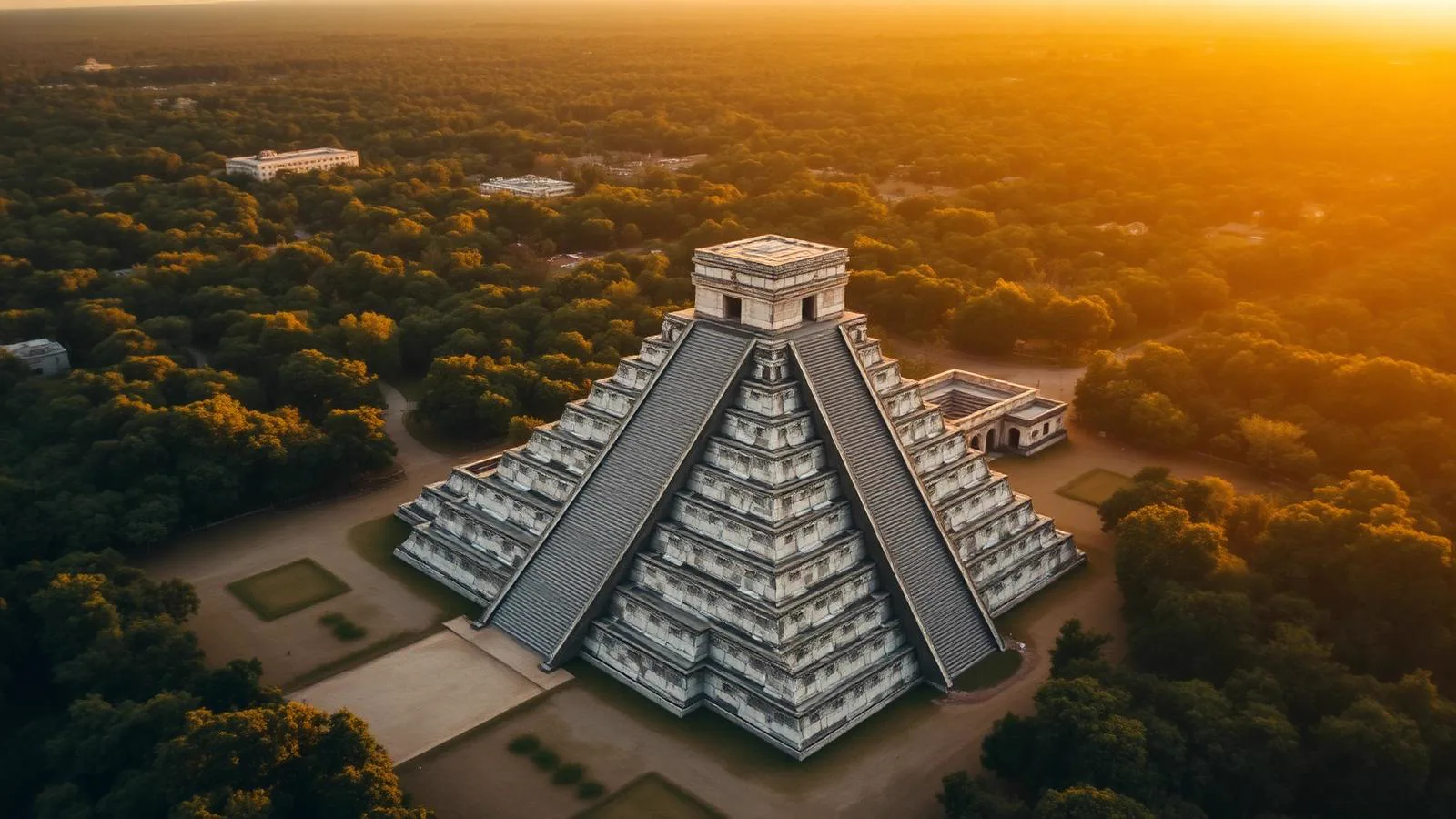
Chichen Itza is an ancient Maya city in Mexico's Yucatan Peninsula, 120 kilometres east of Merida and 40 kilometres west of Valladolid, in the municipality of Tinum, Yucatan state. The walled archaeological zone covers roughly 5 square kilometres and holds El Castillo, the Great Ball Court, the Sacred Cenote and El Caracol.
Mexico's National Institute of Anthropology and History, INAH, manages the site and records it as one of the country's most visited archaeological zones. This guide explains where Chichen Itza sits, what stands inside the archaeological zone today, and why UNESCO and the New7Wonders vote treat this one Maya city as exceptional.
Where Is Chichen Itza in the Yucatan Peninsula?
Chichen Itza lies in the eastern Yucatan Peninsula at 20.6843 degrees north, 88.5678 degrees west, inside Tinum municipality in Yucatan state, Mexico. The city sits on flat limestone karst roughly 2.5 hours by road from Cancun, 1.5 hours from Merida and 45 minutes from Valladolid, on federal highway 180.
The Yucatan Peninsula has no surface rivers. Rainwater drains straight through the limestone shelf into sinkholes called cenotes, and that geology decided where this city stood. Chichen Itza grew around two natural cenotes, and the name itself translates as at the mouth of the well of the Itza.
| From | Road distance | Typical drive |
|---|---|---|
| Valladolid | 45 km | 45 minutes |
| Merida | 120 km | 1 hour 30 minutes |
| Tulum | 150 km | 2 hours |
| Playa del Carmen | 180 km | 2 hours 15 minutes |
| Cancun | 200 km | 2 hours 30 minutes |
Most pages give only the Cancun distance. The Valladolid figure matters more in practice, because the town is the closest overnight base and the first bus departures leave from there. Travellers comparing routes can read the full breakdown of how far Chichen Itza is from Cancun before choosing a base.
What Is Chichen Itza and Why Is It Famous?
Chichen Itza is a pre-Hispanic Maya city founded around the Terminal Classic period and later shaped by strong central-Mexican influence. It is famous because its architecture merges two traditions, Puuc Maya and Toltec, in one settlement, and because El Castillo encodes the 365-day Maya solar count in stone.
The city was a regional capital rather than a single monument. Its causeways, called sacbeob, linked residential groups, plazas and water sources across several square kilometres, and the surviving structures represent only the excavated core of a much larger settlement.
Fame today rests on three separate designations: UNESCO World Heritage inscription, selection as one of the New7Wonders of the World, and federal protection as an INAH archaeological zone. The city's founding, rulers and decline belong to a longer story, covered in the Chichen Itza history guide.
Is Chichen Itza Maya or Aztec?
Chichen Itza is a Maya city, not an Aztec one. The Aztec capital, Tenochtitlan, stood some 1,300 km west in the Valley of Mexico and rose centuries later. The confusion comes from the Toltec-style carvings at Chichen Itza, which reflect central-Mexican contact rather than Aztec rule.
El Castillo is therefore a Maya pyramid, not an Aztec temple, and the feathered serpent worshipped here is Kukulcan, the Yucatec Maya counterpart of the central-Mexican Quetzalcoatl. The wider Maya world and its cities are described in the Maya civilization guide.
How Do You Pronounce and Spell Chichen Itza?
Chichen Itza is pronounced chee-CHEN eet-SAH, with the stress on the second syllable of each word. The Spanish spelling carries accents, Chichén Itzá, while English usually drops them. Common misspellings such as Chichen Itzia, Chitchen Itza or Chichenitza all refer to the same Maya city in Yucatan.
The name is Yucatec Maya and translates as at the mouth of the well of the Itza, joining chi (mouth), chen (well) and Itza, the lineage that ruled the city.
Why Is Chichen Itza a UNESCO World Heritage Site and a New Wonder?
UNESCO inscribed Chichen Itza in 1988 as the Pre-Hispanic City of Chichen-Itza, listed under criteria i, ii and iii for its artistic achievement and the fusion of Maya and central-Mexican building traditions. In 2007 a global public vote run by the New7Wonders Foundation named the city one of the New7Wonders of the World.
- UNESCO World Heritage (1988): an expert inscription on the World Heritage List, based on documented Outstanding Universal Value, site number 483.
- New7Wonders (2007): a private global poll organised by the New7Wonders Foundation, decided by public votes rather than by UNESCO or the United Nations.
- INAH archaeological zone: Mexican federal protection, which governs opening hours, conservation and the climbing ban.
- State of Yucatan: co-administers visitor access and charges a separate state portion of the entrance fee.
Almost no travel page states that the New7Wonders result was a private poll with no UNESCO involvement. Naming the two bodies separately is what makes this distinction reliable rather than repeated.
What Can You See at Chichen Itza?
The archaeological zone contains around 26 cleared structures grouped into three main clusters: the northern Toltec-influenced group, the central group around El Caracol, and the southern Puuc-style group known as Old Chichen. Five buildings carry the city's reputation, and each one rewards a short stop.
El Castillo, the Temple of Kukulcan
El Castillo is the stepped pyramid at the centre of the northern plaza, dedicated to the feathered serpent deity Kukulcan. Its staircases and terraces encode the Maya solar year, and twice a year the late-afternoon sun casts a serpent-shaped shadow down the northern balustrade. Full architectural detail sits in the Kukulcan pyramid guide.
The Great Ball Court
The Great Ball Court is the largest surviving Mesoamerican ball court, running north to south beside El Castillo, with stone rings set high in each side wall and carved relief panels along the benches. Acoustics carry a spoken word from one end wall to the other. See the Great Ball Court at Chichen Itza for the reliefs and their reading.
The Sacred Cenote
The Sacred Cenote lies at the end of a 300-metre sacbe north of the main plaza, a near-circular sinkhole used for ritual deposits rather than for drinking water. Dredging recovered jade, gold, copal and human remains. The Sacred Cenote guide covers the excavation record.
El Caracol Observatory
El Caracol is the round tower in the central group, named for its internal spiral stair, with narrow window slots aligned to the extreme positions of Venus. It is the clearest surviving evidence of Maya astronomical practice at the city. Read the alignments in the El Caracol observatory guide.
The Temple of the Warriors
The Temple of the Warriors stands east of the main plaza, fronted by the Group of a Thousand Columns, with a chacmool figure at the upper entrance and carved warrior pillars below. The colonnade shows the strongest central-Mexican influence at the site, described in the Temple of the Warriors guide.
How Old Is Chichen Itza?
Chichen Itza was settled by roughly the 5th or 6th century, reached its height between about 600 and 1000 CE, and had declined as a dominant power before Spanish contact in the 16th century. Dating comes from ceramic sequences and carved hieroglyphic dates rather than from any single founding record.
The construction sequence, rulers and collapse are set out in the Chichen Itza history guide.
Chichen Itza was built by the Maya, and the surviving core was built in stages between roughly the 7th and 11th centuries rather than on one construction date. El Castillo itself was built over an earlier pyramid, which is why no single build year applies to the city.
Quick Facts About Chichen Itza
Chichen Itza is a federally protected archaeological zone in Yucatan state, inscribed by UNESCO in 1988 and voted a New7Wonder in 2007. It is administered jointly by INAH and the state of Yucatan, and the name comes from Yucatec Maya, meaning at the mouth of the well of the Itza.
| Attribute | Detail |
|---|---|
| Country and state | Mexico, Yucatan, Tinum municipality |
| Coordinates | 20.6829° N, 88.5686° W |
| Cultural affiliation | Maya, with strong central-Mexican influence |
| Managing body | INAH, with the state of Yucatan |
| Language of the name | Yucatec Maya |
Figures, records and lesser-known details are collected in the Chichen Itza facts guide.
How Do You Get to Chichen Itza?
Four routes reach Chichen Itza: the Maya Train, the ADO intercity bus, a rental car on highway 180, and a guided day trip. Valladolid and Merida sit closest, while Cancun and the Riviera Maya require an early start to arrive before the midday crowd.
- Maya Train. The Tren Maya network, opened from 2023, serves a Chichen Itza station with a shuttle transfer to the entrance.
- ADO bus. Scheduled intercity coaches run from Valladolid, Merida, Cancun and Playa del Carmen directly to the site car park.
- Rental car. Federal highway 180 and the 180D toll road both reach the turn-off; the toll road is faster and the free road passes through village speed bumps.
- Guided day trip. A driver-guide collects you from your hotel and handles tickets, which suits travellers coming from the coast.
Route details by departure city are covered in the Chichen Itza tour from Cancun, Chichen Itza from Playa del Carmen and Chichen Itza from Tulum guides.
What Are the Opening Hours and Entrance Fee?
Chichen Itza opens daily, with last entry well before closing, and the ticket is split between an INAH federal charge and a Yucatan state charge, paid at separate windows. Arriving in the first hour gives the coolest light and the shortest queue at the ticket booths.
Current times are listed in the Chichen Itza opening hours guide, and the split ticket is explained in the Chichen Itza entrance fee guide.
When Is the Best Time to Visit Chichen Itza?
The driest, most comfortable months run from November to April, and the calmest hour of any day is the first one after opening. Coach groups from the coast arrive from late morning, so an early arrival changes the experience more than the month does.
Month-by-month weather and crowd patterns are compared in the best time to visit Chichen Itza guide, and the annotated Chichen Itza map shows a suggested walking order once you are inside.
Two further questions have their own guides: whether you can climb Chichen Itza and whether Chichen Itza is worth it.
If you would rather have the context explained on site than read it beforehand, our INAH-credentialed guides cover all of it on our private Chichen Itza tours.
Continue reading
Related guides with the same travel intent.
Frequently Asked Questions
What is Chichen Itza?
Chichen Itza is a ruined ancient Maya city in the Yucatan Peninsula of Mexico, once a religious, political and trading capital of the northern Maya lowlands. Today Chichen Itza is an archaeological zone managed by INAH, a UNESCO World Heritage Site since 1988 and one of the New7Wonders of the World.
Is Chichen Itza in the Yucatan Peninsula?
Yes, Chichen Itza is in the Yucatan Peninsula, the limestone landmass that separates the Gulf of Mexico from the Caribbean Sea. Chichen Itza stands in the north-central part of the peninsula, inside Yucatan state, roughly midway between Merida on the Gulf side and Cancun on the Caribbean coast.
Is Chichen Itza in Yucatan state or Quintana Roo?
Chichen Itza is in Yucatan state, not Quintana Roo. The confusion comes from Cancun, Playa del Carmen and Tulum, which sit in Quintana Roo on the Caribbean coast. Visitors from those resorts cross the state line on the drive west, and the site follows Yucatan state time and rules.
Why is Chichen Itza famous?
Chichen Itza is famous for El Castillo, the stepped pyramid of Kukulkan, and for architecture aligned with the sun, including the serpent shadow of the equinoxes. Chichen Itza also holds the largest ball court in Mesoamerica, the Sacred Cenote and a rare mix of Maya and central-Mexican styles.
Why did the Maya build Chichen Itza in the Yucatan Peninsula?
The Maya built Chichen Itza where they did because of water. The Yucatan Peninsula has almost no rivers, so its porous limestone collapses into cenotes that expose the underground water table. Two large cenotes gave Chichen Itza reliable drinking water and a sacred well for offerings.
What was Chichen Itza used for?
Chichen Itza was a capital and pilgrimage centre. Rulers governed the northern Yucatan from its plazas, priests used its temples and observatory for ceremonies tied to the calendar, and merchants traded salt, jade and obsidian through it. The Sacred Cenote drew pilgrims long after Chichen Itza lost power.
What are the main buildings at Chichen Itza?
The main buildings at Chichen Itza are El Castillo, the Temple of the Warriors, the Great Ball Court, El Caracol observatory, the Sacred Cenote, the Platform of Venus, the Tzompantli skull rack and the Nunnery complex in Old Chichen. Each structure has its own guide on this site.
Who looks after Chichen Itza today?
Chichen Itza is federal property of Mexico, and INAH, the National Institute of Anthropology and History, manages excavation, conservation and visitor access. Chichen Itza remains an active archaeological site, so INAH still uncovers structures and closes some areas for restoration while the main plazas stay open.
Is Chichen Itza one of the seven wonders of the world?
Chichen Itza is one of the New7Wonders of the World, named in a 2007 global public vote organised by the New7Wonders Foundation. It is not one of the classical seven wonders of the ancient world, and the New7Wonders list is separate from the UNESCO World Heritage List it joined in 1988.
Where exactly is Chichen Itza located in Mexico?
Chichen Itza is in Tinum municipality, Yucatan state, in the eastern Yucatan Peninsula of Mexico, at 20.6843 north and 88.5678 west. The site sits on highway 180 between Merida and Valladolid, about 200 kilometres west of Cancun and 40 kilometres from Valladolid.
Is Chichen Itza Aztec or Mayan?
Chichen Itza is Mayan, not Aztec. It was built by Maya people in the Yucatan Peninsula, while the Aztec empire was centred on Tenochtitlan in central Mexico and rose centuries later. The Toltec-style carvings at Chichen Itza show central-Mexican contact, not Aztec rule.
What does the name Chichen Itza mean?
Chichen Itza comes from Yucatec Maya and translates as at the mouth of the well of the Itza. Chi means mouth, chen means well, and Itza names the group associated with the city. The well in question is the Sacred Cenote north of the main plaza.
How long do you need at Chichen Itza?
Most visitors need two to three hours to walk the cleared zone at a steady pace, including the northern plaza, the ball court, the Sacred Cenote causeway and Old Chichen. Add an hour if you stop for photographs or read the interpretive panels at each structure.
Can you climb the pyramid at Chichen Itza?
Climbing El Castillo is not permitted. INAH closed the staircases to visitors to protect the structure and after a fatal fall, and the ban applies to every pyramid at the site.
Is Chichen Itza worth visiting?
Chichen Itza rewards visitors who arrive early and understand what they are looking at, because the architecture carries astronomical and political meaning that is invisible without context.
Is there a map of the Chichen Itza site?
A site map helps, because the cleared zone spreads across several plazas linked by causeways rather than one central square. An annotated Chichen Itza map shows every structure, the entrance gates and a suggested walking order.