
Best Time to Visit Chichen Itza in 2026: Month, Hour and Day

The best time to visit Chichen Itza is 8 AM from November to April. Full month-by-month weather, hour-by-hour crowd matrix, and 2026 equinox dates.
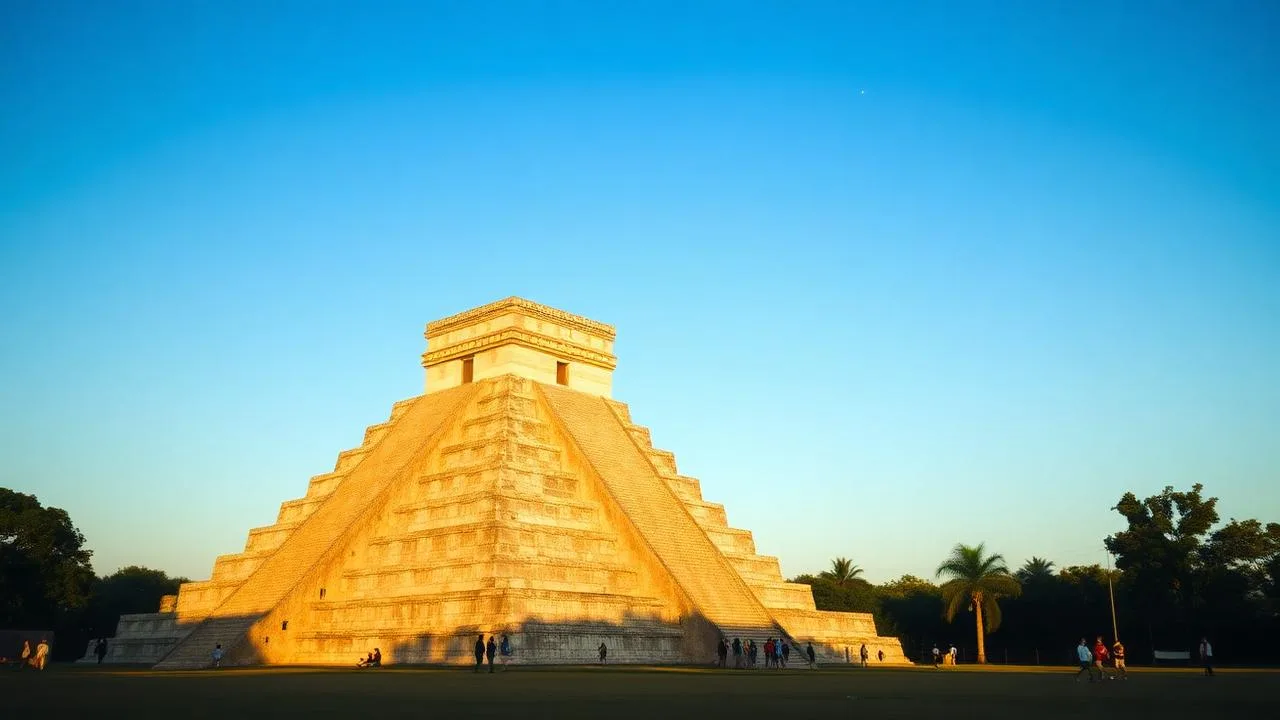
The best time to visit Chichen Itza in 2026 is 8:00 AM from November to April, on a Tuesday, Wednesday or Thursday. That window combines the site's coolest dry-season weather (average high 29–31°C), the emptiest plaza of the day (fewer than 1,500 visitors before 10 AM), and the lightest weekly crowd rhythm before Sunday's free-entry surge.
Hour-by-hour visitor numbers and the quietest days are in how crowded is Chichen Itza.
This guide walks through every timing variable, month, hour, day of the week, equinox windows, hurricane risk, and booking lead time, with 2026 numbers pulled from INAH visitor logs, CONAGUA weather records, and on-site observations. Skip the summary if you already know your travel dates; each section stands on its own.
Dates, viewing times and crowd tips for the equinox light show are in Chichen Itza snake shadow.
What Is the Best Month to Visit Chichen Itza?
November through April is the best window to visit Chichen Itza. These six dry-season months deliver stable weather, low humidity, and afternoon skies clear enough to see the shadow effects on El Castillo. Within that window, February and November are the sweet spot, dry, comfortable, and free of the December-January holiday spike that pushes daily counts past 12,000.
Rainy-season months (May through October) are not off-limits, mornings are usually sunny and crowds thin by 40 to 50 percent, but afternoons carry a 60 to 70 percent chance of a 30-minute downpour. September brings the highest hurricane risk of the year and October the highest total rainfall. Independent travelers can still visit in these months as long as they arrive at opening.
What Time of Day Is Best to Visit Chichen Itza? (Hour-by-Hour Crowds)
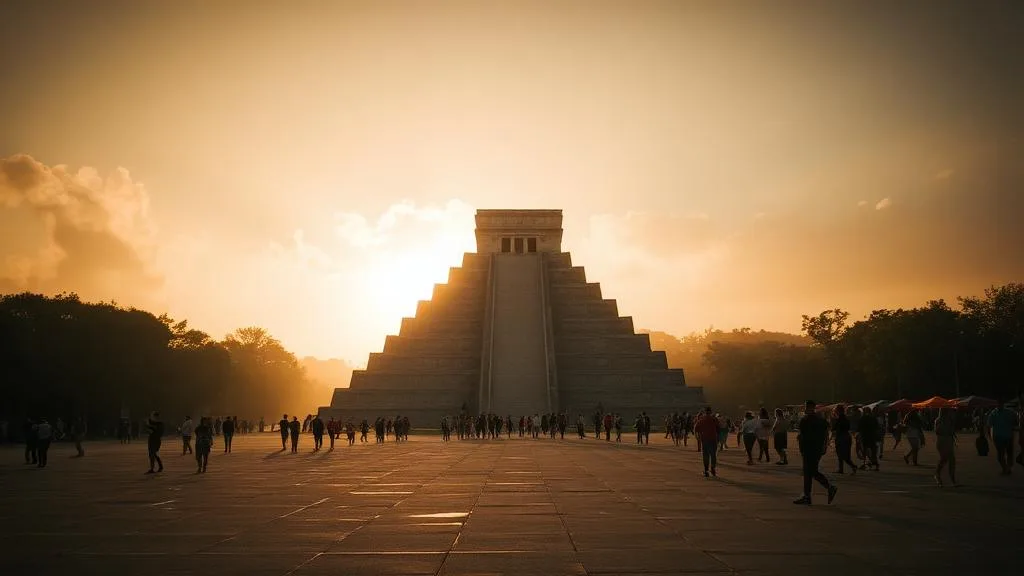
The best time of day to visit Chichen Itza is between 8:00 and 10:00 AM. Doors open at 8:00 sharp and the first tour buses from Cancun, Playa del Carmen, and Tulum do not reach the parking lot until 10:15–10:45 AM. Those two hours are the only window when El Castillo can be photographed without visitors in the frame.
| Hour | Approx. visitors on site | Temperature | What to expect |
|---|---|---|---|
| 8:00–9:00 AM | 200–600 | 22–26°C | Near-empty plaza, cool shade, sharp photos |
| 9:00–10:00 AM | 600–1,500 | 26–29°C | Independent travelers arrive, still peaceful |
| 10:00–11:30 AM | 1,500–4,000 | 29–32°C | Cancun and Playa tour buses arrive in waves |
| 11:30 AM–1:30 PM | 4,000–8,000 | 32–36°C | Peak crowd, peak heat, minimal shade |
| 1:30–3:00 PM | 6,000–9,000 | 34–37°C | Tulum and Merida groups add on |
| 3:00–4:30 PM | 3,000–5,000 | 32–34°C | Buses depart, equinox shadow starts if in season |
| 4:30–5:00 PM | under 1,500 | 30–32°C | Last-entry window, quiet again, softer light |
If you can only visit in the afternoon, target 3:30 PM onward: the last entry is at 4:00 PM, most tour groups have left, and the light softens dramatically. The trade-off is 90 minutes on site instead of a full morning. Anyone chasing a quiet dawn photo should look at a dedicated early-access format like the sunrise tour.
Which Day of the Week Is Least Crowded at Chichen Itza?
Tuesday, Wednesday, and Thursday are the least crowded days at Chichen Itza year-round, running about 30 to 40 percent below Sunday levels. Sunday is free for Mexican citizens and legal residents, and domestic family groups fill the site from 10 AM to 3 PM. Saturday and Monday sit between the two extremes because of weekend spillover and Monday-morning cruise-ship arrivals.
| Day | Crowd level | Why | Recommended for photos |
|---|---|---|---|
| Monday | Medium | Cruise-ship day trips from Progreso and Cozumel | Yes if arriving 8 AM |
| Tuesday | Low | No cruise arrivals, no free-entry surge | Best of the week |
| Wednesday | Low | Same as Tuesday, plus Night Show attendance | Excellent |
| Thursday | Low–Medium | Groups start pre-weekend arrivals | Very good |
| Friday | Medium | Weekend leisure travel begins | Fine before 10 AM |
| Saturday | High | Weekend Mexican tourism plus international | Only before 9:30 AM |
| Sunday | Very high | Free entry for Mexican nationals | Avoid unless you want atmosphere |
For the exact 2026 visitor-count patterns behind these bands, cross-check the deep-dive on when to visit Chichen Itza, with daily and seasonal numbers.
How Weather at Chichen Itza Changes Month by Month
Chichen Itza sits in the interior Yucatan, roughly 40 km from the coast, so temperatures run 2–4°C hotter than Cancun or Tulum year-round with lower breeze. Dry season (November–April) averages 22–31°C with 8 to 30 mm of rain per month. Wet season (May–October) averages 25–36°C with 100 to 200 mm of rain, concentrated in short late-afternoon storms.
| Month | Avg high | Avg low | Rainfall | Verdict |
|---|---|---|---|---|
| January | 29°C / 84°F | 18°C / 64°F | 25 mm | Best weather of the year |
| February | 31°C / 88°F | 19°C / 66°F | 20 mm | Excellent, low crowds after mid-month |
| March | 33°C / 91°F | 21°C / 70°F | 25 mm | Warm, equinox peak |
| April | 35°C / 95°F | 23°C / 73°F | 35 mm | Very hot, spring break crowds |
| May | 36°C / 97°F | 24°C / 75°F | 90 mm | Hottest month, first rains |
| June–August | 34°C / 93°F | 24°C / 75°F | 140–170 mm | Hot, humid, afternoon storms |
| September | 33°C / 91°F | 23°C / 73°F | 200 mm | Wettest, hurricane peak |
| October | 32°C / 90°F | 22°C / 72°F | 150 mm | Rain tapering, few visitors |
| November | 30°C / 86°F | 20°C / 68°F | 40 mm | Sweet spot: cool + quiet |
| December | 29°C / 84°F | 18°C / 64°F | 25 mm | Cool but holiday crowds |
When Is Hurricane Season and Should You Avoid It?
Atlantic hurricane season runs June 1 to November 30, with the sharpest risk from mid-August to mid-October. Chichen Itza is 120 km inland, so direct hurricane hits are rare, the site's real concern is 24 to 48 hours of tropical rain that can force early closure. September carries the highest single-month risk, with roughly one closure day every three years. Travel insurance covering weather is worth the small premium.
If a named storm appears on the National Hurricane Center feed within 72 hours of your visit, most tour operators reschedule at no cost. Independent visitors should watch the CONAGUA yellow-red alert map for Yucatan state. INAH keeps the site open in light rain, closes it in lightning, and issues a full evacuation only under a hurricane warning.
When Does the Kukulcan Serpent Equinox Appear at Chichen Itza?
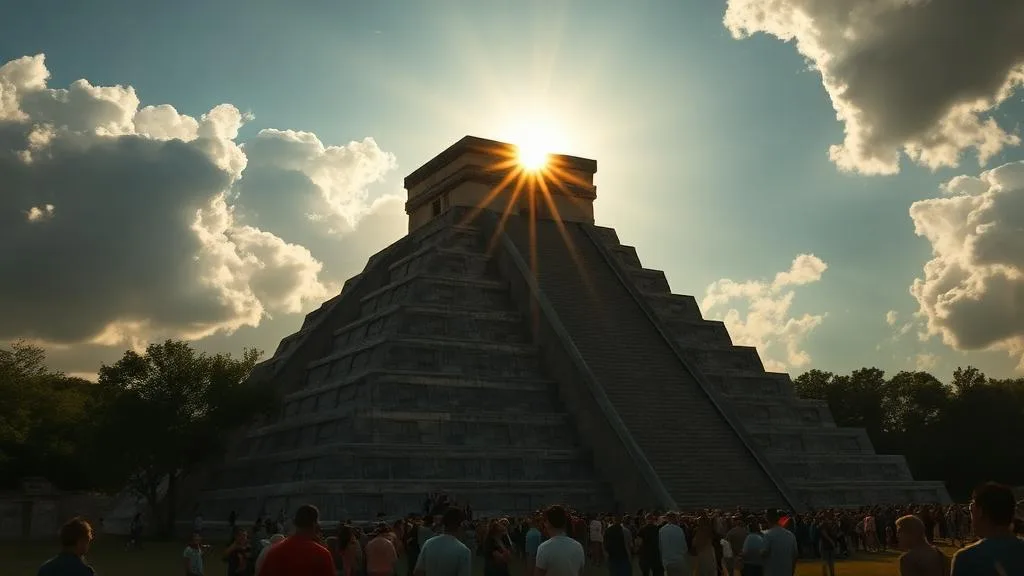
For a best-time decision, the two dates that matter are the spring equinox around March 20–21 and the autumn equinox around September 22–23, with a visible window of roughly one week on either side. Spring consistently outperforms autumn because it lands inside dry season and afternoon skies stay clear; autumn falls in the wettest month and gets partly obscured by cloud cover more often than not. The equinox afternoon is also the single most crowded window of the entire calendar, plan for a five-fold surge over a normal day.
The full shadow-phenomenon description, the seven triangles, El Castillo's astronomical alignment and the correct camera angle, lives in the El Castillo pyramid. This guide only owns the date window; do not shop the astronomical detail here. If your trip coincides with the date, a Chichen Itza equinox tour handles the parking and gets you to the right viewing angle.
Should You Visit Chichen Itza at Sunrise or Sunset?
For a best-time decision, treat sunrise and sunset the same way: neither is viewable from inside the archaeological zone under normal ticketing, because the gate opens well after first light and closes before sundown. What travelers really mean by the sunrise experience is the first thirty minutes after general opening, soft eastern light on El Castillo, near-total silence and cooler air. That thirty-minute window is the single best photographic slot of the day. Sunset from inside the plaza is only available on the rare paid-event nights INAH runs a few times a year.
The exact opening time, last entry and close, with holiday variations, live in the Chichen Itza hours. This guide only owns the best-time-of-day decision; do not shop official hours here. If dawn photography inside the plaza is the goal, the only legitimate route is a private early-access format with the right permits, a Chichen Itza sunrise tour is the only commercial vehicle that carries those.
When to Book Your Chichen Itza Trip for the Best Price
Gate admission itself does not move on price, the site charges the same for every foreign adult year-round with no early-bird and no late deal. What does move on price is everything around the gate: tour rates, hotel nights in Valladolid or Piste, rental cars from Cancun airport and van transfers from the coast. Book those four to six weeks ahead for December, January, Semana Santa and the March equinox. Two weeks is fine for shoulder months, and mid-week last-minute is often cheapest in October and early November.
The exact admission amount, the federal-plus-state breakdown and who enters free live in the Chichen Itza admission. This guide only owns the timing of when to book; do not shop the price figure here.
Worst Times to Visit Chichen Itza (Dates to Avoid)
Six periods consistently ruin the Chichen Itza experience for photographers and solo travelers: December 26 to January 3 (holiday peak, 12,000+ daily), Mexican Easter week / Semana Santa (national holiday surge), March 19–22 (equinox peak crowding), Sundays year-round (free entry for Mexicans), any day arriving after 11 AM in April or May (heat above 36°C), and the 72-hour window after any named Atlantic storm makes landfall in the Yucatan.
If your dates fall inside one of these windows and cannot move, the only lever left is arrival time: aim for 8:00 AM exactly, skip the main parking lot, and weigh whether the site truly fits your trip, the honest read on whether Chichen Itza is worth it helps decide.
For travelers leaving from the coast, the 8 AM window means a pre-dawn departure, plan the real drive using the Chichen Itza distance from Cancun or the Chichen Itza distance from Tulum. Travelers who prefer to hand off the 4:30 AM logistics can book a private Chichen Itza tour from Cancun with Itza Quest, timed to land at El Castillo before the 10:15 AM bus surge.
Continue reading
Related guides with the same travel intent.
Frequently Asked Questions
Is it worth visiting Chichen Itza in the rainy season?
Yes, if you arrive at 8 AM. Rainy season (May to October) brings short afternoon downpours, not all-day rain. Mornings are usually clear, crowds are 40 to 50 percent lighter than dry season, and the jungle around the ruins turns vivid green. Bring a light poncho and skip the noon window when both rain and heat peak.
What is the coolest month to visit Chichen Itza?
January is the coolest month at Chichen Itza, with average daytime highs of 29°C (84°F) and morning lows near 18°C (64°F). December and February are close behind. From April to September highs regularly exceed 35°C (95°F) with tropical humidity, and shade inside the archaeological zone is very limited.
How early should I arrive at Chichen Itza to beat the crowds?
Arrive by 8:00 AM, when the site opens. Between 8 and 10 AM you will share the plaza with fewer than 1,500 visitors. After 10:30 AM the Cancun and Playa del Carmen tour buses arrive and daily counts climb toward the site's 8,000 to 12,000 peak-season average. By noon El Castillo is fully surrounded by crowds.
Is Sunday the worst day to visit Chichen Itza?
For foreigners chasing quiet photos, yes. Sunday is free for Mexican citizens and residents, so domestic visitor counts triple and family groups fill the plaza from 10 AM onward. Foreigners still pay the full 697 MXN fee that day. Tuesday, Wednesday, and Thursday consistently have the lightest crowds year-round.
When exactly does the Kukulcan serpent shadow appear?
The serpent-of-shadow descends El Castillo's northern staircase around 3:00 to 4:30 PM on the spring equinox (March 20 or 21) and the autumn equinox (September 22 or 23), plus roughly one week on either side. The effect is clearest in dry season, so March draws far larger crowds than September, when afternoon clouds often hide it.
How far in advance should I book my Chichen Itza trip?
Book 4 to 6 weeks ahead for December, January, spring break, and the March equinox. Two weeks is enough for the shoulder months of November, February, and October. Same-week booking usually works from May to September except around Easter. Booking earlier does not lower Chichen Itza's fixed 697 MXN entrance fee, only tour and hotel prices.