
Chichen Itza History: Who Built It, When It Rose, and Why the Great Maya City Fell

Chichen Itza history explained: founded by the Itza Maya around 550 AD, ruled the northern Yucatan 800–1200 AD, abandoned before the Spanish arrived. Full timeline, who built it, why it declined, and how it became a UNESCO World Heritage Site.
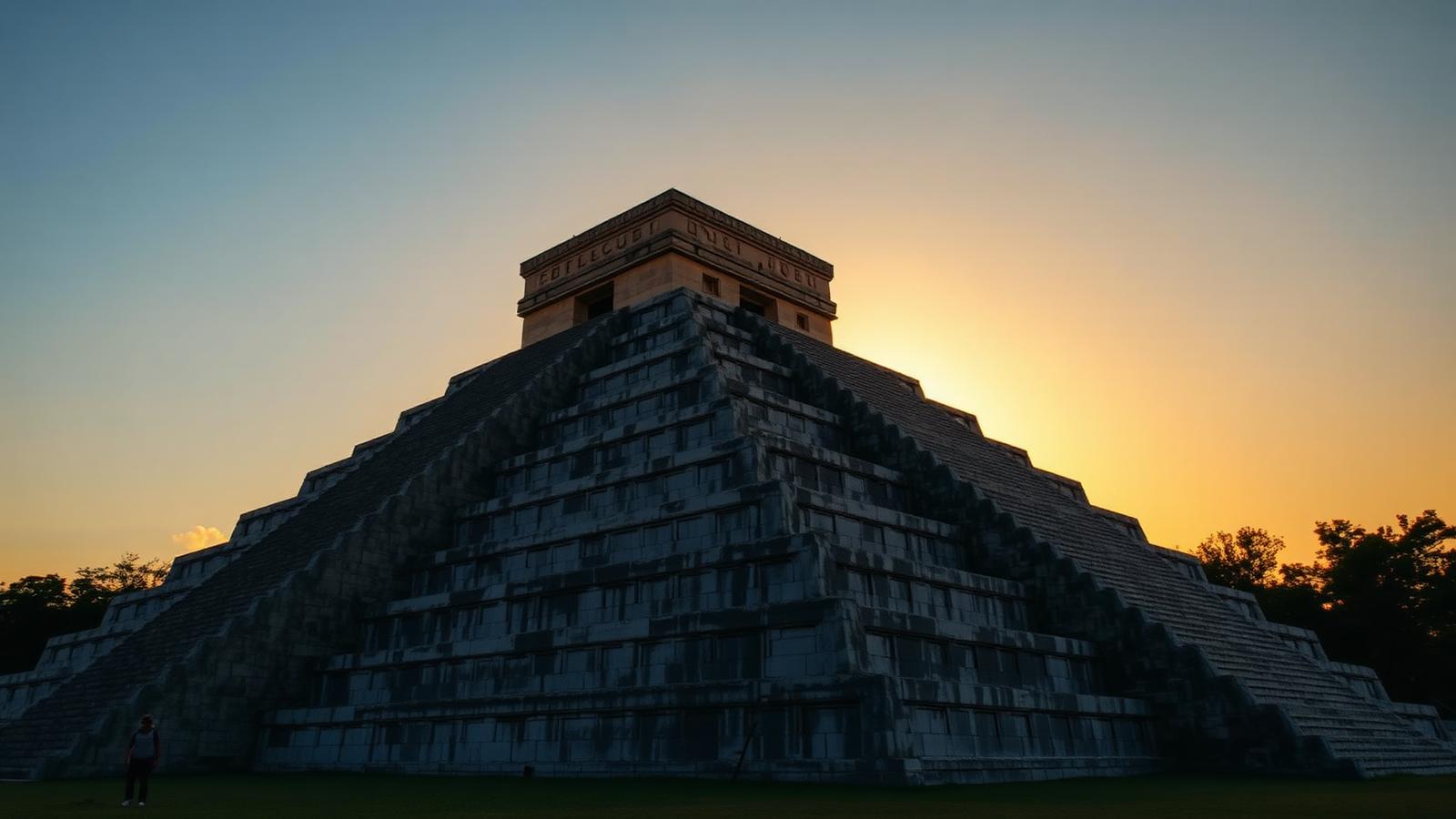
Chichen Itza history spans roughly 700 years. The city was founded by the Itza Maya around 550 AD in the northern Yucatan Peninsula, rose to become the dominant Maya capital between 800 and 1200 AD, absorbed Toltec cultural influence from central Mexico around 900–1100 AD, and was largely abandoned by 1250 AD, nearly 300 years before the Spanish arrived. It became a UNESCO World Heritage Site in 1988 and one of the New Seven Wonders of the World in 2007.
This guide walks through the full timeline: who the Itza Maya were, when each major building at Chichen Itza was constructed, how Toltec influence reshaped the city, why the great Maya capital collapsed, what happened during the colonial and modern rediscovery, and how the site is protected today. Dates follow the mainstream archaeological consensus published by INAH, the Peabody Museum, and UNESCO. This is the historical narrative, for the pyramid itself, see the dedicated Kukulcan guide.
Who Built Chichen Itza? The Itza Maya Founders
Chichen Itza was built by the Itza, a Yucatec Maya lineage that arrived at the site around 550 AD. The name of the city records their identity, Chi Chen Itza means at the mouth of the well of the Itza, referring to the Sacred Cenote that gave the settlement its water source and its ceremonial center. The Itza were part of the wider Maya civilization that occupied the Yucatan Peninsula, Guatemala, Belize and western Honduras from roughly 2000 BC onward.
The founding population was small, a few thousand people clustered around the two large cenotes (Sacred Cenote to the north, Xtoloc Cenote to the south). By 800 AD the city had grown to an estimated 30,000–50,000 residents and controlled a dense network of tributary towns across the northern lowlands. Rulers took the title k'ul ajaw (holy lord). Very few individual names are securely attributed in the inscriptions, one, K'ak'upakal, appears on hieroglyphic bands dated to the late 800s AD and may have been the most powerful documented ruler of the city.
The Itza belonged to the wider Maya world covered in our Maya civilization guide, and the city they founded is the same one described in the general Chichen Itza guide.
When Was Chichen Itza Built? Full Chichen Itza Timeline
Chichen Itza was not built in one campaign. Construction unfolded across three broad periods spanning roughly 650 years. The oldest structures cluster in the southern half of the site and belong to a pure Maya architectural tradition called Puuc style. The northern half, with the famous pyramid, ball court, and warrior temples, reflects the later Toltec-influenced phase and dates to the city's political peak.
| Period | Approximate dates | Key structures built |
|---|---|---|
| Late Classic (Puuc phase) | 600–800 AD | Las Monjas, Akab Dzib, Casa Colorada, Iglesia |
| Terminal Classic | 800–1000 AD | Caracol observatory, Ossario, Osario Platform, older layers of El Castillo |
| Early Postclassic (Toltec phase) | 1000–1200 AD | El Castillo (final form), Temple of the Warriors, Great Ball Court, Tzompantli, Platform of Venus |
| Decline | 1200–1250 AD | No new monumental construction; ceremonial use only |
| Colonial period | 1520s–1700s | Site abandoned, occasional Maya pilgrimages to Sacred Cenote |
The pyramid of Kukulcan, the site's most famous structure, was built in two layers, an older inner pyramid around 800–900 AD and the final 30-m outer shell you see today around 1050 AD. For exact dimensions, inner chambers and the equinox serpent shadow, see the dedicated Kukulcan Pyramid guide.
How Powerful Was Chichen Itza at Its Peak? Population, Trade and Politics
At its peak between 900 and 1100 AD, Chichen Itza was the largest and most powerful city in the northern Maya lowlands. Population estimates range from 30,000 to 50,000 residents inside a 5-square-kilometer urban core, comparable to Tikal at its height and larger than most European cities of the same era. The city controlled long-distance trade routes that stretched from central Mexico to Honduras, moving obsidian, jade, cacao, salt, cotton, feathers and copper bells across Mesoamerica.
Chichen Itza was also an inland port. The city controlled a coastal base at Isla Cerritos on the northern Yucatan coast 90 km away, which served as its maritime harbor. Ek Balam, 55 km to the northeast, was a rival Maya capital until ~900 AD, when it fell under Chichen Itza's sphere of influence, the route between the two cities is still one of the most recommended archaeological pairings today. A Chichen Itza and Ek Balam tour connects the two capitals in one day.
Why Does Chichen Itza Look Toltec? Central Mexico's Influence
Around 900–1000 AD, Chichen Itza began showing architectural and religious features almost identical to Tula, the Toltec capital 1,200 km northwest in what is now the state of Hidalgo. The chac-mool reclining sculpture, warrior columns, feathered-serpent balustrades on El Castillo, skull-rack platforms (tzompantli), and the cult of Quetzalcoatl (Kukulcan in Maya) all appear at Chichen Itza in this phase, features absent from earlier southern Maya cities.
Archaeologists have debated for a century whether this reflects a physical Toltec invasion, a returning wave of migrating Itza who had traveled to central Mexico, or a shared elite culture that spread across Mesoamerica through trade and political alliance. Recent DNA studies (Harvard, 2024) of skeletons from the Sacred Cenote suggest the population remained majority Maya throughout, pointing to cultural exchange rather than population replacement. The best-supported reading today is that Chichen Itza elites deliberately adopted Toltec symbols to legitimize a new hybrid political ideology.
How Did Religion Shape Political Power at Chichen Itza?
Religion at Chichen Itza was not separate from statecraft, it was the machinery of it. The ruling council, the multepal, drew its legitimacy from the priesthood, and public ritual on the plaza in front of El Castillo functioned as political theater that bound the city's population to the elite. Feast days, calendar-round ceremonies and the equinox descent were scheduled state events, not private devotions. Anyone who could read the calendar and predict the sky held political leverage, which is why astronomer-priests sat close to the rulers named in the Casa Colorada inscriptions.
Through the drought decades of the 1000s, power shifted toward the rain cults. Chaac displaced Kukulcan as the focus of the most urgent ceremonies, and the Sacred Cenote became the main stage for those petitions, the worse the harvest, the more expensive the offerings. That shift is part of why the site falls shortly afterward. For what was thrown into the sacrificial well, what the 1904 excavations revealed, and what was recovered from the bottom, see Sacred Cenote.
Why Did Chichen Itza Fall? Drought, Revolt and the Rise of Mayapán
Chichen Itza began declining sharply after 1150 AD and was effectively abandoned by 1250 AD as a functioning capital. There is no single cause. The most widely accepted synthesis combines three overlapping pressures. First, environmental, lake sediment cores from Punta Laguna and Chichancanab show severe multi-decade droughts hit northern Yucatan between 1020 and 1100 AD, then again after 1200 AD. In a landscape that depends entirely on cenote water and rain-fed maize, prolonged drought destroys the agricultural surplus that sustains cities.
Second, political, the sources compiled after the conquest (the Chilam Balam books) describe a revolt against the ruling Cocom lineage and a shift of power to the coastal city of Mayapán around 1220–1250 AD. Third, economic, the same coastal trade routes Chichen Itza had dominated shifted toward Mayapán and later toward the east coast (Tulum). By 1400 AD the ceremonial center of Chichen Itza stood empty of residents, though local Maya continued to visit the Sacred Cenote for pilgrimages, a practice documented well into the colonial period.
Who Rediscovered Chichen Itza? Colonial Records and Early Excavation
The Spanish first reached the Yucatan in 1517 under Francisco Hernández de Córdoba. In 1533 conquistador Francisco de Montejo the Younger briefly established a Spanish camp at Chichen Itza called Ciudad Real, hoping to use it as a base to subdue the peninsula. The Maya resisted, and within a year Montejo abandoned the site. Bishop Diego de Landa's 1566 manuscript Relación de las cosas de Yucatan gives the earliest detailed European description of the ruins, including the Sacred Cenote and the great pyramid.
For three centuries after that, Chichen Itza sat forgotten by outsiders under jungle cover. The site returned to global attention in 1841 with the publication of Incidents of Travel in Yucatan by American diplomat John Lloyd Stephens and English artist Frederick Catherwood. Their engravings sparked the first wave of archaeological interest. Systematic work began in 1904 when U.S. consul Edward Herbert Thompson bought the hacienda that contained the ruins and began dredging the Sacred Cenote, recovering thousands of objects that later ended up at Harvard's Peabody Museum, many since repatriated to Mexico.
What Happened to Chichen Itza After Rediscovery? Protection and Modern History
The modern protected site opened as a formal archaeological zone in 1972 under Mexico's National Institute of Anthropology and History (INAH). UNESCO inscribed Chichen Itza on the World Heritage List in 1988 (WHC reference 483). In 2007 the New7Wonders Foundation ran a global public vote that named Chichen Itza one of the New Seven Wonders of the World, alongside Petra, the Great Wall of China, the Colosseum, Christ the Redeemer, Machu Picchu and the Taj Mahal. Climbing on the monuments has been prohibited since 2006 to protect them from wear.
Today Chichen Itza receives roughly 2.5 million visitors per year, most on day trips from the Riviera Maya and Merida. The modern city of Merida, colonial capital of Yucatan and the classic starting point for Maya studies, sits just 1h 40m from the site; full drive and cultural context are in the Chichen Itza tour from Merida guide. For the headline numbers, El Castillo's height, peak population, Sacred Cenote offerings, see the verified Chichen Itza facts. To weigh whether the site meets modern visitor expectations, see whether Chichen Itza is worth it.
How Can You Walk Chichen Itza History in Order on Site?
Reading history in Chichen Itza on the ground works in a specific order. Start at Las Monjas complex in the southern half, the oldest surviving buildings, pure Puuc Maya, no Toltec elements. Walk north past the Caracol observatory, where Maya astronomers tracked Venus with 90% accuracy over centuries. Continue to the Osario platform, a transitional structure. Then reach the Great Plaza, El Castillo, Temple of the Warriors, Great Ball Court and Tzompantli, all Toltec-phase, all built 900–1100 AD. This south-to-north walk mirrors the city's chronological growth.
To place each phase on the ground, the Chichen Itza map shows the southern and northern zones, and the Maya calendar explains the dating system behind the Caracol and El Castillo.
The south-to-north chronological route is not marked at the site and most group tours skip it. A private guide unlocks it. If your priority is understanding the city as a historical narrative, not just snapping photos in front of El Castillo, a private Chichen Itza tour with a certified guide lets you walk the structures in chronological order and linger as long as you need at each phase. That is the difference between seeing ruins and reading a 700-year-old city.
Chichen Itza history is not a single date or a single ruler. It is the arc of a Maya lineage that built a capital, welcomed foreign influence, dominated the Yucatan for two centuries, and dissolved in the face of drought and political revolt, leaving behind stone that still tracks the sun on the equinox and a Sacred Cenote that still holds the offerings of a thousand years. Itza Quest builds every guided visit around that arc so travelers leave with a city, not a photo.
Continue reading
Related guides with the same travel intent.
Frequently Asked Questions
Who built Chichen Itza?
Chichen Itza was built by the Itza Maya, a Yucatec Maya group who settled the site around 550 AD. The name means at the mouth of the well of the Itza, Chi (mouth), Chen (well), Itza (the founding lineage). Later, between 900 and 1100 AD, the city absorbed strong Toltec architectural and religious influence from central Mexico, which is why El Castillo, the Temple of the Warriors and the Great Ball Court look distinct from earlier southern Maya cities.
When was Chichen Itza built?
Construction spanned roughly 650 years, from about 550 AD to 1200 AD. The earliest structures (the Nunnery, the Akab Dzib) date to the Late Classic period, around 600–800 AD. The famous pyramid of Kukulcan (El Castillo), the Great Ball Court and the Temple of the Warriors were built during the city's peak, the Terminal Classic and Early Postclassic, roughly 900–1100 AD.
Why was Chichen Itza abandoned?
Chichen Itza declined between 1200 and 1250 AD. No single event caused it, the collapse mix includes long droughts documented in Yucatan lake-sediment records, political revolt against the ruling elite, and the rise of Mayapán as the new regional capital. By the time the Spanish arrived in the 1520s, Chichen Itza had been abandoned as a functioning city for roughly 300 years, though local Maya still made pilgrimages to the Sacred Cenote.
Is Chichen Itza Maya or Aztec?
Chichen Itza is Maya, not Aztec. This is one of the most common confusions in Mesoamerican history. The Maya civilization spanned the Yucatan Peninsula, Guatemala, Belize and Honduras from 2000 BC to the Spanish conquest. The Aztec (Mexica) empire rose 1,000 km northwest of Chichen Itza, near modern Mexico City, and did not exist until roughly 1325 AD, after Chichen Itza was already abandoned.
Who discovered Chichen Itza?
The site was never truly lost, local Maya always knew about it. The Spanish chronicler Diego de Landa described it in 1566. Modern archaeological attention began in 1841 when American explorer John Lloyd Stephens and English illustrator Frederick Catherwood published Incidents of Travel in Yucatan. Systematic excavation started in 1904 under U.S. consul Edward Herbert Thompson, who dredged the Sacred Cenote and recovered thousands of Maya offerings.
When did Chichen Itza become a UNESCO World Heritage Site?
UNESCO inscribed Chichen Itza on the World Heritage List in 1988. In 2007 it was voted one of the New Seven Wonders of the World in a global public poll organized by the New7Wonders Foundation, alongside the Great Wall of China, Petra, the Colosseum, Christ the Redeemer, Machu Picchu and the Taj Mahal. The site is managed by Mexico's National Institute of Anthropology and History (INAH).
What language did the people of Chichen Itza speak?
The residents spoke Yucatec Maya, the same language still spoken by roughly 800,000 people across the Yucatan Peninsula today. Inscriptions carved into stone at Chichen Itza use the Maya hieroglyphic script, a fully developed writing system with over 800 signs combining logograms and syllables. The script recorded royal names, dates using the Long Count calendar, and religious texts.
What happened at the Sacred Cenote of Chichen Itza?
In the history of Chichen Itza the Sacred Cenote served as the city's main religious petition site: priests threw offerings, jade, ceramics and, in specific ceremonies, human sacrifices, to Chaac, the rain god, during droughts. That role intensified through the 11th-century dry decades and helps explain the city's decline. For the excavation record, what was dredged from the well and the 2024 DNA findings on the sacrificed individuals, see our Sacred Cenote guide.