
Mayan Gods: The Major Deities of the Maya Pantheon and What They Ruled

A clear guide to the main Mayan gods: Itzamna, Chaac, Kukulkan, Ix Chel, Ah Puch and the Maize God. Who each one ruled, how they were worshipped, and which ones you meet carved at Chichen Itza.
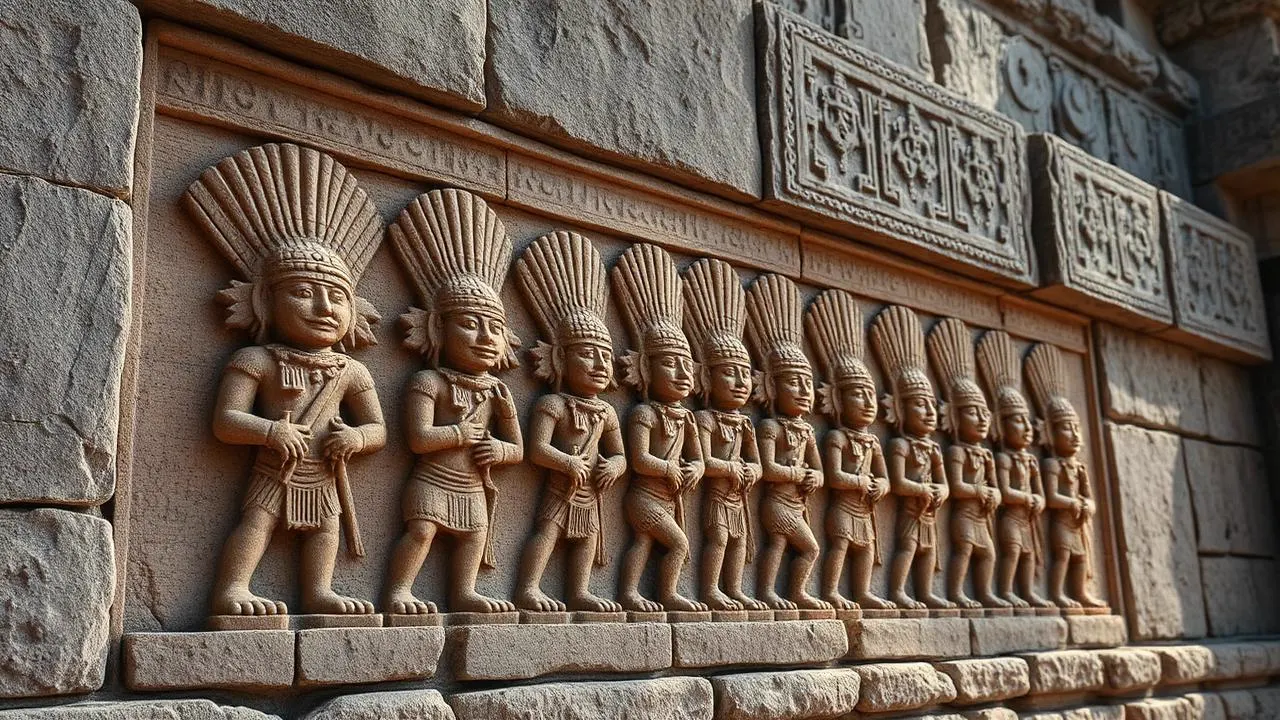
Mayan gods governed rain, maize, death, war and the movement of the sky, and each one had a job the community depended on. The best known are Itzamna the creator, Chaac the rain bringer, Kukulkan the feathered serpent, Ix Chel the moon goddess, Ah Puch the death lord, and the Maize God.
This pantheon is not decoration. It is the reason a pyramid faces the direction it faces, why a cenote holds gold and bone, and why one carved face repeats on almost every building at Chichen Itza. Understanding six deities changes what you see on a site visit more than any other piece of preparation.
Itzamna: The Creator God and Lord of the Sky
Itzamna sat at the top of the Maya pantheon as creator, patron of writing and lord of day and night. He is usually drawn as an aged man with a hooked nose and toothless jaw, sometimes merged with a celestial reptile. Scribes and priests treated him as the source of literacy and medicine.
Why the Rain God Chaac Covers Every Corner at Chichen Itza
Chaac controlled rain, thunder and lightning, and in a region with no rivers that made him the single most urgent deity in Yucatan. He appears as a long-nosed mask with curling snout, stacked in rows on corners and doorways. Four directional Chaacs governed the cardinal points, each with its own colour.
At Chichen Itza the Sacred Cenote functioned as Chaac's mailbox. Dredging recovered jade, gold discs, copal incense, wooden idols and human remains dropped in during droughts. The full excavation record sits in the Sacred Cenote at Chichen Itza guide.
Kukulkan, the Feathered Serpent of Wind and Renewal
Kukulkan bridged sky and earth as a serpent covered in quetzal feathers, associated with wind, Venus, learning and political legitimacy. Rulers who claimed descent from him gained authority. At Chichen Itza his temple dominates the plaza and his shadow appears on the balustrade at the equinoxes.
The deity has a dedicated page on Kukulkan, the feathered serpent god, and the building carries its own Kukulcan Pyramid at Chichen Itza guide.
Ix Chel, Ah Puch and the Maize God: Life, Death and Harvest
Ix Chel, Goddess of the Moon and Childbirth
Ix Chel governed the moon, weaving, medicine and childbirth, and appears both as a young woman and as an aged figure with a serpent headdress. Isla Mujeres and Cozumel held major pilgrimage shrines to her, which is why Maya women crossed open water to reach the islands.
Ah Puch and the Lords of Xibalba
Ah Puch, also called God A, ruled Xibalba, the layered underworld. He is drawn as a skeletal figure hung with bells and decaying flesh. The Popol Vuh describes the Hero Twins defeating the Xibalban lords in a ball game, a story physically staged at the Great Ball Court.
| Deity | Domain | Recognised by | Seen at Chichen Itza |
|---|---|---|---|
| Itzamna | Creation, writing, sky | Aged man, hooked nose | Codex-style reliefs |
| Chaac | Rain, lightning, storms | Long curling snout mask | Everywhere, plus Sacred Cenote |
| Kukulkan | Wind, Venus, renewal | Feathered serpent | El Castillo, serpent heads |
| Ix Chel | Moon, childbirth, weaving | Serpent headdress | Rare, stronger on the islands |
| Ah Puch | Death, Xibalba | Skeletal body, bells | Ball court panels |
| Maize God | Maize, rebirth | Young man, corn-silk hair | Foliated motifs |
How the Maya Actually Worshipped: Offerings, Bloodletting and Cenotes
Daily worship meant burning copal incense, offering maize and flowers, and keeping household shrines. Rulers performed bloodletting, piercing tongue or ears with stingray spines, because elite blood was considered the strongest possible offering. Human sacrifice existed but was exceptional, tied to drought, dedication events and captured enemy lords.
Cenotes were treated as doorways to the gods rather than water sources alone. That belief is why the deepest sinkholes hold artefacts far older than the buildings above them, from the Cenote Ik Kil swimming stop to the Cenote Suytun light beam. The same religion staged the Hero Twins story at the Great Ball Court at Chichen Itza and lined the Temple of the Warriors with Chaac masks.
Seeing the Maya Pantheon on a Guided Visit
Every carved mask, serpent head and skull rack at Chichen Itza belongs to one of these deities, and a certified guide can name them building by building. Compare guided formats on the Chichen Itza tours hub, or set out with a Chichen Itza tour from Playa del Carmen.
Continue reading
Related guides with the same travel intent.
Frequently Asked Questions
Who were the main Mayan gods?
The core Maya deities were Itzamna, the creator and lord of the sky; Chaac, the rain and lightning god; Kukulkan, the feathered serpent of wind and renewal; Ix Chel, goddess of the moon, weaving and childbirth; Ah Puch, lord of death; and the Maize God, whose life cycle mirrored the growing season.
How many gods did the Maya have?
Scholars have identified more than 250 named Maya deities, though the number is fluid. Maya gods merged, split and changed aspect depending on direction, colour and season, so one deity such as Chaac appears as four directional Chaacs. Roughly two dozen dominate the surviving codices and monuments.
Which Mayan god was worshipped at Chichen Itza?
Kukulkan was the dominant deity at Chichen Itza, with El Castillo built as his temple and serpent heads flanking the north stairway. Chaac is the most frequently carved face on site, appearing in long-nosed masks across the Nunnery and Temple of the Warriors. The Sacred Cenote received offerings to Chaac.
Is Kukulkan the same as Quetzalcoatl?
They are cognate deities, not identical ones. Kukulkan is the Yucatec Maya feathered serpent; Quetzalcoatl is the Nahua equivalent from central Mexico. The two traditions converged at Chichen Itza during the Toltec-influenced period, which is why the site's iconography reads as both Maya and central Mexican.
Did the Maya sacrifice people to their gods?
Yes, though far less often than popular media suggests. Bloodletting by rulers was the routine offering; human sacrifice was reserved for drought, war captives and major dedications. Dredging of the Sacred Cenote at Chichen Itza recovered human remains alongside jade, gold and copal offerings to Chaac.
What did the Maya believe happened after death?
Most of the dead travelled to Xibalba, a layered underworld ruled by death lords, and had to pass its trials. Warriors killed in battle, women who died in childbirth and sacrificial victims bypassed those trials. Caves and cenotes were treated as physical entrances to Xibalba.