
Kukulkan: The Maya Feathered Serpent God of Wind, Venus and Renewal

Kukulkan is the Maya feathered serpent god of wind, Venus and renewal. Who he was, how he differs from Quetzalcoatl, what he meant to Maya rulers, and how his worship shaped Chichen Itza.
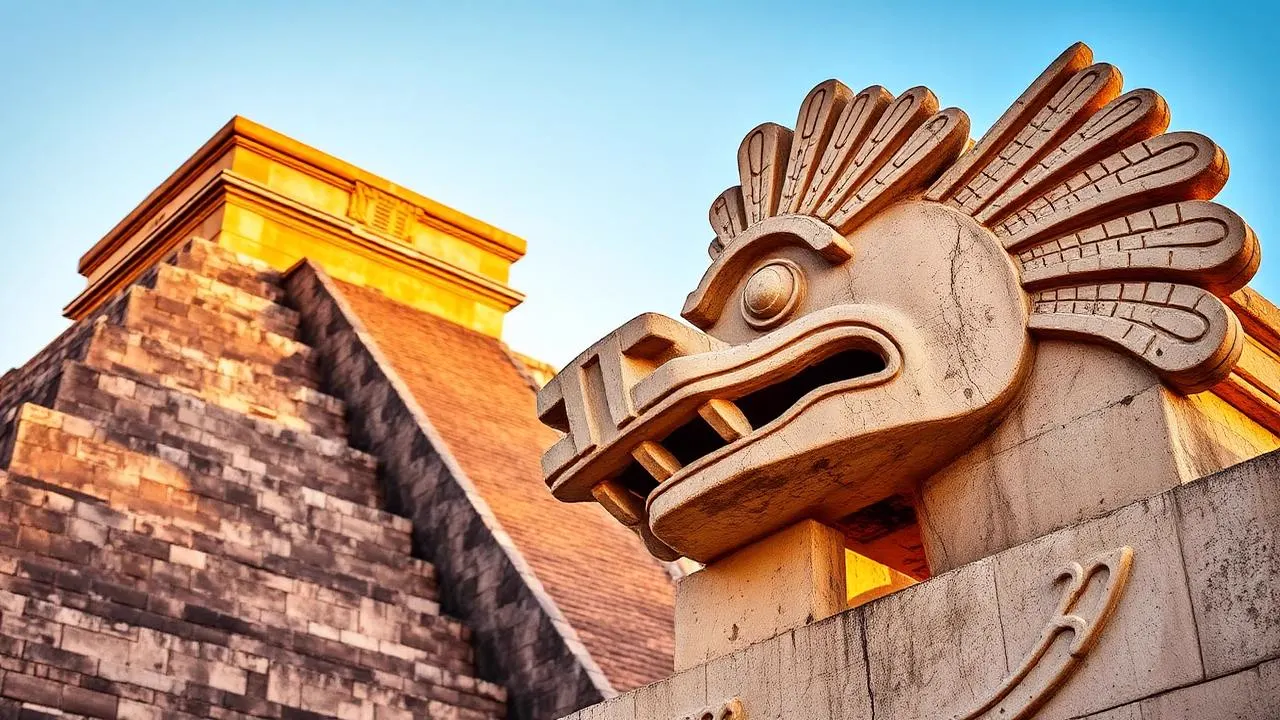
Kukulkan is the Maya feathered serpent god of wind, Venus and renewal, worshipped across Yucatan and adopted as the patron deity of Chichen Itza. His name joins k'uk'ul, feathered, with kan, serpent. Rulers claimed him as ancestor, farmers invoked him for wind before rain, and priests tracked his star.
This page is about the deity, not the building. If you came looking for the pyramid, its dimensions, interior chamber and climbing rules are covered on the Kukulcan Pyramid at Chichen Itza guide. Here the subject is the god himself: origin, powers, iconography, festivals, and how he differs from Quetzalcoatl.
Who Is Kukulkan in Maya Religion?
Kukulkan belongs to a family of Mesoamerican feathered serpent deities that appear from Teotihuacan onward. In Yucatec Maya belief he moved between sky and earth, carrying wind, breath and messages between worlds. Because breath meant life, a wind god sat close to creation itself in Maya cosmology.
He is not a distant abstraction. Maya texts describe him arriving, teaching and departing, then promising return. That narrative made him politically useful, since any new dynasty could present itself as the fulfilment of the promise and take his name as a royal title.
Kukulkan vs Quetzalcoatl vs Q'uq'umatz: The Same Serpent?
| Name | Culture | Language | Primary association |
|---|---|---|---|
| Kukulkan | Yucatec Maya | Yucatec | Wind, Venus, dynastic renewal |
| Q'uq'umatz | K'iche' Maya | K'iche' | Creation, Popol Vuh co-creator |
| Quetzalcoatl | Nahua / Toltec / Aztec | Nahuatl | Wind, priesthood, learning |
The three share a body plan and a domain but not a biography. Confusing them flattens three separate religious traditions into one. At Chichen Itza the Maya and central Mexican strands genuinely mixed during the Toltec-influenced era, which is why the site shows both Maya masks and Tula-style serpent columns.
Powers and Domains: Wind, Venus, Learning and Kingship
Wind Before Rain
Maya farmers watched for the wind that precedes a storm front and read it as Kukulkan clearing the road for Chaac, the rain god. Wind temples were built round so no corner could block the breath of the god, an architectural rule visible across the Yucatan peninsula.
Venus, the Watched Star
Kukulkan was tied to Venus as morning and evening star, and Venus was the planet Maya astronomers tracked most obsessively. The Dresden Codex Venus tables predict its cycle to within about two hours over five centuries, and El Caracol at Chichen Itza has sightlines to Venus extremes.
How those cycles were counted is explained in the Mayan calendar system explained guide, and the building that tracked them in the El Caracol observatory at Chichen Itza guide.
How to Recognise Kukulkan in Maya Art
Look for a serpent body rendered with overlapping quetzal plumes rather than plain scales, an open jaw with a protruding tongue, and a human face sometimes emerging from the mouth. Balustrade serpents, column serpents and roof-comb serpents are all the same deity in different architectural roles.
The Temple of the Warriors serpent columns frame its doorway head down and tail up, holding the lintel. That single design choice tells you the building was entered through the body of the god, a statement of divine sanction, and the same logic runs through the wider history of Chichen Itza.
Where the Feathered Serpent Was Worshipped: Chichen Itza and the Xul Festival
Bishop Diego de Landa recorded a peninsula-wide festival in the Maya month Xul, when lords and priests travelled to Mani, and earlier to Chichen Itza, for five days of processions, fasting and offerings. Feathers, jade, copal and turkeys were given; the closing rite dismissed the god until the following year.
Twice a year the site still stages its own version of that attention. At the spring and autumn equinoxes a triangular shadow ripples down El Castillo's northern balustrade and joins the carved serpent head at the base. Dates, timings and crowd strategy sit on the Chichen Itza equinox tour page.
Seeing Kukulkan for Yourself at Chichen Itza
Serpent heads, columns and the equinox shadow all sit within a ten-minute walk of each other, but only a certified guide connects them into one argument about power and religion. Compare formats on the Chichen Itza tours hub, or travel in with a Chichen Itza tour from Cancun.
Continue reading
Related guides with the same travel intent.
Frequently Asked Questions
Who is Kukulkan?
Kukulkan is the Yucatec Maya feathered serpent deity, a god of wind, rain-bringing storms, Venus, learning and political renewal. His name combines k'uk'ul, feathered, with kan, serpent. He served as the patron deity of Chichen Itza and as the ancestral figure ruling dynasties claimed descent from.
What is the difference between Kukulkan and Quetzalcoatl?
They are parallel feathered serpent deities from two different cultures. Kukulkan is Yucatec Maya, Quetzalcoatl is Nahua from central Mexico, and Q'uq'umatz is the highland Maya counterpart. The three overlap in wind, Venus and creation roles, but each carries its own myths, iconography and priesthood.
Was Kukulkan a god or a real person?
Both traditions exist. Colonial chronicles describe a historical lord named Kukulkan who arrived in Yucatan and founded or reformed Chichen Itza, while inscriptions treat Kukulkan as a deity. Most scholars read this as a ruler taking the god's name as a title, a common Mesoamerican practice.
What powers did Kukulkan have?
Kukulkan governed wind, which the Maya believed swept the road clear ahead of rain, so he was invoked before the growing season. He was linked to Venus as morning and evening star, to writing and calendrical knowledge, and to the renewal of royal power at the start of a new cycle.
How was Kukulkan worshipped?
Worship centred on round wind temples, feathered serpent columns, and offerings of copal, jade and quetzal feathers. Diego de Landa recorded a Yucatan-wide festival held in the month Xul, when priests and lords from across the peninsula gathered for five days of ceremony in Kukulkan's honour.
Why is Kukulkan important at Chichen Itza?
Kukulkan was the city's patron deity, and the ruling elite legitimised their power through him. That is why the main temple is dedicated to him, why serpent columns frame the Temple of the Warriors, and why feathered serpent motifs repeat across the site more than any other divine figure.