
Valladolid Mexico: The Complete 2026 Guide to Yucatan's Colonial Pueblo Mágico

Valladolid Mexico 2026 guide: things to do in the Yucatan Pueblo Mágico, cenotes, food, safety, how to get there and day-trip pairing with Chichen Itza.
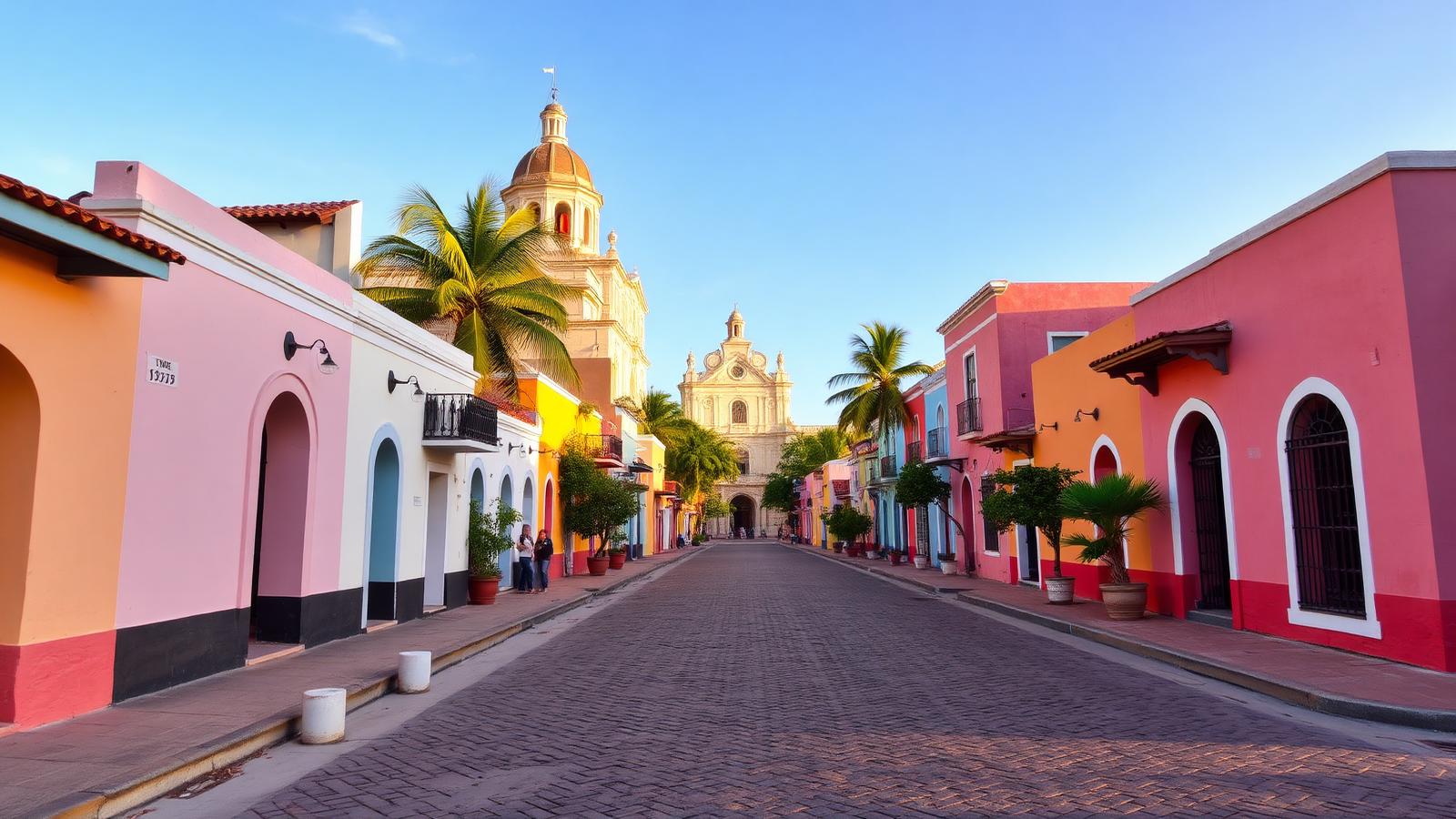
Valladolid Mexico is a colonial city and designated Pueblo Mágico in the state of Yucatan, 160 km west of Cancun and 40 km east of Chichen Itza, founded by the Spanish in 1543 on the site of the pre-Hispanic Maya town of Zací. It has a population of about 85,000, a walkable 16-square-block colonial center, five swimmable cenotes within 15 minutes, and the 1552 Convento de San Bernardino de Siena as its architectural anchor. It is Yucatan's most convenient base for exploring Chichen Itza, Ek Balam and Cenote Suytun, and one of the safest cities in Mexico for foreign travelers.
This guide answers the questions travelers actually ask before visiting: where Valladolid sits on the Yucatan map, why it earned Pueblo Mágico status, the exact top ten things to do, cenotes within reach, where to eat Yucatecan food, whether it is safe, how to get there from Cancun, Tulum, Playa del Carmen or Merida, and how many days it deserves on a Yucatan itinerary.
Where Valladolid Yucatan Sits and Why It Became a Pueblo Mágico
Valladolid Yucatan sits in the geographic center of the Yucatan Peninsula at 20.6896° N, 88.2020° W, on Federal Highway 180 and the 180D toll road that connects Cancun with Merida. It is the seat of the Valladolid municipality, home to about 85,000 residents, and the third city of the state of Yucatan after Merida and Tizimín. The Spanish founded the modern town in 1543 under Francisco de Montejo the Younger, replacing the earlier site of Zací, the Maya town whose central cenote, still swimmable inside the city today, gave the settlement its water supply. The colonial grid, cathedral, San Bernardino convent and stone-paved streets have survived almost intact for four centuries.
Mexico's federal tourism secretariat added Valladolid to the Pueblo Mágico program in 2012. The designation is awarded to towns that combine historical, cultural or natural significance with tourism infrastructure. Valladolid qualified on four counts: the intact 16th-century colonial center, active Maya culture in the surrounding villages, five accessible cenotes in the karst plateau under the city, and its role as the historical spark of the 1847 Caste War of Yucatan. Today Yucatan has eight Pueblos Mágicos; Valladolid is by far the most visited because of its central position between Cancun and Chichen Itza.
| Fact | Detail |
|---|---|
| State | Yucatan, Mexico |
| Coordinates | 20.6896° N, 88.2020° W |
| Population | ~85,000 (municipality: 90,000) |
| Founded | 1543 by Francisco de Montejo the Younger |
| Pre-Hispanic name | Zací (Yucatec Maya, 'white hawk') |
| Pueblo Mágico status | Awarded 2012 |
| Distance from Chichen Itza | 40 km east |
| Distance from Cancun | 160 km west |
| Distance from Merida | 160 km east |
| Time zone | Central (UTC−6), 1 h behind Cancun |
Top Things to Do in Valladolid Mexico in One Day
The things to do in Valladolid concentrate inside a walkable eight-block radius around the Parque Francisco Cantón Rosado, the main plaza. A single day covers the downtown circuit; a second day is needed for cenotes and archaeological sites within a 40 km radius. The morning window (8–11 AM) is coolest for walking; the light-mapping show on the convent facade runs at 9 PM every Friday, Saturday and Sunday. Below is the tested one-day sequence used by most independent travelers and by every full-day tour operator in the state.
| Time | Stop | Detail |
|---|---|---|
| 8:00 AM | Parque Francisco Cantón Rosado | Coffee at the plaza; Cathedral of San Servacio facade |
| 9:00 AM | Calzada de los Frailes | Cobblestone photo street to the convent |
| 9:30 AM | Convento de San Bernardino | 1552 Franciscan convent, cenote inside cloister |
| 11:00 AM | Cenote Zací | Urban cenote 3 blocks from plaza, 30 MXN |
| 1:00 PM | El Mesón del Marqués | Cochinita pibil, longaniza, lomitos de Valladolid |
| 3:00 PM | Casa de los Venados | Folk-art collection, guided tour 100 MXN |
| 4:30 PM | Mercado Municipal | Hammocks, honey, embroidered huipiles |
| 6:30 PM | Plaza sunset + marquesita | Rolled crepe with Edam cheese, plaza food carts |
| 9:00 PM | Video-mapping (Fri–Sun) | Free light show on convent facade, 20 minutes |
Cenotes Near Valladolid: Zací, X'Kekén, Samulá, Suytun, Oxman
Valladolid sits directly on the Chicxulub crater karst, and the limestone plateau under the city is riddled with cenotes. Five are swimmable and open to the public within a 15-minute drive of the plaza, the tightest cenote cluster in Yucatan. Cenote Zací sits three blocks from the main plaza, walkable in flip-flops from any hotel in the centro. X'Kekén (also spelled Dzitnup) and its twin Samulá sit 7 km west on the road toward Chichen Itza, both cave cenotes reached down stone staircases. Cenote Suytun sits 8 km east on the road to Tekom, the closed cave with the light beam. Cenote Oxman sits 4 km south inside a hacienda, with a rope swing over the water.
For prices, hours, the light-beam window and what to expect from the closed cave, see the Cenote Suytun. If you are driving west the same day to pair with the ruins, the swim cenote almost every visitor pairs with Chichen Itza is covered in the Ik Kil sinkhole.
| Cenote | Distance from plaza | Type |
|---|---|---|
| Zací | 0.5 km (walkable) | Semi-open, urban |
| X'Kekén (Dzitnup) | 7 km west | Closed cave |
| Samulá | 7 km west (same site) | Closed cave, twin of X'Kekén |
| Suytun | 8 km east | Closed cave, light beam |
| Oxman | 4 km south | Open, hacienda setting |
The one most day-trippers skip is Cenote Oxman, the open sinkhole 4 km south inside Hacienda San Lorenzo: a rope swing, hanging roots and a pool deck, and it stays quiet through the same midday hours when Suytun peaks.
Where to Eat Yucatecan Food in Valladolid
Valladolid is one of the two best places in Mexico to eat Yucatecan food, alongside Merida. The dishes to try in one visit: cochinita pibil (slow-roasted pork in achiote and sour orange, wrapped in banana leaf), longaniza de Valladolid (the local pork sausage, smoked in the town for four centuries), lomitos de Valladolid (diced pork in tomato sauce, plated with hard-boiled egg), papadzules (tortillas rolled around egg and covered in pumpkin-seed sauce), sopa de lima (chicken and lime broth), and the marquesita, a crisp rolled crepe filled with Edam cheese and Nutella, invented in Yucatan in the 1940s and now sold at every plaza food cart after 6 PM.
| Spot | Type | Best order | Price range |
|---|---|---|---|
| El Mesón del Marqués | Colonial courtyard | Longaniza and cochinita combo | $$ |
| Taberna de los Frailes | Fine Yucatecan | Lomitos de Valladolid | $$$ |
| IX CAT IK | Chef's tasting menu | Recado negro pork | $$$$ |
| Conato 1910 | Rustic mole and Maya | Kaan taco flight | $$ |
| El Atrio del Mayab | Casual local | Papadzules | $ |
| Plaza food carts (6–10 PM) | Street food | Marquesita with Edam + Nutella | $ |
| Mercado Municipal (7 AM–2 PM) | Market comedores | Cochinita pibil torta | $ |
Every plate above is broken down with prices, market stalls and ordering tips in the Yucatan food guide, cochinita pibil in Valladolid is served from 7 AM and sells out by noon.
How to Get to Valladolid from Cancun, Tulum, Playa del Carmen and Merida
Valladolid sits on the 180D toll highway that crosses Yucatan east to west, and on the 295 that runs north from Tulum through Coba. Every major point on the peninsula reaches Valladolid in three hours or less. From Cancun the fastest option is the 180D toll road (2 hours, 372 MXN toll). From Tulum the free 109/295 via Coba (2 hours, no tolls) is the standard route. From Playa del Carmen the 305 south to 180D toll route runs 2 h 20 min. From Merida the 180D east is a flat 2-hour drive. ADO buses connect Valladolid to all four cities with hourly departures from the terminal at Calle 46 x Calle 39.
| From | Distance | Drive | ADO bus | Toll (car) |
|---|---|---|---|---|
| Cancun airport | 160 km | 2 h 00 min | 2 h 30 min · 320 MXN | 372 MXN |
| Cancun hotel zone | 180 km | 2 h 20 min | 2 h 45 min · 460 MXN | 372 MXN |
| Playa del Carmen | 160 km | 2 h 20 min | 3 h · 400 MXN | 264 MXN |
| Tulum | 100 km | 1 h 45 min | 2 h · 220 MXN | 0 (free route) |
| Merida | 160 km | 2 h 00 min | 2 h 15 min · 250 MXN | 212 MXN |
| Chichen Itza | 40 km | 40 min | 45 min · 90 MXN | 0 |
| Ek Balam | 30 km | 35 min | no direct bus | 0 |
Pairing Chichen Itza at sunrise with Valladolid at lunch is the single most efficient one-day loop from the coast, or from Merida, which sits just 45 minutes west. A Chichen Itza tour from Merida with private transport can be built to include a two-hour Valladolid stop on the return leg without adding total time to the day.
Is Valladolid Mexico Safe and What to Watch For
Valladolid is one of the safest cities in Mexico. The state of Yucatan has recorded the lowest homicide rate in the country for over a decade, 2.1 per 100,000 residents in 2024, below Canada, France and most US states. Tourism police patrol the plaza, Calzada de los Frailes and the ADO terminal day and night. Solo female travelers regularly report Valladolid as the town where they felt most comfortable walking at night in all of Mexico. The Mexican federal travel advisory rates Yucatan Level 1 (exercise normal precautions), the same rating as most of the US and Europe.
Practical watch-outs are limited: use ATMs inside the Banorte, Santander or HSBC branches on the plaza and avoid the freestanding ones on Calle 41 (skimmer reports); carry a photocopy of your passport rather than the original; do not leave valuables visible in parked rental cars; drink bottled water outside restaurants and hotels. Taxi drivers in Valladolid do not run meters, agree the fare (80–100 MXN inside the centro, 300 MXN to nearby cenotes) before entering the car. Uber does not operate in Valladolid; DiDi has partial coverage.
History of Valladolid: From Zací to the Caste War Spark
Before the Spanish arrived, the site was a Yucatec Maya town called Zací, 'white hawk', a mid-sized settlement organized around the central cenote that still swims in the middle of Valladolid today. In 1543, Francisco de Montejo the Younger destroyed Zací and founded Valladolid on top of it, naming it after the Spanish city where the Montejo family originated. The 16th-century Franciscan convent of San Bernardino de Siena went up in 1552 and remains the oldest continuously used building in eastern Yucatan. In 1847 the town became the trigger of the Caste War of Yucatan, one of the most sustained indigenous uprisings in Latin American history, when Manuel Antonio Ay was executed here, prompting Maya communities across the peninsula to revolt against creole elites. The war ran until 1901.
The Maya history that makes Valladolid a natural base also makes Chichen Itza the mandatory neighbor, the archaeological site sits 40 km west and the history of Chichen Itza covers the 700 years before Valladolid was founded. For the less-visited Maya ruins you can still climb, Ek Balam ruins is 30 km north.
How Many Days in Valladolid and How to Pair It with Chichen Itza
One night in Valladolid is enough for the downtown, one cenote and a Yucatecan dinner. Two nights is the sweet spot, day one covers the plaza, San Bernardino, Cenote Zací, and dinner; day two starts at 5:30 AM for a sunrise arrival at Chichen Itza, midday at Cenote Suytun, and an afternoon at Ek Balam or a second cenote. Three nights adds a full-day loop north to Río Lagartos for the flamingos and Las Coloradas for the pink lakes. Most travelers use Valladolid as the one-night hinge in a 7-day peninsula loop: Cancun → Tulum → Valladolid → Merida → Cancun.
If your only day for Chichen Itza leaves from the coast and you can't stay in Valladolid, the logistics change: check the distance from Chichen Itza to Cancun and decide whether one night in Valladolid mid-loop is worth it. For many travelers, Chichen Itza is worth it precisely because Valladolid absorbs the long drive, the day becomes two experiences instead of a race. A private Chichen Itza tour with Itza Quest can be arranged to include a 90-minute Valladolid stop on the return leg from Cancun, Playa del Carmen or Tulum without staying overnight.
From Valladolid, two more side trips fit the same base. Ninety minutes north the salt lagoons of Rio Lagartos flamingos hold pink flocks year round, and 100 km west the yellow colonial town of Izamal, Mexico sits on a Maya pyramid platform.
Continue reading
Related guides with the same travel intent.
Frequently Asked Questions
Where is Valladolid Mexico?
Valladolid is a colonial city in the state of Yucatan, southeast Mexico, at 20.6896° N, 88.2020° W. It sits in the center of the Yucatan Peninsula on Federal Highway 180, 160 km west of Cancun, 40 km east of Chichen Itza, 155 km north of Tulum and 160 km east of Merida. Population is about 85,000. It is the third-largest city in the state of Yucatan after Merida and Tizimín, and the natural base for exploring the eastern half of the peninsula.
Is Valladolid Mexico worth visiting?
Yes. Valladolid was named a Pueblo Mágico by Mexico's tourism secretariat in 2012 and is one of the most walkable colonial towns in Yucatan. In one day you get pastel-painted colonial streets, the 16th-century Convento de San Bernardino de Siena, three swimmable cenotes within 8 km of the plaza (Zací, X'Kekén, Suytun), Yucatecan food (cochinita pibil, longaniza, marquesitas) at half the price of Playa del Carmen, and a base 40 km from Chichen Itza. It is worth 1 night on any Yucatan itinerary, 2 nights if you want time for cenotes and Ek Balam.
How far is Valladolid from Cancun?
Valladolid is 160 km west of Cancun International Airport by road, a 2-hour drive on the 180D toll highway. From the Cancun Hotel Zone the distance adds 20 km. Tolls one way run 372 MXN. ADO buses run the route in 2 hours 30 minutes for 320–460 MXN. The colectivo (shared van) costs 200 MXN and takes 3 hours. Most travelers coming from Cancun for Chichen Itza stop for lunch in Valladolid on the return.
What are the top things to do in Valladolid Mexico?
The 10 essentials in Valladolid: (1) walk Calzada de los Frailes, the postcard cobblestone street connecting downtown to the convent; (2) tour Convento de San Bernardino de Siena, built in 1552, with a nightly video-mapping show at 9 PM; (3) sit in Parque Francisco Cantón Rosado (the main plaza) at sunset; (4) swim in Cenote Zací right in town (30 MXN); (5) drive 7 km west to Cenote X'Kekén and Samulá (125 MXN each); (6) drive 8 km east to Cenote Suytun for the light beam; (7) eat cochinita pibil at El Mesón del Marqués; (8) buy hammocks and honey at Mercado Municipal; (9) see the Casa de los Venados folk-art collection; (10) day-trip to Chichen Itza or Ek Balam. Full day: 8 AM to 10 PM.
Is Valladolid Mexico safe?
Yes, Valladolid is one of the safest cities in Mexico for tourists. Yucatan state has recorded the lowest homicide rate in Mexico for over a decade, 2.1 per 100,000 in 2024, below Canada. Violent crime against tourists is effectively unheard of. The downtown grid and Calzada de los Frailes are patrolled by tourism police day and night. Standard precautions still apply: use ATMs inside banks (Banorte on the plaza), keep a photocopy of your passport, and don't leave valuables visible in rental cars. Water is safe in restaurants and hotels; drink bottled outside them.
How many days do you need in Valladolid?
One night covers the downtown, one cenote and dinner. Two nights lets you add Chichen Itza at sunrise (40 min drive) and Ek Balam or two extra cenotes the second day. Three nights adds Río Lagartos flamingos and Las Coloradas pink lakes as a full-day trip north. Most Cancun-based itineraries do Valladolid as one night in the middle of a peninsula loop; Merida-based itineraries use it as the eastern anchor for a 2-night stop.
What is Valladolid Mexico known for?
Valladolid is known as the gateway to Chichen Itza, as one of Mexico's designated Pueblos Mágicos, and as the historical stage of the Caste War of Yucatan, the Maya uprising of 1847 that began with a shot fired here. It is also known for cenote density (five swimmable cenotes within a 15-minute drive), colonial architecture centered on the 1552 San Bernardino convent, and Yucatecan cuisine: cochinita pibil, longaniza de Valladolid (the local pork sausage), lomitos de Valladolid, papadzules and the marquesita, a rolled crepe with Edam cheese invented in the state in the 1940s.
How to pronounce Valladolid in Mexico?
In Mexican Spanish, Valladolid is pronounced 'bah-yah-doh-LEED' with stress on the last syllable. The double L sounds like a soft Y, the D at the end is barely audible, and the initial V is pronounced closer to B. Locals do not use the Castilian Spanish 'bah-lyah-DOH-leeth' pronunciation from Valladolid, Spain, the two cities share a name but nothing else. In Yucatec Maya the town is called Zací, meaning 'white hawk', the pre-conquest name still used for the town cenote.