
The Chichen Itza Snake Shadow: How the Equinox Serpent Appears on El Castillo

The Chichen Itza snake shadow is the equinox light effect on El Castillo, when seven triangles of light form a serpent body descending the northern staircase to a carved stone head.
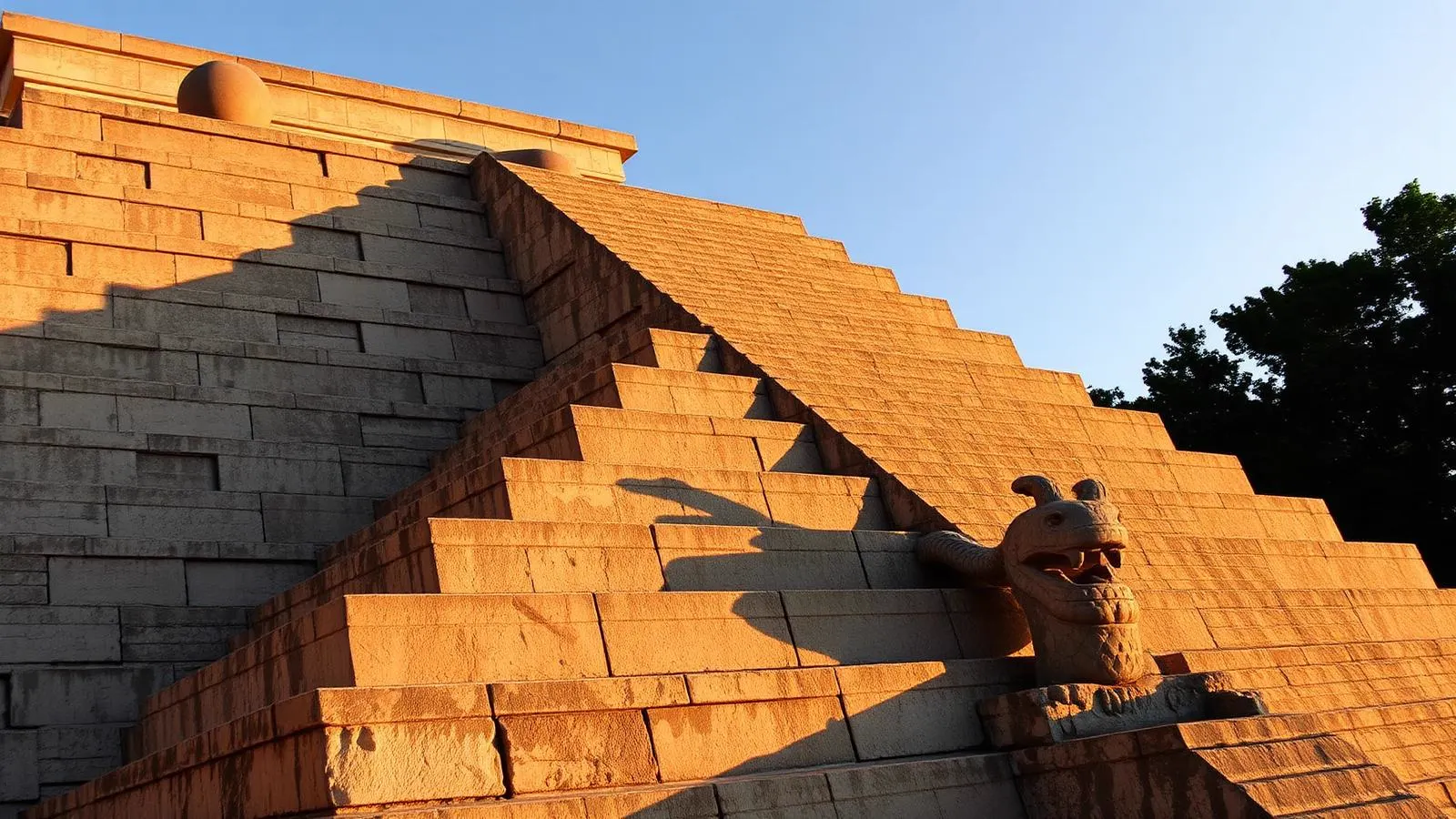
The Chichen Itza snake shadow is an equinox light effect on El Castillo, where seven triangles of light run down the northern balustrade and meet a carved serpent head at the base. It lasts around 45 minutes in the late afternoon, and it is the single most photographed moment in Maya archaeology.
This guide covers the phenomenon itself: the optics, the timing, the dates, the viewing angle and the archaeology debate. For the building that produces it, its dimensions, inner chamber and construction phases are covered in the Kukulcan Pyramid guide.
How the Equinox Serpent Shadow Actually Forms
The effect is pure geometry. El Castillo has nine stepped terraces, and their corners are cut back at an angle. When the late-afternoon sun sits low in the west, each terrace corner blocks part of the light falling on the northern staircase balustrade, leaving alternating triangles of light and shadow along a 24-metre stone ramp.
Two details make it read as a snake rather than as random shapes. First, the balustrade is a continuous straight ramp, so the triangles line up into one body. Second, a carved serpent head with open jaws sits at the bottom of that exact ramp, giving the light body a head to belong to.
Best Dates and Times to See the Light Serpent Descend
Best viewing is 20-21 March and 22-23 September between 15:30 and 17:00, with a usable version for about a week on either side of each equinox. The March event draws far bigger crowds than September, and the shoulder dates deliver almost the same photograph with a fraction of the people.
| Window | Dates | Effect strength | Crowd level |
|---|---|---|---|
| Spring peak | 20-21 March | Full seven triangles | Extreme, 20,000+ visitors |
| Spring shoulder | 15-19 and 22-27 March | Six to seven triangles | Heavy but walkable |
| Autumn peak | 22-23 September | Full seven triangles | High, roughly half of March |
| Autumn shoulder | 17-21 and 24-29 September | Six to seven triangles | Moderate |
Timing rules for the rest of the year, month-by-month heat and crowd patterns, sit in the best time to visit Chichen Itza guide, and gate closing time matters here because the effect finishes close to last exit. Check current hours in the Chichen Itza opening hours guide before planning a late-afternoon visit.
Where to Stand: The Viewing Angle Most Visitors Get Wrong
Position yourself on the lawn north of the pyramid and about 15 metres west of the staircase centreline, roughly 40 to 60 metres back. From there the triangles stack cleanly and the serpent head anchors the bottom of the frame. Directly head-on, the ramp foreshortens and the body loses its shape.
Camera Settings That Hold the Triangles
Expose for the lit stone, not the sky, or the triangles blow out into one white band. A phone works if you tap the brightest step and drag exposure down. Fuller settings, lens choices and the other high-value angles on site are covered in the Chichen Itza photography guide.
Why the Maya Would Encode a Serpent in Sunlight
The serpent is Kukulkan, patron deity of the city and a god of wind, Venus and renewal, whose descent marked the turn of the agricultural year. The deity's full mythology, powers and how he differs from Quetzalcoatl sit in the Kukulkan feathered serpent god guide.
An equinox display is also a public calendar. A city that could predict the day in front of thousands of people held real political authority, and the same maths shows up in the staircase counts explained in the Mayan calendar guide and in the Venus observations tracked from El Caracol observatory.
What the Archaeology Debate Actually Says
Scholars split on intent, not on the phenomenon. Everyone agrees the shadow happens; the argument is whether ninth-century builders designed for it or whether a solar-aligned pyramid produced it as a by-product. The strongest pro-design evidence is that serpent heads exist only on the northern stairway.
Skeptics point out that similar effects appear for weeks, not on a single astronomical instant, so the pyramid is not a precise instrument. INAH presents the effect as culturally significant without settling the intent question. The wider construction record and the city's rise and fall are set out in the Chichen Itza history guide.
Planning an Equinox Afternoon Without Losing the Light
Arrive by 14:00 on peak dates. Parking fills, the entrance queue runs long, and the walk from the gate to the north lawn takes 15 minutes on a crowded day. Bring water, a hat and cash for parking, and expect to hold your standing spot for close to an hour.
If you want the timing handled for you, our Chichen Itza equinox tour is built around the afternoon light window with a certified INAH guide, and travellers starting on the coast can compare full-day logistics on the Chichen Itza tours from Cancun page. Itza Quest runs these as private departures, so your group decides when to leave the plaza.
Continue reading
Related guides with the same travel intent.
Frequently Asked Questions
What is the snake shadow at Chichen Itza?
The snake shadow is a light-and-shadow effect on El Castillo. In the late afternoon around the equinoxes, the stepped northwest corner casts seven triangles of light onto the northern balustrade. The triangles line up with a carved serpent head at the base, so the pyramid appears to grow a descending snake.
What time does the serpent shadow appear?
The effect builds through the late afternoon and is clearest roughly between 15:30 and 17:00 local time, peaking about an hour before sunset. It needs direct sun on the western face, so a cloudy afternoon cancels it completely. Morning visits never show it.
What dates can you see the Chichen Itza snake shadow?
Peak dates are around 20-21 March and 22-23 September, the spring and autumn equinoxes. A weaker but recognisable version shows for roughly a week either side of each date, so 15-27 March and 17-29 September are realistic viewing windows with far smaller crowds.
How many triangles of light form the serpent?
Seven triangles of light separated by shadow form the serpent's body, running down the western edge of the northern staircase. They appear one at a time as the sun drops, then connect with the 1.4-metre carved serpent head at the foot of the stairway.
Was the equinox effect built deliberately?
Most archaeologists accept it as intentional. The pyramid is rotated about 17 degrees east of true north, the serpent heads sit only on the northern stairway, and Maya builders demonstrably encoded solar and Venus cycles elsewhere at the site. A minority still argue the alignment is partly coincidental.
Where should you stand to see the snake shadow?
Stand on the grass north of the pyramid, offset slightly to the west, roughly 40 to 60 metres back. That angle keeps all seven triangles and the serpent head in one frame. Standing directly in front of the staircase flattens the triangles and ruins the effect.