
Rio Lagartos Flamingos: Best Months, Boat Prices and the Truth About the Pink Lake

Rio Lagartos flamingos: when the birds are there, boat tour prices, the pink lake at Las Coloradas, ethical viewing distance, what else lives in the reserve and how to combine it with Chichen Itza.
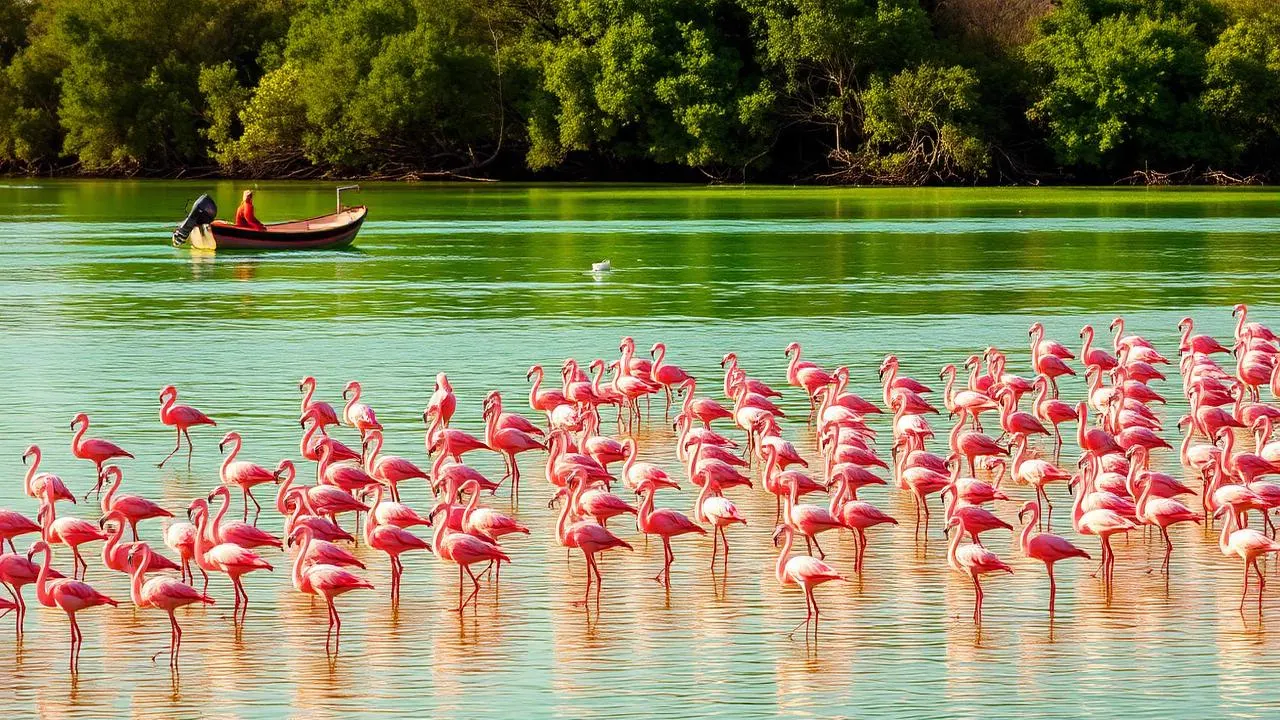
Rio Lagartos flamingos gather in the Ria Lagartos Biosphere Reserve on Yucatan's north coast, strongest from April to September and peaking May to July. A two to three hour boat circuit runs about 400 to 500 MXN per person shared, and Valladolid is the practical base 90 minutes south.
When the Flocks Are Actually There
Numbers swell after the spring rains start filling the estuary with brine shrimp, so May through July concentrates the largest groups near the nesting colonies. Winter visitors still see flamingos, but in scattered dozens rather than the massed pink lines that fill photographs.
| Season | Flamingo numbers | Conditions |
|---|---|---|
| May - July | Peak, thousands | Hot, humid, breeding colonies active |
| April & August - September | High | Warm, occasional afternoon storms |
| October - November | Moderate | Cooler, post-hurricane season clarity |
| December - March | Low, scattered | Best weather, fewest birds |
Ethical Viewing the Guides Enforce
Licensed boatmen cut engines at about 50 metres and drift, because a startled flock burns energy it needs for breeding. Chasing birds for a closer frame is a reportable offence inside the reserve, so bring a zoom lens rather than expecting the boat to close the distance.
What the Boat Circuit Includes Beyond Flamingos
The standard circuit adds crocodiles in the mangrove channels, a Maya mud bath stop where guides coat you in mineral clay, and a freshwater spring where the estuary meets the aquifer. Over 400 bird species use the reserve, including roseate spoonbills, pelicans and frigatebirds.
The salt flats at Las Coloradas, 20 minutes east, are a separate paid stop rather than part of the boat trip. They photograph well but hold no wildlife, so treat them as an add-on the way the swimming stops work in the Cenote Ik Kil guide.
Building the Trip Around a Chichen Itza Day
Boat departures work best at 07:00, which rules out driving up from Cancun the same morning. Sleeping in Valladolid solves it, and the town itself is covered in the Valladolid Mexico guide, with an in-town swim at Cenote Zaci for the afternoon you return.
Pairing Wildlife With Ruins
The classic three-day loop runs Chichen Itza, then Ek Balam and a cenote, then flamingos on the coast. The second day is set out in the Ek Balam guide, and the driving times that make or break the loop are in the how far is Chichen Itza from Cancun guide.
Rio Lagartos is a self-drive or local-cooperative trip; the ruins are where a guide changes the day. Our Chichen Itza and Ek Balam tour covers the northern route with a certified INAH guide, and the Chichen Itza tours hub compares formats, including the early Chichen Itza sunrise tour that frees an afternoon for the coast.
Continue reading
Related guides with the same travel intent.
Frequently Asked Questions
When is the best time to see flamingos at Rio Lagartos?
April to September holds the largest flocks, peaking between May and July when thousands gather to breed at nearby Ria Lagartos nesting grounds. Birds are present year round in smaller numbers, and early morning gives the calmest water and best light.
How much does a Rio Lagartos boat tour cost?
Expect roughly 1,500 to 2,500 MXN for a private boat carrying up to six people, for a two to three hour circuit. Joining a shared departure at the malecon costs about 400 to 500 MXN per person, plus a small reserve conservation fee.
Can you swim at Las Coloradas pink lake?
No. Swimming has been banned since 2016 because the ponds are an active industrial salt works with extreme salinity. You can walk a designated viewing path for about 300 MXN, but the water itself is fenced off and patrolled.
How far is Rio Lagartos from Chichen Itza?
Rio Lagartos sits about 130 kilometres north of Chichen Itza, roughly two hours by car through Tizimin. From Valladolid it is 100 kilometres and 90 minutes, which makes Valladolid the practical overnight base for an early boat departure.
Why are the flamingos pink?
Their colour comes from carotenoid pigments in the brine shrimp and algae they filter from the shallows. Ria Lagartos produces unusually rich feeding, which is why Yucatan flamingos show a deeper coral pink than populations in the Caribbean islands.
Is a Rio Lagartos trip suitable for children?
Yes, with planning. Boats are stable open pangas with life jackets, and the circuit lasts two to three hours with no shade. Bring hats, long sleeves and water, and choose a 07:00 departure so the trip ends before the heat peaks.