
Tulum Ruins: The 2026 Complete Visitor Guide

The 2026 local's guide to the Tulum ruins, Mayan history of Zamá, the four temples you must see (El Castillo, Frescoes, Descending God, Wind God), real 2026 Jaguar National Park dual-fee (INAH + CONANP) in pesos, opening hours, tickets, beach access status, climb and swim rules, how to get from Tulum, Cancun, Playa and Cozumel, honest Tulum-vs-Chichen-Itza verdict.
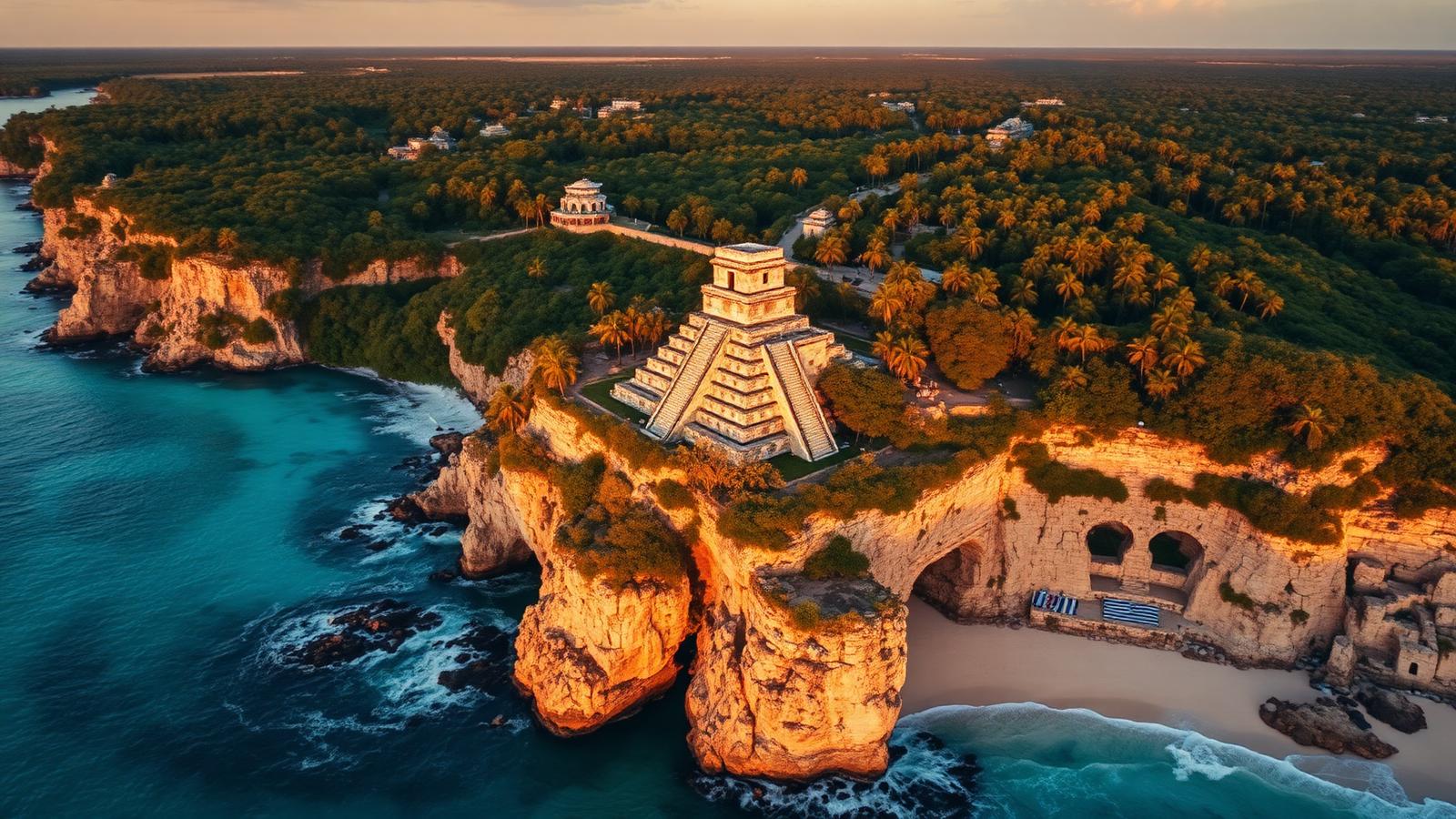
The Tulum ruins are the walled Mayan port city of Zamá, built between 1200 and 1521 CE on a limestone cliff 12 metres above the Caribbean, the only major Maya archaeological zone on the Mexican coast. This 2026 guide is the version an operator working the Riviera Maya would give you: the four temples that matter (El Castillo, Frescoes, Descending God, Wind God), the exact Parque del Jaguar dual-fee in pesos, opening hours down to the minute, ticket workarounds, beach access status this year, how to arrive from Tulum town, Cancun, Playa del Carmen, Cozumel and the new Tulum airport (TQO), climb and swim rules, and an honest verdict on how Tulum compares to Chichen Itza. Every price, hour and rule was cross-checked with current INAH, CONANP and Parque del Jaguar sources before publication.
Tulum Ruins Quick Facts: The 2026 Answer at a Glance
Tulum ruins entrance fee 2026: 100 MXN INAH ticket + 259 MXN Parque del Jaguar bracelet through the main gate, or 100 MXN INAH-only through the Playa Pescadores beach path. Tulum ruins hours: daily 8:00 AM–5:00 PM (last entry 3:30 PM). Best time: 8:00 AM sharp. Time needed inside: 90 minutes. Climbing: prohibited on every structure since 2008. Cost per foreign adult through the main entrance: 359 MXN, about $19.50 USD. Beach access from inside the site (Playa Ruinas): intermittent, open in most 2026 checks, subject to cliff-erosion closures. Location: 4.5 km north of Tulum Pueblo on Highway 307, 130 km south of Cancun airport, 65 km south of Playa del Carmen.
Where Are the Tulum Ruins Located?
The Tulum ruins sit on the eastern coast of the Yucatan Peninsula in the state of Quintana Roo, on a limestone cliff facing the Caribbean Sea. The site sits at 20.2143° N, 87.4292° W, 4.5 km north of Tulum Pueblo (the working town), 65 km south of Playa del Carmen, 130 km south of Cancun International Airport, and 45 km north of the new Tulum International Airport (TQO). The archaeological zone is now inside Parque del Jaguar, the 2,249-hectare national park CONANP created around it in 2024. The main entrance and parking lot is on Highway 307 at kilometre 230, marked 'Zona Arqueológica de Tulum – Parque del Jaguar', you cannot miss it, there are always Federal Police at the turn.
Tulum Mayan Ruins History: From Zamá to Spanish Contact
The Tulum mayan ruins were called Zamá, 'place of the dawn', because the cliff faces due east and the sunrise breaks directly over the Caribbean straight into the temple doorways. The name 'Tulum' means 'wall' or 'fence' in Yucatec Maya and was applied only after abandonment, referring to the stone wall on three sides of the city. Occupation of the site began as early as the sixth century CE (a stela inside the site carries a Long Count date of 564 CE), but the city visible today is Late Postclassic, most stone architecture is dated between 1200 and 1450 CE. At its peak the walled area held perhaps 1,600 residents, with a much larger farming population outside the wall.
Tulum was a coastal trading port, the Maya moved obsidian from Guatemala, cacao from Tabasco, salt from the north Yucatan and cotton from central Mexico along this coast in seagoing dugout canoes, and Tulum was the customs stop. It is one of the very few Maya cities we know was still occupied at Spanish contact. In 1518 Juan de Grijalva's expedition sailed past the cliff and his chronicler Juan Díaz wrote that the city looked 'as large as Seville,' complete with a tall tower, El Castillo, still visible from the sea. The city held out for another eighty years but had been abandoned by roughly 1600, likely from imported European disease rather than direct conquest.
The Tulum ruins are one node in a much larger post-classic Maya story. For the civilization-scale context of how the northern Yucatan developed, the shift from Chichen Itza's Terminal Classic collapse (roughly 1000 CE) to the rise of coastal cities like Tulum, the deeper narrative sits in the Chichen Itza Maya history, which covers the same 1,500-year timeline from the other end.
Why the Maya Built Tulum on a Cliff
Tulum is the only walled Maya city on the Caribbean coast and the placement was deliberate: cliff on the east, 3.5-metre stone wall on the north, west and south, and two watchtowers built into the wall corners. Two motives are archaeologically supported. First, defence, by 1200 CE the coast was contested by rival Maya polities and the wall plus cliff reduced attack surfaces. Second, navigation, the reef running parallel to the Riviera Maya has exactly one natural gap opposite the Tulum cliff, and El Castillo functioned as a lighthouse. Two windows in the top chamber were fitted with torches at night; when a canoe pilot could see both flames stacked vertically, he was aligned with the reef gap and could safely enter the shallow water below.
Tulum Archaeological Site Layout: What You'll Actually Walk
The Tulum archaeological site is compact, a single 900-metre loop trail marked with numbered plaques and gravel underfoot. From the current entrance on the west side, the trail runs clockwise past the House of the Cenote (Structure 35), the House of Columns, the Temple of the Descending God, El Castillo (the flagship on the cliff), the Temple of the Frescoes, the small stelae plaza and back to the exit. Elevation change is negligible, benches are placed roughly every 200 metres, and the whole circuit is stroller-accessible on the compacted gravel but not wheelchair-friendly on the final cliff-edge section. Signage is minimal, 60-word Spanish plaques with English translation and a date range, so pick up the free CONANP app map at the visitor centre before you start.
El Castillo: The Main Tulum Pyramid
El Castillo is the largest tulum pyramid and the reason the postcard exists. Built in three stages between roughly 1200 and 1450 CE, the structure stands 7.5 metres tall on a 12-metre cliff, making the sea-level height about 19 metres. It faces east and the summit chamber has two doorways with a central column carved as the Descending God, the same figure that gives the neighbouring temple its name. Function was dual: an active ceremonial temple during the day and a coastal lighthouse at night, using the two window torches described above. Since 2008 climbing is prohibited; the viewing rope is two metres from the base and the best photograph is from the north-side low wall, not the front.
El Castillo at Tulum is a different structure from Chichen Itza's El Castillo, locals often use the same name for both, which confuses many visitors. Chichen Itza's El Castillo (also called the Kukulcan Pyramid) is 30 metres tall and four times larger, and its geometry encodes the Maya calendar. The two are best understood side by side in the Kukulcán pyramid, which explains why Chichen's is one of the New 7 Wonders and Tulum's is not.
Temple of the Frescoes: The Painted Interior
The Temple of the Frescoes is the second-most-important structure at the site and, for many art historians, the most interesting. Built between 1200 and 1450 CE in three superimposed layers, its interior chamber preserves painted murals in blue, red and black depicting Maya deities including Chak (the rain god), Ixchel (the moon and childbirth) and the Descending God, plus astronomical iconography linked to Venus. The colours have faded but you can see clear figures from the viewing platform behind the rope; a small flashlight held sideways picks up details the naked eye misses. The exterior corners carry the finest carved masks in the site, a stylised face of Itzamná, the Maya creator god.
Temple of the Descending God: The Bee-God Iconography
The Temple of the Descending God, immediately north of El Castillo, is small, a single-room shrine on a low platform, but it carries the most-photographed carving at Tulum. Above the doorway, a stone figure hangs upside down with arms folded and legs raised, feathers on the head, called the Descending God (Dios Descendente in Spanish). Debate continues: some archaeologists read it as the setting sun, others as the Maya bee god Ah-Muzen-Cab (which would fit Tulum's position on Melipona-bee honey trade routes), still others as a stylised god descending from the sky at ritual moments. Whatever the identity, the same figure appears on El Castillo, the Frescoes, and at other Postclassic east-coast sites, a signature motif of late Maya coastal art.
Temple of the Wind God: The Hurricane Warning System
At the north end of the site, on a small circular platform right at the cliff edge, stands the Temple of the Wind God (Templo del Dios del Viento). It is the only round-plan Maya temple at Tulum and one of the very few round temples anywhere on the peninsula. The wind god Kukulkán (in his Ehécatl aspect) was thought to bring both trade winds and hurricanes, and the temple's alignment with the coast plus a small stone whistle-hole in the chamber wall has led some researchers to propose it functioned as an early hurricane warning system, when the wind shifted to a specific angle from the east, air rushing through the hole produced a whistling tone that could be heard across the walled city. Whether or not that is proven, the temple's location, the highest wind-exposed point of the cliff, makes the interpretation plausible.
Tulum Ruins Entrance Fee 2026: The Jaguar Park Dual-Fee Explained
The 2026 tulum ruins entrance fee is the single most confused topic online because the site changed access twice since 2023. Here is the actual structure in effect right now: two separate agencies charge two separate fees. INAH (the National Institute of Anthropology and History) charges 100 MXN for the archaeological ticket, this is required no matter how you enter. CONANP (the National Commission of Natural Protected Areas) charges an additional 259 MXN for the Parque del Jaguar bracelet if you enter through the main visitor centre. Total through the main gate for a foreign adult in 2026: 359 MXN, roughly $19.50 USD. Mexicans on Sunday enter INAH free but still pay CONANP; children under 13 are free everywhere; teachers, students with valid Mexican ID and INAPAM seniors get INAH free but pay CONANP.
| Visitor category | INAH fee | CONANP fee | Total (MXN) | Total (USD) |
|---|---|---|---|---|
| Foreign adult, main gate | 100 MXN | 259 MXN | 359 MXN | ~$19.50 |
| Foreign adult, Playa Pescadores | 100 MXN | 0 | 100 MXN | ~$5.50 |
| Mexican adult, Sunday, main gate | 0 | 259 MXN | 259 MXN | ~$14 |
| Mexican adult, weekday, main gate | 100 MXN | 259 MXN | 359 MXN | ~$19.50 |
| Child under 13 | 0 | 0 | 0 | free |
| INAPAM senior (65+ Mexican) | 0 | 259 MXN | 259 MXN | ~$14 |
Bring pesos in cash. Card readers at the CONANP kiosk fail routinely, reports on Reddit and TripAdvisor put reader downtime around 30 percent in 2025 and 2026. The nearest reliable ATM is at the Chedraui or OXXO in Tulum Pueblo, 4.5 km back down Highway 307; the ATM at the visitor centre charges a 60-MXN foreign-card fee. There is no combined ticket, you pay INAH first, walk to the CONANP kiosk, then walk to the shuttle or trail.
Tulum Ruins Hours + Best Time to Visit
Tulum ruins hours are consistent year-round: 8:00 AM to 5:00 PM every day, with last entry at 3:30 PM and the site cleared by 5:00 PM sharp. The Parque del Jaguar visitor centre opens at 7:30 AM so you can queue for the 8:00 AM ticket window. Christmas Day and New Year's Day remain open with normal hours. The best time to visit is the first 90 minutes, 8:00 to 9:30 AM, because Cancun day-trip coaches do not arrive until roughly 10:30 AM, the temperature is 24–27 °C rather than the 34 °C midday peak, and the eastern sun angle makes El Castillo photograph well. The worst window is 11:00 AM to 1:00 PM: 3,000-plus visitors, no shade on most of the trail, and hard overhead light.
Tulum Ruins Tickets: Where to Buy and How to Skip the Line
Tulum ruins tickets are sold in person at the Parque del Jaguar visitor centre and, for INAH only, at the Playa Pescadores entry booth. There is no official online pre-sale, any site selling 'skip-the-line Tulum ruins tickets' is a third-party reseller charging a $10–25 USD markup for the same 100/259 MXN paid at the kiosk. The real time-saving move is the arrival window: reach the visitor centre at 7:45 AM before the queue forms and both tickets take four minutes total. Arriving at 10:00 AM the same purchase takes 25–40 minutes. Groups of more than eight can pre-book the CONANP portion in advance through the Parque del Jaguar site (limited slots) which skips the second queue but not the first.
How to Get to the Tulum Ruins
Getting to the Tulum ruins depends on where you sleep. From Tulum Pueblo (4.5 km south) a colectivo van from Avenida Tulum is 20 MXN, a taxi is 120–180 MXN, a rented bike is a 40-minute paved-shoulder ride. From the Tulum beach zone, taxi is 250–400 MXN depending on the hotel and there is no bus. From Playa del Carmen (65 km north) an ADO first-class bus is 118 MXN and drops at Tulum ADO, then colectivo to the ruins; a rental car with the Playa del Carmen–Tulum toll (240 MXN) is 55 minutes. From Cancun (130 km) an ADO to Tulum is 258 MXN and 2 hours 30 minutes; a private shuttle door-to-door is $110–160 USD for up to eight.
Two 2026 options did not exist five years ago. The Tren Maya line 5 station in Tulum opened December 2023 and connects Cancun airport to Tulum in 1 hour 55 minutes for 388 MXN economy, the Tren Maya station is a further 8 km from the ruins so add a 300-MXN taxi. The Tulum International Airport (TQO, Felipe Carrillo Puerto), open since March 2024, has direct flights from six US cities and most Mexican hubs; from TQO the ruins are 45 km north via Highway 307, roughly 45 minutes by taxi at 900 MXN. For visitors combining Tulum ruins with Chichen Itza on the same trip, the whole logistics chain is covered in the sister guide.
The full drive-time and route breakdown for combining Tulum with Chichen Itza on a single day sits in how far is Chichen Itza from Tulum, including whether to overnight in Valladolid, which highways to take and the honest window for pulling both off in one loop.
Tulum Ruins Tour vs Self-Guided: Honest Verdict
A guided tulum ruins tour and a self-guided visit deliver noticeably different experiences. A guided tour ($65–110 USD per person from Tulum, $110–160 USD from Playa or Cancun) usually includes hotel pickup, both tickets, a licensed archaeologist-guide (INAH-certified) for 60–75 minutes inside the site, and a cenote stop afterwards. Self-guided is 359 MXN plus transport, at your own pace, no context beyond the placards. The honest recommendation: if this is your first Maya site, take a guided tour for context, the murals of the Frescoes and the iconography of the Descending God mean far more when a Maya-history-trained guide unpacks them. If you have already visited Chichen Itza or Uxmal with a guide, self-guided Tulum is enough.
Can You Climb, Swim, Drone? Tulum Ruins Rules 2026
Climbing any structure at Tulum has been prohibited by INAH since 2008, viewing rope two metres from the base, guards enforce. Drones are prohibited without a permit, a Federal Government permit from INAH plus separate CONANP clearance for the national park; walk-in drone use is confiscated. Tripods larger than 30 cm require the same 60-MXN professional-photo permit as any INAH site. Food and drink other than sealed water are prohibited inside the walls. Pets are prohibited except registered service animals. Cigarettes are prohibited on all trails inside the park. Swimming from the beach below (Playa Ruinas) is allowed when the stairway is open, status varies month to month, so check on arrival.
Tulum Ruins Beach: Playa Ruinas Access Status 2026
Tulum ruins beach, the small cove directly below El Castillo, officially Playa Ruinas, is one of the most photographed swim spots on the Riviera Maya but access has been intermittent since 2022. The wooden stairway from inside the archaeological zone was closed for cliff-erosion works from May 2022 to October 2023, reopened, closed again for high-season overcrowding in early 2024, and has been open in most 2025 and 2026 checks with a soft daily cap of roughly 500 swimmers. When open, the beach is small (60 metres of white sand), free of the archaeological ticket, sargassum-affected May through August like the rest of the Tulum coast, and closes to swimmers at 4:30 PM. If the stairway is closed on the day of your visit, walk 500 metres south on Highway 307 to Playa Pescadores for public beach access with the same views back up at El Castillo.
How Long to Spend + Suggested Itinerary
Ninety minutes inside the walls is the tulum ruins sweet spot. Below that the visit feels rushed; above that you have seen the entire site twice. The full trip from a Tulum hotel, including the drive, ticket queue, walk in from the visitor centre, temple loop and photo time, takes 3.5 hours. A workable morning itinerary looks like this. 7:30 AM leave hotel. 7:50 AM park at Parque del Jaguar visitor centre. 7:55 AM buy both tickets. 8:00 AM enter the site. 8:00 to 9:30 AM full loop. 9:30 to 10:15 AM swim at Playa Ruinas if stairway is open, or Playa Pescadores if not. 10:30 AM leave for the next stop, Gran Cenote on the Coba road 8 km away is the classic pairing, followed by an early Tulum-pueblo lunch.
Tulum Ruins vs Chichen Itza: Which Is Actually Worth It?
This is the single most-asked comparison in the Riviera Maya and the honest answer is: they are not substitutes, they are companions. Tulum is small, coastal, photogenic and 90 minutes in, a 60-structure walled port city with El Castillo standing 7.5 metres above a Caribbean cliff, one dry inner-wall cenote, and no climbable structures. Chichen Itza is huge, inland, a New 7 Wonder of the World, and needs a full day; its scale, monument count and Sacred Cenote sit in their own guides, do not shop those specs against Tulum here. What is safe to say from the Tulum side: Tulum is where you go for the postcard and the two-hour visit; Chichen Itza is where you go for the monument and the full-day experience. If your trip only allows one Maya site and you are already in the Riviera Maya, we run a same-day loop that pairs both.
The full same-day route from Tulum to Chichen Itza, pickup times, cenote pairings, lunch stop in Valladolid and honest crowd windows, is the specialty of our Chichen Itza tour from Tulum, which is why most visitors who ask this question end up doing both on separate mornings rather than choosing.
If the choice-between question is real and you can only fit one, the honest verdict on the bigger site, with tour cost, day-trip logistics and worth-it framework, sits in is Chichen Itza worth it. Tulum is the postcard; Chichen Itza is the monument.
Persona Picks: Cruisers, Families, Seniors, Photographers
Cruise passengers from Cozumel
Doable but tight. Ferry Cozumel to Playa del Carmen (35 min, 380 MXN) plus taxi Playa to Tulum (65 km, 900 MXN one way or 250 MXN by ADO) puts you at the ruins by 10:00 AM if the ferry leaves at 8:00. Return the same way for a 3:00 PM ship reboarding. A private van from the Cozumel ferry is $220–320 USD round trip for up to six and pays back in stress reduction. If your ship day is short, San Gervasio on Cozumel is a viable smaller ruin closer to port.
Families with kids
Excellent for elementary-age kids, less good for toddlers. The 900-metre loop is flat and stroller-tolerant on gravel; there are benches every 200 metres, one shaded rest area near the House of Columns, and no water inside the walls (bring sealed bottles). Kids under 13 enter free. The 25-minute walk from the visitor centre is the hardest part, take the free electric buggy both ways. Playa Ruinas below the cliff is the reward if open. Cenote Gran Cenote on the Coba road pairs well as an afternoon activity for families.
Seniors and reduced mobility
Manageable with planning. The main circuit gravel is compact but not smooth; a rollator handles it, a wheelchair struggles at the final cliff-edge section. The free electric buggy runs 7:30 AM to 4:30 PM between visitor centre and site every 8 minutes and takes wheelchairs. Two shaded benches are within 200 metres of El Castillo. Skip the beach stairway (18-percent grade, no handrail on the lower half). If mobility is the concern, Chichen Itza is actually flatter and more chair-friendly on its main causeways.
Photographers
Best light on El Castillo is 8:00 to 9:15 AM from the north-side low wall, the eastern sunrise angle catches the temple front and the sea behind. For sunset shots of the cliff, book a Sian Ka'an biosphere boat that swings past the ruins from offshore, the site closes at 5:00 PM but the cliff view from the water at 6:30 PM golden hour is the shot most travel magazines actually publish. Drones are prohibited without a permit; the licensed permit route (INAH + CONANP) takes six weeks of paperwork and roughly $600 USD in fees. Do not fly guerilla, the airspace over the park is monitored.
What to Bring + On-Site Amenities
What to bring: 500 MXN cash minimum, printed passport photocopy (INAH occasionally checks for Sunday-free eligibility), sealed water bottle, hat with brim (no shade in most of the site), reef-safe sunscreen applied before entry (cannot apply inside, sand attracts), quick-dry towel and swimsuit under clothes if beach might be open, closed-toe walking shoes (the gravel cuts flip-flops). What you will find inside: water refill station at the visitor centre (free), restrooms at the visitor centre only (there are none inside the walls), a small snack kiosk near the exit charging 60-MXN sodas and 40-MXN cookies, a small INAH bookshop with the definitive site guidebook (180 MXN), Wi-Fi at the visitor centre but not inside. Cell signal is unreliable at the cliff edge on all Mexican carriers.
Combining Tulum Ruins with Cenotes and Nearby Sites
Tulum is the anchor of a natural half-day loop. The three most common pairings after the ruins: Gran Cenote (8 km northwest on Highway 109 to Coba, 500 MXN entry) for the shallow crystal-clear swim; Cenote Calavera (3 km, 250 MXN) for the jumping cenote; Coba archaeological zone (44 km inland, 100 MXN INAH) for the tallest climbable pyramid in Yucatan at 42 metres. Add the Sian Ka'an biosphere south of Tulum for a full afternoon of boat, mangrove and flamingo instead of a second ruin. For the honest ranking of cenotes in the Yucatan and how they compare, the deep-dive guide on the most famous of them all covers water depth, jump platforms and the whole regional context.
The deep-dive on the region's flagship cenote, one of the most photographed in Mexico and a natural pairing on any Tulum-to-Chichen-Itza day, sits in Ik Kil cenote. If you have a full week and want a broader Tulum-region plan rather than just the ruins, the planning page things to do in Tulum lays out 22 ranked activities.
Should You Book a Private Tour or Go Independent?
For the Tulum ruins alone, going independent is fine, the site is small, the trail is one loop, and pesos-cash entry is straightforward. Where a private tour pays off is when Tulum is one stop in a longer chain: Tulum ruins in the morning, cenote at 10:30 AM, Chichen Itza in the afternoon, or in the reverse for photographers who want El Castillo in the late-afternoon amber light before the 5:00 PM close. A private guide-driver removes the ADO schedule, the taxi negotiation, the sunblock-shopping stop and the ticket queue anxiety. If Tulum is your only Maya site of the trip, book independent; if it is a checkbox on a wider Yucatan week, a private day pays back.
The version that runs from anywhere in the Riviera Maya as a private, unhurried, expert-guided day at both Tulum-region cenotes and Chichen Itza is on the Chichen Itza private tour page, Itza Quest is the operator behind it, backed by 4,163 five-star reviews, and the page exists precisely because a lot of people ask this question and end up wanting both ruins in one day.
Common Mistakes at the Tulum Ruins (and How to Avoid Them)
Five mistakes we see weekly. First, arriving at 11:00 AM, the temperature is 34 °C, the buses have landed, and the queue is 40 minutes; move it to 8:00 AM. Second, buying 'skip-the-line' tickets from third-party resellers, there is no official online ticket, you overpay and still queue. Third, showing up without pesos, card readers fail 30 percent of the time and the ATM at the centre charges a 60-MXN foreign-card fee. Fourth, planning both Gran Cenote and Dos Ojos on the same morning as the ruins, the drive time between them plus changing kills the day; pick one. Fifth, walking the 25 minutes from visitor centre to site in midday sun when the free electric buggy is right there, use the buggy in and out.
Frequently Asked Questions
Every visitor question we get about the Tulum ruins is answered above in the guide. The 10 questions below repeat the most useful answers in condensed form for quick reference and are the same set our team gives over WhatsApp before a booking.
Continue reading
Related guides with the same travel intent.
Frequently Asked Questions
What are the Tulum ruins?
The Tulum ruins are a walled Mayan port city built between roughly 1200 and 1521 CE, perched on a 12-metre limestone cliff directly above the Caribbean Sea. The Maya called it Zamá, 'place of the dawn.' It is the only major Maya archaeological site in Mexico built directly on the coast and one of the last cities the Maya still inhabited when Spanish ships first sighted it in 1518. The site covers 6 hectares, includes about 60 preserved structures inside a stone wall on three sides, and now sits inside the 2,249-hectare Parque del Jaguar national park created by CONANP in 2024.
How much does it cost to visit the Tulum ruins in 2026?
The 2026 price is a dual fee. The INAH archaeological ticket is 100 MXN (about $5.50 USD). Because the ruins are now inside Parque del Jaguar, the CONANP national park bracelet is an additional 259 MXN (about $14 USD) when you enter through the main Jaguar Park visitor center. Total for a foreign adult through the main gate: 359 MXN, roughly $19.50 USD. The Playa Pescadores beach path still lets you skip the CONANP bracelet in 2026 and pay only the 100-MXN INAH ticket, a legal 259-peso saving. Mexicans on Sunday enter INAH free; kids under 13 are free everywhere; there is no card reader you can rely on, so bring pesos in cash.
What are the Tulum ruins opening hours?
The Tulum archaeological site opens 8:00 AM and last entry is 3:30 PM, with the site clearing by 5:00 PM. It opens every day of the year including Christmas and New Year's Day. The best window is 8:00 AM to 9:30 AM, the Cancun day-trip coaches do not arrive until roughly 10:30 AM, and the light on El Castillo from the east is best in the first two hours. The Parque del Jaguar visitor center opens 7:30 AM so you can queue for the 8:00 AM opening. Avoid arriving between 11:00 AM and 1:00 PM: it is the hottest hour, no shade on the trail, and 3,000-plus visitors on-site.
How long do you need at the Tulum ruins?
Ninety minutes inside the walls is the sweet spot, two hours if you photograph slowly. The whole archaeological zone is compact, the marked trail is about 900 metres, and you can see every named structure on one lap. Add 25 minutes each way if you walk from the Parque del Jaguar visitor center, or five minutes on the free electric buggy. Budget a full 3.5 hours from the moment you leave your hotel until you are back in the car, longer if you also swim at the beach below.
Can you climb the Tulum ruins?
No. Climbing any structure at Tulum has been prohibited by INAH since 2008. All temples, including El Castillo and the Temple of the Frescoes, are roped off with a viewing distance of roughly two metres. Guards enforce it and expulsion is the penalty. If you want a Maya pyramid you can still climb legally, the two options in Yucatan are the Acropolis at Ek Balam and Nohoch Mul at Coba, both within 90 minutes of Tulum.
Can you swim at the Tulum ruins beach?
Yes, the small cove below El Castillo, Playa Ruinas, is a swimmable public beach reached by a wooden stairway from inside the archaeological zone. Access has been intermittently closed and reopened since 2022 for cliff-erosion repairs; check the day of the visit. When open, the beach is small (roughly 60 metres of sand), sargassum-affected May–August, and one of the most photographed swim spots in the Yucatan when clear. Bring a swimsuit and quick-dry towel; there are no changing rooms inside the ruins.
How old are the Tulum ruins?
The oldest confirmed stone construction at Tulum dates from the sixth century CE (a stela with a Long Count date of 564 CE), but the walled city visible today was built during the Late Postclassic period, roughly 1200–1521 CE, about 800 years old at its most recent construction. Tulum was still an active settlement when Spanish explorer Juan de Grijalva sailed past it in 1518 and reportedly said it looked as large as Seville. That makes Tulum one of the very few Maya cities to have been continuously inhabited from construction until European contact.
Are the Tulum ruins worth visiting?
Yes, with realistic expectations. Tulum is worth an early morning if you are already in the Riviera Maya, the setting on the cliff above the Caribbean is unique and no photo prepares you for the colour of the water below. It is not worth flying in for; the site is small, no climbing, and the interior temples are viewed from a distance. If you have one day for one ruin from Cancun, Playa or Tulum itself, Chichen Itza delivers a bigger monument (the Kukulcan pyramid is 30 m tall vs Tulum's 7.5 m El Castillo) and a New 7 Wonder, but Tulum wins on the setting.
How do you get to the Tulum ruins from Tulum town?
From Tulum Pueblo it is 4.5 km north on Highway 307 to the Parque del Jaguar main entrance. A taxi from the ADO station is 120–180 MXN, a shared colectivo van (departing from Avenida Tulum) is 20 MXN, a rental bike from downtown is 40 minutes on a paved shoulder, and the Parque del Jaguar visitor centre has 800 marked parking spaces at 100 MXN per car. From the beach zone, a taxi is 250–400 MXN depending on which hotel you leave from.
Do you need a guide at the Tulum ruins?
Not required, but useful once. There are minimal signs at the site, the trail is well-marked but every temple has only a small placard with a name and date. A licensed INAH guide at the entrance charges 800–1,200 MXN for a group of up to eight for a 60-minute walk; a private guided tour from Tulum with transport included runs $65–110 USD per person. If you visit only one Maya site, a guide adds meaningful context. If Tulum is your third or fourth ruin, the free INAH map on the CONANP app is enough.