
Tulum Cenotes: The 2026 Complete Ranked Guide

The 2026 local's guide to the Tulum cenotes, what a cenote actually is, the four types (open, semi-open, cave, mangrove), a ranked shortlist of the seven best swimmable cenotes near Tulum with real 2026 peso prices, depths and halocline data, the enforced biodegradable-sunscreen rule and fines, how to drive or colectivo there, safe swim rules, and honest Tulum-vs-Ik-Kil comparison.
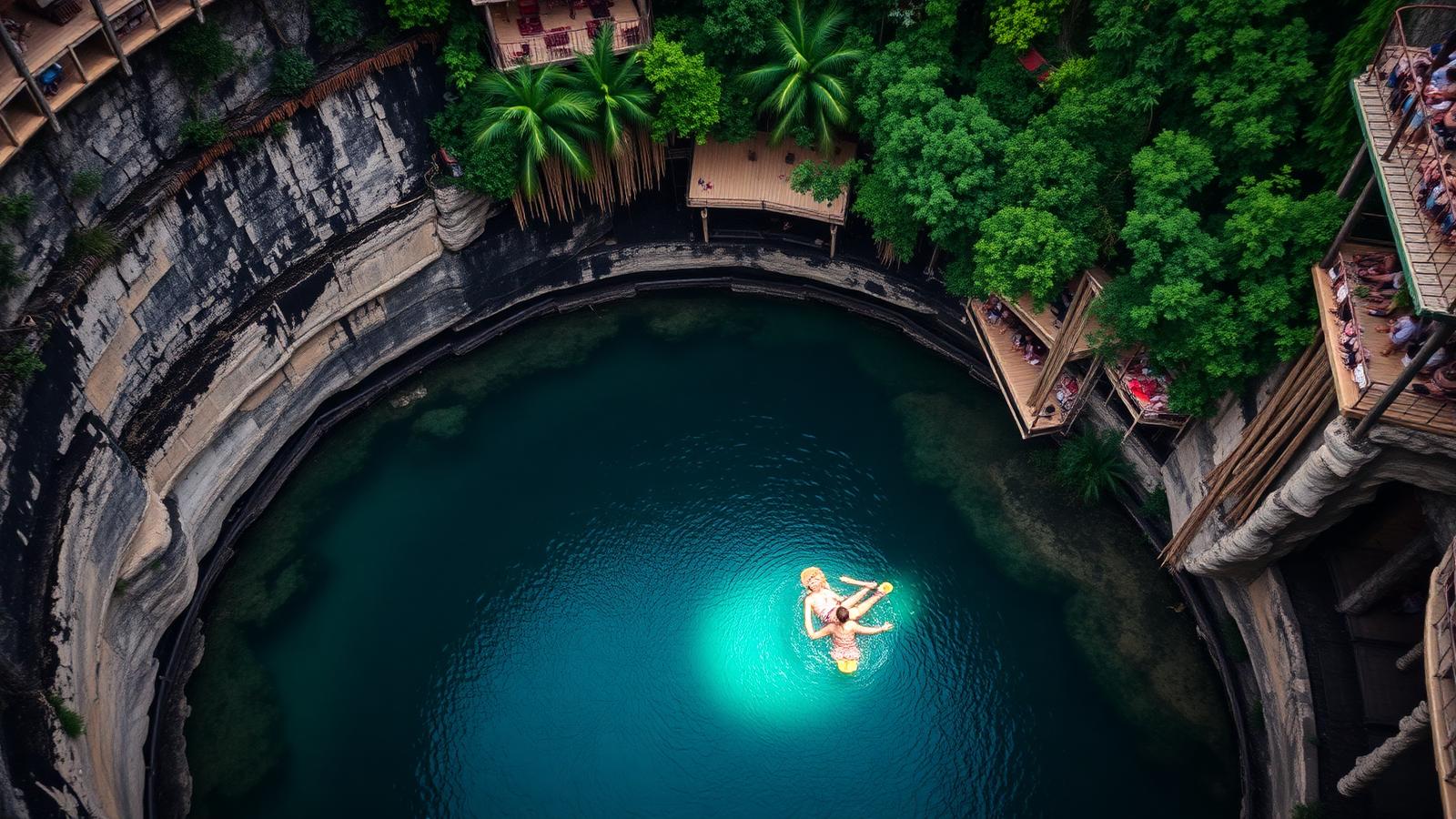
The Tulum cenotes are the freshwater sinkholes that pierce the limestone shelf inland from the Caribbean coast, feeding the world's longest underwater cave system, Sac Actun at 376 km, plus its neighbour Ox Bel Ha. This 2026 guide ranks the seven best cenotes within 25 km of Tulum town, explains the four cenote types, gives real peso prices, depths and halocline data, spells out the enforced biodegradable-sunscreen rule, and answers the questions we get on WhatsApp every week: which cenote for kids, which for divers, which for photos, and whether they beat Ik Kil near Chichen Itza. Every figure was cross-checked with the on-site kiosks and ejido operators in the last 30 days.
Tulum Cenotes Quick Facts: The 2026 Top 5 at a Glance
Best all-round Tulum cenote 2026: Gran Cenote, 500 MXN, 5–10 m deep, 4 km from Tulum on the Coba road. Best diver cenote: Dos Ojos, 350 MXN snorkel or 1,600 MXN guided cavern dive, 20 km north on Highway 307. Best jumping cenote: Calavera, 250 MXN, 3 km from Tulum. Best family cenote: Zacil-Ha, 200 MXN plus 200 MXN unlimited waterslide, 8 km on the Coba road. Best wildlife cenote: Casa Cenote, 200 MXN, mangrove, 8 km north on Highway 307. Sunscreen: reef-safe biodegradable only, 1,200 MXN fine if you enter with non-approved product. Payment: pesos in cash, most cenotes.
What Is a Cenote? Sac Actun Geology and How They Formed
A cenote is a natural freshwater sinkhole formed when the roof of an underground limestone cave collapses and exposes the groundwater beneath. The Yucatan peninsula sits on 300 metres of porous karst limestone deposited during the Cretaceous, so rainwater slowly dissolves the rock and carves out interconnected caves, the two biggest in the world, Sac Actun (376 km) and Ox Bel Ha (270 km), both run right under Tulum. Sea-level fluctuations during ice ages flooded these caves, sea-level drops emptied them, and the ceiling gave way in stages, opening the surface windows we now call cenotes. There are roughly 6,000 mapped cenotes in Yucatan and a further 3,000 in Quintana Roo alone.
Types of Cenotes in Tulum: Open, Semi-Open, Cave and Mangrove
Cenotes are classified by how far the collapse has progressed, the older the collapse, the more open the cenote. Four types cover every Tulum cenote you can visit.
Open cenotes: no ceiling remains, full sunlight, freshwater lilies on the surface, water lightly warmer at 25–26 °C. Zacil-Ha and Nicte-Ha are the local examples. Semi-open cenotes: partial ceiling with a large opening, mixed light and shade, the classic postcard shape. Gran Cenote and Calavera are the flagship semi-opens near Tulum. Cave (or cavern) cenotes: most of the roof is intact, stalactites hang overhead, natural light comes only from small holes above. Dos Ojos and Car Wash are the reference caves and the entry point to certified cavern diving. Mangrove cenotes: the geologically youngest type, connected directly to the sea through underground channels, so brackish, with visible haloclines and marine life. Casa Cenote is the Tulum classic.
Which Are the Best Cenotes in Tulum? Ranked Shortlist for 2026
The best cenotes in Tulum for a 2026 first visit ranked by all-round experience are: 1. Gran Cenote (snorkel + turtles), 2. Cenote Dos Ojos (cavern), 3. Cenote Calavera (jumping), 4. Casa Cenote (mangrove + crocodile), 5. Cenote Zacil-Ha (family + slide), 6. Cenote Car Wash (budget), 7. Cenote Nicte-Ha (photography). Each one owns a different use case, this is why we rank them by intent rather than by a single number. If you have three cenotes in your Tulum week, our recommended combination is Gran Cenote in the morning, Casa Cenote at midday for the mangrove, Calavera at 3 PM when the light beam hits the water. All three can be strung together in one day with a rental car.
Gran Cenote: The Flagship Snorkelling Cenote
Gran Cenote is the flagship Tulum cenote and the safest first-timer pick, 500 MXN entry in 2026, open 8:00 AM to 4:45 PM, located at kilometre 3.5 on Highway 109 to Coba just west of Tulum pueblo. The layout is two semi-open pools connected by a shallow swim-through under a natural stone arch. Water is 5–10 metres deep in the swim zone with 25 metres of visibility, freshwater turtles are habituated and swim past your fins, and small catfish shelter under the stone shelves. The cavern beyond the roped-off line goes to 61 metres and is a certified cavern-dive site only. Amenities include changing rooms, freshwater rinse showers, snorkel and life-jacket rental (100 MXN each), and a small kiosk for water and snacks. Arrive by 8:30 AM to beat the tour buses that begin dropping at 10:15 AM.
Cenote Dos Ojos: The Diver's Cavern System
Cenote Dos Ojos is the certified-diver's cenote and the entry point to 61 km of mapped cavern passages, 'two eyes' because it is two circular pools linked by a shallow tunnel. Entry is 350 MXN for snorkelling and swimming in 2026, or 1,600 MXN for a guided cavern dive with tanks, weights, guide and 45 minutes of underwater time (open-water certification required). The cavern connects into the Sac Actun system, holds the famous Bat Cave dome, and offers two named dive routes, the Barbie Line (easier, 200 m loop) and the Bat Cave Line (harder, 320 m loop). Snorkellers get 200 m of ceiling passage with natural skylights and can see the cavern mouth but not enter it. Located at kilometre 124 on Highway 307, 20 km north of Tulum pueblo.
Cenote Calavera: The Skull-Shaped Jumping Cenote
Cenote Calavera is the local jumping cenote, the surface opening is three holes in the limestone that from above look like the eye sockets and mouth of a skull, hence the name. Entry is 250 MXN in 2026, open 9:00 AM to 5:00 PM, and the cenote is 3 km from Tulum pueblo on the Coba road (Highway 109), a 12-minute bike ride from downtown. Water depth is 15 metres from the surface, with two wooden jump platforms at 3 and 5 metres and a rope swing above them. It is the only cenote near Tulum where jumping is officially permitted, and safety rules are enforced by an on-site attendant. There is no snorkelling around the cave, the appeal is the jump, the light beam that appears through the main skylight between noon and 1:30 PM, and the small underwater cavern for free-divers.
Casa Cenote: The Mangrove River with Crocodile Sightings
Casa Cenote is a mangrove-lined cenote river 8 km north of Tulum on Highway 307 that flows a short distance underground and emerges into the Caribbean 200 metres downstream, so the water is brackish with a visible halocline at 3 metres deep. Entry is 200 MXN in 2026, 8:00 AM to 5:00 PM. The name draws from the resident crocodile 'Panchito', a habituated 2.5-metre morelet's crocodile that has lived in the cenote since 2013 and has never bitten a swimmer, but swim beside him, not toward him, and rules ban food and flash. The cenote is 300 metres long and 3–8 metres deep, snorkel-friendly, with mangrove roots underwater that shelter mojarra, snook and juvenile tarpon. Rent a kayak (250 MXN/hour) for the full river run, or snorkel from the platform for free.
Cenote Car Wash (Aktun-Ha): The Local Budget Pick
Cenote Car Wash, officially Aktun-Ha, 'water cave' in Yucatec Maya, is the cheapest named cenote near Tulum at 100 MXN entry in 2026, so-named because taxi drivers used it to rinse cars in the 1970s. Located at kilometre 8 on Highway 109 to Coba, it is a shallow open pool (3 metres) that leads into a 15-metre cave system for cavern divers. Water lilies cover the surface in the rainy season (June to October) which produces the postcard photo but reduces visibility to 8 metres. Snorkelling is free-form, no roped lanes, no lifeguard tower, and there is a small palapa restaurant on-site with 80-MXN quesadillas. It is the pick for backpackers, the pick for a quiet afternoon after a busy morning at Gran Cenote, and it holds a resident population of small freshwater turtles.
Cenote Zacil-Ha: The Family Waterslide Cenote
Cenote Zacil-Ha is the only cenote near Tulum with a real waterslide and it is the family-first pick, 200 MXN entry 2026 plus 200 MXN unlimited slide access, 8:00 AM to 5:30 PM, at kilometre 8.5 on Highway 109 to Coba (200 metres past Car Wash). The pool is a 20-metre-wide open cenote just 3 metres deep, so kids who can swim have full run of it. A 15-metre fibreglass slide drops into the deep end, a short zipline crosses the water for 100 MXN a run, and palapa-shaded picnic tables ring the pool. On-site restaurant serves cochinita pibil, panuchos and beer. It is not the cenote for a photographer or a diver, but for a family with children ages 5 to 12 it is the highest-satisfaction stop in the Tulum area.
Cenote Nicte-Ha: The Photographer's Lily-Pad Cenote
Cenote Nicte-Ha is the photographer's cenote, an open circular cenote 350 metres from Cenote Dos Ojos on the same ejido property, entry 350 MXN in 2026 or included in a combined Dos Ojos ticket. Water depth is 10 metres, visibility hits 40 metres in dry season (November to May), and freshwater lily pads (Nymphaea ampla, the flower that gives the cenote its Maya name, 'water flower') cover 40 percent of the surface. The image most travel magazines run of a Tulum cenote, swimmer floating between lily pads with light beams cutting through, is shot here between 11:00 AM and 1:00 PM when the overhead sun lights the water. There is no cave section, minimal fish life, and one shaded palapa. Bring an underwater camera or a phone in a waterproof case.
2026 Tulum Cenote Prices Compared: The Fee Table
Every entry price cross-checked with the on-site kiosks in the last 30 days. Add 100–200 MXN for snorkel or life-jacket rental, and always carry pesos in cash, card readers work reliably only at Gran Cenote and Dos Ojos.
| Cenote | Type | 2026 fee (adult) | Depth | Distance from Tulum |
|---|---|---|---|---|
| Gran Cenote | Semi-open | 500 MXN | 5–10 m | 4 km |
| Cenote Dos Ojos | Cave | 350 MXN (dive 1,600) | 10 m / 61 m cave | 20 km |
| Cenote Calavera | Semi-open | 250 MXN | 15 m | 3 km |
| Casa Cenote | Mangrove | 200 MXN | 3–8 m | 8 km |
| Cenote Car Wash | Open + cave | 100 MXN | 3 m / 15 m cave | 8 km |
| Cenote Zacil-Ha | Open | 200 + 200 slide | 3 m | 8.5 km |
| Cenote Nicte-Ha | Open | 350 MXN | 10 m | 20 km |
Should You Book a Tulum Cenote Tour or Drive Yourself?
For the Tulum-area cenotes on their own, driving yourself with a rental car wins on cost and flexibility, 900 MXN for 24-hour compact rental plus 300 MXN fuel visits three cenotes at your pace. A group cenote tour (Viator, GetYourGuide) runs $65–95 USD per person, includes transport plus one lunch and two cenote entries, and works if you do not want to drive Highway 307 in Riviera Maya traffic. The tour trade-off is the 45-minute wait at each stop while the group regroups. If you are pairing cenotes with Chichen Itza on the same day, which is the classic Yucatan week combo, a private guide-driver is meaningfully more efficient because the drive to Chichen Itza is two hours and the timing has to line up.
How to Get to the Tulum Cenotes: Car, Colectivo, Taxi, Tren Maya
Getting to the Tulum cenotes takes four formats. Rental car is the most flexible, a compact runs 900 MXN/day at TQO or Cancun airport, all cenotes have free or 30-MXN parking. Colectivo (shared white vans) departs every 15 minutes from Avenida Tulum in the pueblo, 30–40 MXN per person, dropping at any cenote entrance on Highway 307 or Highway 109 on request. Taxi from Tulum pueblo runs 80–400 MXN one way per cenote (agree the price before entering the car, no meters). The Tren Maya opened Tulum station in December 2023 at kilometre 5 of the Coba road, 500 metres from Cenote Zacil-Ha and 3.5 km from Gran Cenote, walkable or a 30-MXN local taxi from the station.
Cenote Swimming Rules 2026: Sunscreen Ban, Gear and Halocline
Cenote swimming rules in 2026 are strict and enforced. Rule one: only biodegradable reef-safe sunscreen. Rule two: shower off any product before entering the water, every cenote has freshwater rinse stations. Rule three: no food, alcohol or glass anywhere near the water. Rule four: no diving from unmarked ledges, only from posted platforms at Calavera. Rule five: children under 12 must wear a life jacket (free at Gran Cenote, Casa Cenote, Zacil-Ha). Rule six: pass the roped-off line only if you hold cavern-diver or cave-diver certification, the halocline at 8–15 metres is where untrained swimmers get disoriented. Rule seven: no drone flying inside the cenote property without a permit. Fines are up to 1,200 MXN and refusal of entry.
How Deep Are the Cenotes in Tulum? Depth Data Per Cenote
Depths vary widely and matter for what you can do. Gran Cenote is 5–10 metres in the swim area and connects to 61 metres of cave. Dos Ojos is 10 metres in the two open eyes and links into 61 metres of mapped cavern. Calavera is 15 metres from surface to bottom, the deepest open pool for a free-diver. Casa Cenote runs 3–8 metres with the halocline at 3 metres. Car Wash surface pool is 3 metres, the cave dive drops to 15 metres. Zacil-Ha is a flat 3 metres, swimmable end to end. Nicte-Ha is 10 metres. For extreme depth the specialist cenote is Angelita, 45 minutes south of Tulum, at 60 metres with the region's most photographed halocline layer at 30 metres.
Are Tulum Cenotes Safe? Health, Wildlife and Cave-Diving Risks
Tulum cenotes are safe for swimming, snorkelling and jumping at platform-supervised sites, Quintana Roo civil-protection records fewer than one non-diving drowning per year across the entire region. The freshwater is filtered by 300 metres of limestone and tests below EPA thresholds for coliforms at every audited cenote. Wildlife is not a threat: the crocodile at Casa Cenote is habituated and has never bitten a swimmer, the fish are small, and no venomous snakes live in the cenotes. The real risk is cavern and cave diving without certification, every recorded diver fatality in the region since 2010 has been an uncertified diver crossing the cavern line. Do not cross the rope without a cavern or cave-diver card, do not free-dive under overhangs, and do not swim after alcohol.
When Is the Best Time of Day and Year to Visit a Cenote?
Best time of day is 8:00 to 10:00 AM: cenotes open at 8:00, tour buses do not arrive until 10:15, the water is undisturbed and clear, and midday sun beams appear at Nicte-Ha and Calavera between 11:00 AM and 1:30 PM if that is what you came for. Best time of year is January to April: dry season, lowest rain, highest visibility (up to 40 m at Nicte-Ha), no sargassum concern because cenotes are inland freshwater, and the water temperature stays 24–25 °C year-round so cold is never an issue. Worst window is October when hurricane rain drops visibility to 6 metres and lily-pad coverage peaks. Avoid Sundays at Gran Cenote, free-entry day for Mexicans doubles the crowd.
What to Bring (and What to Leave in the Car)
Bring: 1,000 MXN cash minimum (three cenotes at Gran Cenote prices plus snorkel rental), reef-safe biodegradable sunscreen applied and rinsed off before entry, swimsuit worn under clothes, quick-dry towel, water shoes or rubber sandals with heel strap (limestone edges cut), snorkel and mask if you own them (saves 100–200 MXN rental), a dry bag for phone and wallet, a rash guard as free UV protection. Leave in the car: any oil-based sunscreen, non-biodegradable insect spray, glass bottles, alcohol, drone without permit, and any food you are not eating in the parking lot. Locker rental at Gran Cenote and Dos Ojos is 50 MXN; smaller cenotes have no lockers, so travel light and pair up so one person watches the bags.
Tulum Cenotes vs Ik Kil: Which Belongs on Your Trip?
This is the second-most-asked question we get about cenotes, and the answer is a pairing decision, not a spec-sheet fight. Tulum-area cenotes are what you do when Tulum is your base, small, close to your hotel, cheap on average, and spread across four formats (cave, mangrove, open, jumping). Ik Kil is what you do when Chichen Itza is on the itinerary, it exists as the classic swim stop bolted onto a Chichen day, not as a stand-alone destination two hours west of Tulum. Rule of thumb: if you are staying in Tulum for a week, do three Tulum cenotes and skip Ik Kil unless you are already going to Chichen. If you are on the Chichen day trip, Ik Kil is the natural swim stop and it will not disappoint. Ik Kil's dimensions, entry fee, jumping platform and queue timing sit in its own guide, do not shop them here.
The full deep-dive on Chichen Itza's flagship cenote, depth, jumping platform, entry queue, sargassum status, sits in the Cenote Ik Kil (Pisté). For the same-day route that pairs Tulum-region cenotes with Chichen Itza on one door-to-door private day, the ask behind most of these comparison questions, the operator page is our Chichen Itza tour from Tulum.
The distance and drive-time detail from Tulum to Chichen Itza, including which cenote to pair on which route, sits in how far is Chichen Itza from Tulum. If you are still on the fence about adding the New 7 Wonder to a Tulum trip at all, the verdict framework is in is Chichen Itza worth it.
Persona Picks: Families, Divers, Photographers, Cruisers
Families with kids ages 5–12
Zacil-Ha first for the waterslide and the shallow pool, Gran Cenote second for older kids who can snorkel and want to see turtles. Skip Dos Ojos with young kids, the cavern zone and low light stress under-eights. Casa Cenote works if kids swim confidently and can handle the crocodile briefing without panic.
Certified scuba divers
Dos Ojos guided cavern dive (1,600 MXN, Bat Cave route) is the entry-level cavern experience, Angelita 45 minutes south is the technical deep dive to the 30-metre halocline. Both require open-water certification minimum, cavern certification recommended for anything past the initial roped zone. All local dive shops in Tulum pueblo can arrange either.
Photographers
Nicte-Ha at 11:00 AM to 1:00 PM for the lily-pad and light-beam shot, Cenote Calavera at 12:15 PM for the sharp overhead beam through the skull mouth, Casa Cenote at 3:00 PM for warm side-light on the mangrove. Bring a phone in a waterproof case, or a GoPro with a red filter for the halocline layer at Casa. Drones are prohibited on-site without permit.
Cruise passengers from Cozumel
Doable but tight. Ferry Cozumel to Playa del Carmen (35 min, 380 MXN) plus taxi Playa to Casa Cenote (55 km, 750 MXN) puts you at the mangrove by 10:15 AM if the ferry leaves at 8:00. Casa Cenote is the right pick for a cruise day because it is closest to Playa, does not need snorkel gear you carried through the port, and 90 minutes on-site fits a 3:00 PM ship reboarding.
Combining Tulum Cenotes with Ruins and Other Sites
The classic Tulum day is one ruin plus one cenote. Best pairings by geography: Tulum ruins (8:00 AM) + Gran Cenote (10:30 AM), 8 km apart, both on the same north-Tulum axis; Tulum ruins + Casa Cenote, same Highway 307 corridor, 5 km apart; Coba ruins + Cenote Zacil-Ha + Cenote Car Wash, all three on Highway 109; Chichen Itza + Cenote Ik Kil, the full-day loop from any Tulum hotel. For a broader Tulum region plan than just water, the planning page covers 22 ranked activities across ruins, cenotes, beaches and Sian Ka'an.
The ruin side of the classic pairing, El Castillo of Tulum, the Jaguar Park dual fee, the beach access status, lives in the Tulum ruins. For the full 22-activity ranked list of the region across seven days, see things to do in Tulum.
A Note on the Sacred Cenote at Chichen Itza (Don't Pack a Swimsuit)
Not every cenote is for swimming. The Sacred Cenote inside the Chichen Itza archaeological zone is the ritual sinkhole, no swimming, no entry to the water, no exceptions, and we mention it here only so nobody arrives at Chichen Itza expecting a swim after reading a Tulum cenote list. Its size, ritual history, the 1904 archaeological dredging record and why the site placard reads the way it does live in the Sacred Cenote. For anything you can actually swim in, everything above this section applies.
Common Mistakes at the Tulum Cenotes (and How to Avoid Them)
Six mistakes we see weekly. First, arriving with oil-based sunscreen and being refused entry, apply reef-safe before you leave the hotel and rinse off at the entry shower. Second, planning five cenotes in one day, the drive and change time collapses; three is the workable maximum. Third, crossing the roped-off cavern line without certification because 'it looks fine', this is where every regional drowning fatality has occurred. Fourth, expecting to pay by card, bring pesos. Fifth, arriving at 11:00 AM when the tour buses land, go at 8:00. Sixth, wearing swim fins in a small cenote, banned at Nicte-Ha, Zacil-Ha and Casa Cenote surface swim; only allowed at Gran Cenote and Dos Ojos snorkel zones.
Should You Book a Private Cenote-and-Chichen-Itza Day?
For the Tulum-area cenotes on their own, drive or colectivo works. Where a private day pays back is when you want cenotes plus Chichen Itza on a single door-to-door trip, the drive to Chichen is two hours from Tulum, you want to arrive at 8:00 AM before the crowds, swim Ik Kil at 12:30 PM, lunch in Valladolid, and be back at your Tulum hotel by 6:00 PM. Doing this loop on colectivos costs more in stress than the private tour saves. The version we operate, pickup at your hotel, expert guide, two cenotes plus the New 7 Wonder, unhurried pace, is what most travellers who ask this question end up booking.
The full private-day version, pickup times, cenote pairings, expert-guide interpretation at El Castillo and honest crowd windows, is what Itza Quest runs every day, backed by 4,163 five-star reviews. The tour exists because the two-hour drive plus a big archaeological site plus a swim is exactly where a self-drive day breaks down.
Frequently Asked Questions About the Tulum Cenotes
Every visitor question we get about the Tulum cenotes is answered above. The 10 questions below repeat the most useful answers in condensed form for quick reference, the same set our operations team gives over WhatsApp before a booking.
Continue reading
Related guides with the same travel intent.
Frequently Asked Questions
What are the best cenotes in Tulum for 2026?
The five cenotes we send visitors to first are Gran Cenote for shallow crystal snorkelling, Cenote Dos Ojos for cavern diving, Cenote Calavera for jumping, Casa Cenote for mangrove and manatee sightings, and Cenote Zacil-Ha for families with a real waterslide. Gran Cenote is the safe first-timer pick, Dos Ojos the certified-diver pick, Calavera the adrenaline pick, Casa the wildlife pick, Zacil-Ha the kids pick. Every one of these sits inside a 15 km radius of Tulum town and can be reached by colectivo, taxi or rental car in under 25 minutes.
How much do Tulum cenotes cost in 2026?
Prices in 2026 run from 250 to 500 MXN per adult depending on the cenote. Gran Cenote is 500 MXN (about $27 USD), Dos Ojos is 350 MXN for snorkelling and 1,600 MXN for a guided cavern dive, Calavera is 250 MXN, Casa Cenote is 200 MXN, Car Wash is 100 MXN, Zacil-Ha is 200 MXN, Nicte-Ha is 350 MXN. Snorkel gear rental adds 100–200 MXN, life jackets are free at most, and cash in pesos is required, card readers are unreliable outside Gran Cenote and Dos Ojos.
What is the biodegradable sunscreen rule at Tulum cenotes?
Since 2022 every cenote in Quintana Roo has enforced a strict biodegradable-only sunscreen rule and by 2026 the fine for entering with non-approved sunscreen is up to 1,200 MXN plus refusal of entry. Oxybenzone, octinoxate and octocrylene destroy the freshwater ecosystem and cave-adapted species. The workable move is to shower off any sunscreen at the on-site rinse station before entering the water, or to buy a small tube of reef-safe biodegradable sunscreen at the entrance (roughly 350 MXN). Rash guards are the free workaround and every cenote allows them.
How deep are the cenotes in Tulum?
Depths vary dramatically. Gran Cenote is 5–10 metres in the swim area and drops to 61 metres in the connected cave. Dos Ojos is 10 metres in the main basin and links to 61 metres of cavern passages. Calavera goes to 15 metres from the surface with jump platforms at 3 and 5 metres. Casa Cenote is 3–8 metres, shallow mangrove. Car Wash is 15 metres. Zacil-Ha is 3 metres, the shallowest and the reason it is family-friendly. Underwater the whole region connects, Sac Actun is the world's longest underwater cave system at 376 km.
Are Tulum cenotes safe to swim in?
Yes, at supervised entry-fee cenotes with visible lifeguards and posted rope lines the swim risk is low, Quintana Roo civil-protection records fewer than one non-diving drowning per year across all cenotes combined. The real risks are cavern diving without certification (do not enter the roped-off cave zone without an INAH-recognised cave-diver card), jumping from unmarked ledges, and swimming after alcohol. Wildlife is not a threat, the crocodile at Casa Cenote is habituated, has never bitten a swimmer, and the water snakes are non-venomous.
What is the difference between an open, semi-open and cave cenote?
Cenotes form as limestone caves collapse and the ceiling gives way in stages. Open cenotes have no ceiling, full sunlight, freshwater lily pads, best for photos (Zacil-Ha, Nicte-Ha). Semi-open cenotes have partial ceiling with a large light opening, Gran Cenote and Calavera are the classic examples. Cave cenotes still have most of the roof intact, you swim under stalactites in low light (Dos Ojos, Car Wash entrances). Mangrove cenotes like Casa Cenote are geologically youngest and connect directly to the sea.
How do you get from Tulum town to the cenotes?
Cenote Calavera is 3 km by taxi (80 MXN) or bike, Gran Cenote is 4 km on Highway 109 to Coba (taxi 120 MXN, colectivo 30 MXN), Dos Ojos is 20 km north on Highway 307 (colectivo 40 MXN, taxi 400 MXN one way), Casa Cenote is 8 km north on Highway 307 (colectivo 30 MXN). Rental car for a full-day loop of three cenotes runs 900 MXN plus fuel and is the most efficient move if you are visiting more than two. Colectivo shared vans depart every 15 minutes from Avenida Tulum in the pueblo.
Which Tulum cenote is best for families with kids?
Cenote Zacil-Ha is the family-first choice, 3-metre max depth, a real fibreglass waterslide the kids can ride for 200 MXN unlimited, a small zipline over the water, palapa-shaded picnic tables, and a cenote-side restaurant serving cochinita for lunch. Second choice is Gran Cenote for older kids who can snorkel and want to see turtles in the wild. Avoid Dos Ojos and Car Wash for kids under eight, cavern zones and no shallow-end. Casa Cenote is fine for kids who can already swim, thanks to the mangrove protection.
Are the Tulum cenotes free to visit?
No, every named cenote near Tulum charges an entrance fee in 2026 ranging from 100 MXN (Car Wash) to 500 MXN (Gran Cenote). The fee covers changing rooms, lifeguards, freshwater rinse showers, palapa shade and ecosystem maintenance. Free cenotes exist further inland (Cenote Yaxbacaltún on ejido land, roughly 45 km west) but access requires 4×4 and a local guide. Any 'free' cenote you find posted on TikTok inside 20 km of Tulum was either shut by the ejido, is now paid, or is on private property with trespassing risk.
What is a halocline and will I see one in a Tulum cenote?
A halocline is the visible boundary where freshwater floats on top of denser saltwater, freshwater from rain sits above marine water that intrudes underground from the coast. In Tulum cenotes with cavern access (Dos Ojos, Casa Cenote, Angelita further south) the halocline appears as a shimmering, wavy layer at 8–15 metres deep that looks like liquid glass when you swim through it. Free divers with masks can spot the top edge from the surface at Casa Cenote. Certified cavern divers see it fully at Dos Ojos and Angelita, which has the most dramatic halocline in the peninsula at 30 metres.