
Mayan Ruins in Cozumel: The Complete 2026 Local's Guide

Complete 2026 guide to the Mayan ruins in Cozumel, San Gervasio and El Cedral explained temple by temple, pier-by-pier taxi fares, honest verdict on Cozumel pyramids, and how the island's sites compare with Tulum and Chichen Itza from a local operator with 4,163 five-star reviews.
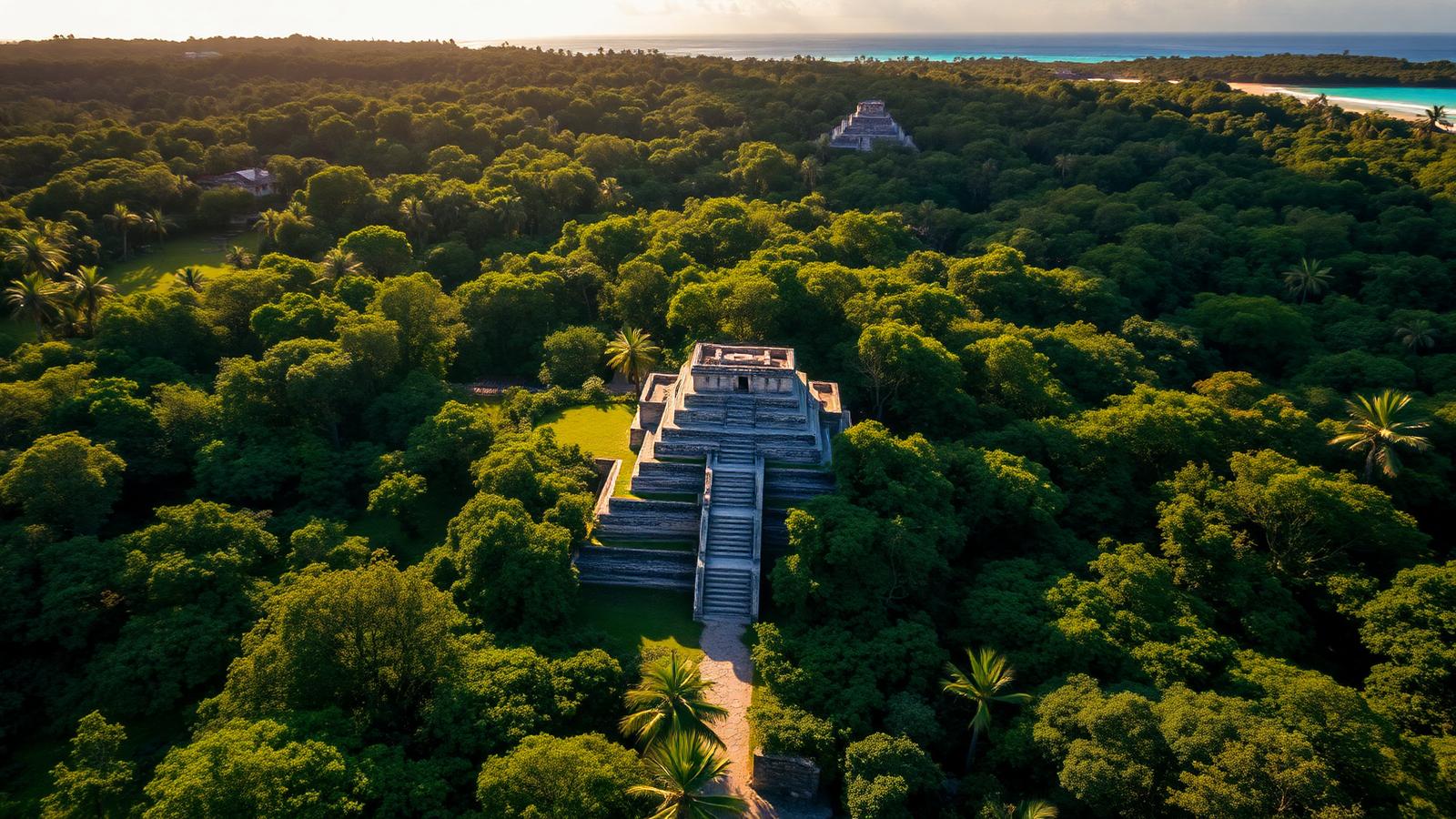
The Mayan ruins in Cozumel are smaller and quieter than the mainland's headline sites, but they carry one of the most important religious stories in the Maya world, Cozumel was the pilgrimage sanctuary of Ix Chel, goddess of fertility, medicine, weaving and the moon. This 2026 guide covers everything a visitor actually needs: the four open temples at San Gervasio structure by structure, the tiny shrine at El Cedral, 2026 entrance fees, taxi fares from each cruise pier, an honest answer to the 'are there pyramids in Cozumel?' question, and how the island's sites compare with Tulum and Chichen Itza when your time is limited. Every number is dated and cross-checked with INAH, the Cozumel taxi union rate card and current cruise-line schedules.
What Are the Mayan Ruins in Cozumel? Quick 2026 Answer
The Mayan ruins in Cozumel are two open archaeological areas, San Gervasio, a walkable pilgrimage sanctuary in the center of the island, and El Cedral, a single small shrine beside a colonial church in the south. San Gervasio is the main site, active from roughly 100 AD until Spanish contact in 1519, with about 40 registered structures and four opened to visitors. El Cedral is a 15-minute stop, mainly historical rather than archaeological. Neither has tall pyramids, Cozumel's Maya architecture is low, wide, and religiously significant rather than visually monumental.
One planning caveat up front: the island does not have a "mini Chichen Itza." If you are chasing the classic Kukulcan silhouette, you need the mainland, the logic is unpacked later in this guide and in the dedicated Kukulcán pyramid. What Cozumel does have is context: the temples here were the pilgrimage destination for Maya women from all across Yucatan, and that story gives the site a weight the stone alone will not reveal.
Cozumel's Role in the Maya World: Ix Chel and the Pilgrimage Sanctuary
Cozumel's role in the Maya world was religious, not political or commercial. From roughly 300 AD onward the island was Kuzamil (later hispanized to Cozumel), the sanctuary of Ix Chel, goddess of childbirth, fertility, medicine, weaving and the moon. Every Maya woman of childbearing age from across the Yucatan Peninsula was expected to make the pilgrimage at least once. Kings and nobles came too, canoeing across the 19 km channel from what is now Xcaret to receive oracles that Maya priests translated on the island. This is why Cozumel has many small ceremonial platforms rather than one grand royal city: it was not a capital, it was a destination.
The pilgrimage economy explains San Gervasio's layout. Instead of one dominant pyramid the site is a scatter of small shrines connected by sacbé causeways, the white raised stone paths the Maya used across the peninsula. Pilgrims arrived by canoe on the west coast, walked inland along a sacbé still visible under the jungle, and rotated through the shrines making offerings. When Chichen Itza rose to power in the northern Yucatan between 800 and 1200 AD its rulers acknowledged Cozumel's religious authority, the two sites shared the same wider Maya cosmology, and Cozumel's Ix Chel sanctuary predates most of the standing architecture at Chichen.
San Gervasio Archaeological Zone: The Only Major Site on Cozumel
San Gervasio archaeological zone is the only major open Maya site on Cozumel and the anchor of any Mayan-ruins visit to the island. It occupies about 4.5 square kilometers of jungle in the center of Cozumel, roughly 10 km east of downtown San Miguel, and was continuously inhabited from about 100 AD until the Spanish arrived in 1519, nearly 1,500 years. Around 40 structures have been registered by INAH, most of them still buried under vegetation. Four are cleared and open to the public, connected by original sacbé paths you walk on today.
The site's construction peak was during the Postclassic period between 1000 and 1500 AD, when the pilgrimage traffic peaked. This is important context: most of what you see is late Maya architecture, not the older Classic-period style found at Chichen Itza or Uxmal. The building style is smaller, plainer, and more functional. Think of San Gervasio as a religious complex rather than a city, closer in feeling to a monastery than a capital.
San Gervasio Structures Explained: Ka'na Nah, Nohoch Nah, Las Manitas, Chichan Nah
The four open structures at San Gervasio each played a specific role in the Ix Chel cult. Reading them in order along the marked path takes about 60 minutes at a normal pace, or 90 minutes with a guide. Below is what each one is and why it matters, the signage at the site is bilingual but shallow, so this section is what you would get from a licensed INAH guide.
Ka'na Nah, The 'Tall House' and Main Sanctuary
Ka'na Nah, which translates as 'tall house' in Yucatec Maya, is the largest structure at San Gervasio at about 5 meters high and 12 meters wide. It is the closest thing the site has to a pyramid. The stepped platform supported a wooden thatched sanctuary at the top where the central Ix Chel oracle statue is believed to have stood. Spanish records from Hernán Cortés's 1519 landing describe a hollow ceramic Ix Chel figure hidden inside a Cozumel temple, spoken through by a priest concealed behind it, most archaeologists identify that temple as Ka'na Nah.
Nohoch Nah, The 'Big House' Twin Chamber
Nohoch Nah, the 'big house,' sits south of Ka'na Nah and is the second-largest structure. It is a low temple with two symmetric interior chambers and preserved stucco fragments on the interior walls, one of the few places on the site where you can still see the red and blue pigment the Maya applied to sacred surfaces. The twin-chamber layout is associated with the dual nature of Ix Chel, who was worshipped as both a young fertility goddess and an old moon goddess. Peer into the chambers from the doorway; entering is not permitted.
Las Manitas, The 'Little Hands' House with Red Handprints
Las Manitas, 'the little hands', is the smallest and, for many visitors, the most memorable of the four structures. On the interior wall of its single chamber are dozens of small red handprints, believed to be the votive marks left by women who completed the Ix Chel pilgrimage. Each print was made by pressing a hand covered in red pigment against the plaster. The tradition mirrors similar handprint votive marks found in caves and temples across Mesoamerica, most famously at Actun Tunichil Muknal in Belize. Photography is allowed; flash is not.
Chichan Nah, The 'Small House' Ceremonial Platform
Chichan Nah, the 'small house,' is a low ceremonial platform at the eastern end of the visitor loop. It has no roof and no interior chamber, just a squared stone plinth about a meter high, ringed by original sacbé stone. Its purpose is disputed: some archaeologists read it as an offering platform where pilgrims left ceramics and jade, others as a dance platform tied to the fertility rites. Two intact urn burials were excavated below it in the 1970s, one containing a young woman with fertility offerings, a physical link back to the site's central purpose.
San Gervasio Entrance Fee, Hours and Practical Info (2026)
San Gervasio's entrance fee in 2026 is 122 MXN per adult (about 7 USD), payable only in Mexican pesos at the ticket booth. Children under 13 enter free. Mexican residents pay a reduced rate on Sundays with a valid ID. The optional site guide is 700 to 900 MXN for a group of up to eight, booked at the entrance kiosk. Parking, if you drive, is 60 MXN. There are no credit cards, no ATM on site, and no cell-phone reception once you enter the jungle path, pull pesos at the pier ATM before you leave.
| Item (2026) | Cost | Notes |
|---|---|---|
| Adult entry | 122 MXN (~$7 USD) | Pesos only, cash at gate |
| Child under 13 | Free | Bring ID / passport copy |
| Optional site guide | 700–900 MXN | Group of up to 8, 60–75 min |
| Parking | 60 MXN | If you self-drive |
| Video camera permit | 45 MXN | Phones free, tripods banned |
| Restrooms + potable water | Included | At entry only, none on trails |
Hours are 8:00 a.m. to 4:00 p.m. daily, last entry 3:45 p.m., no exceptions. The site closes for Mexican civic holidays (Sept 16, Nov 20) and occasionally after named-storm alerts during hurricane season, check with your hotel concierge or the INAH page the day before if you travel between June and November. Allow 60 minutes for the four structures at a brisk pace and 90 to 120 minutes with a guide and photo stops.
How to Get to San Gervasio from the Cozumel Cruise Port (Pier-by-Pier Taxi Fares)
Getting to San Gervasio from the Cozumel cruise port is straightforward, take an official yellow-and-white taxi from any of the three piers straight to the archaeological zone. There is no shuttle bus, no public transit, and no Uber (rideshare is not permitted on Cozumel). Fares are set by the municipal taxi union and printed on rate cards posted at every pier. Below are the 2026 flat fares one-way, always confirm the number against the card before you get in and never accept a per-person quote for the same ride.
| Pier | One-way to San Gervasio | Round trip w/ 90-min wait | Ride time |
|---|---|---|---|
| Puerta Maya (Carnival, RCCL) | $22 USD | $45 USD | 22 min |
| Punta Langosta (downtown) | $25 USD | $50 USD | 20 min |
| International Cruise Terminal | $25 USD | $50 USD | 22 min |
| Downtown San Miguel hotel | $18 USD | $38 USD | 18 min |
| East-side hotel (Palancar) | $28 USD | $55 USD | 25 min |
Practical tricks: ask the driver to wait 90 minutes at the site parking lot (cheaper than hiring two separate taxis and it locks in your return before the ship all-aboard); pay in pesos if you can (a driver's exchange rate is usually 5–8% worse than the pier ATM); confirm official taxi status via the union sticker on the windshield. For pier logistics, all-aboard timing and everything a cruise passenger needs before stepping off, the Cozumel cruise port has the full timeline.
El Cedral: The Oldest Village on Cozumel and Its Mayan Shrine
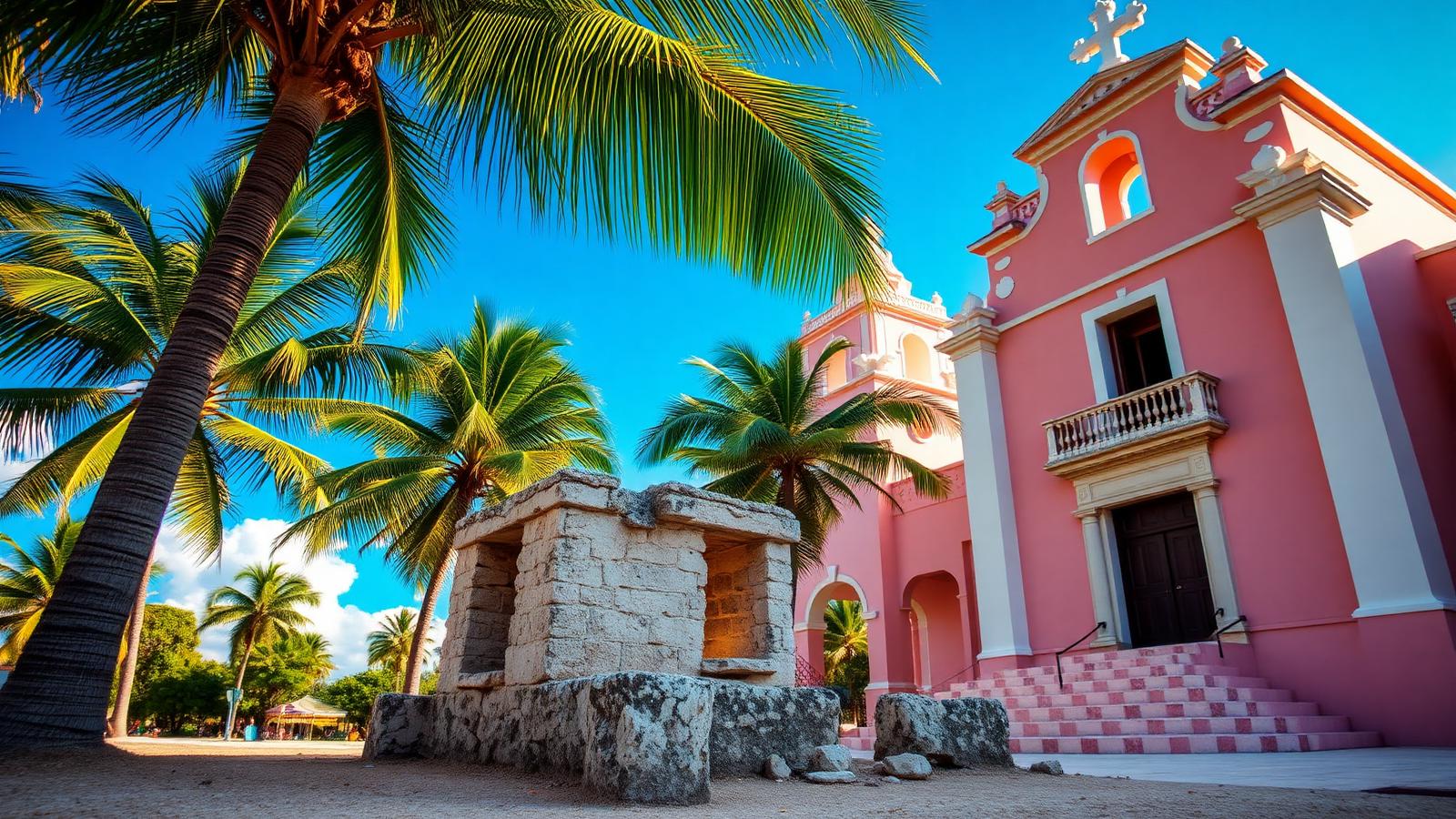
El Cedral is the oldest continuously occupied village on Cozumel and home to the island's second and only other visible Maya structure, a small shrine built around 800 AD. The village was founded by the Maya as a fishing and farming settlement, abandoned after the Spanish conquest, and re-founded in 1847 by Yucatec Maya refugees escaping the Caste War. The original shrine stands preserved beside the pink Iglesia de la Cruz colonial church at the entrance to the village square. It is roughly one meter high, plain in style, and takes 10 to 15 minutes to see.
El Cedral is worth adding to a Cozumel Mayan-ruins day if you have a car or scooter, the shrine sits 20 minutes south of downtown at the end of a well-signed spur off the coastal ring road. Entry is free. Between April 29 and May 3 each year the village hosts the Fiesta de la Santa Cruz, one of the oldest religious festivals in Mexico, with horse races, bullfights, Maya blessings and dances performed on the plaza next to the ancient shrine. If your visit overlaps those dates, prioritize El Cedral over almost anything else on the island.
Are There Pyramids in Cozumel? Honest Answer About 'Cozumel Pyramids'
No, Cozumel does not have tall stepped pyramids in the sense most travelers mean when they type 'Cozumel pyramids' into search. What Cozumel has are stepped ceremonial platforms, the tallest of which is Ka'na Nah at San Gervasio (about 5 meters high). The classic pyramid silhouette, 20 or 30 meters tall, sharp stepped sides, temple on top, belongs to mainland sites: El Castillo (24 m) at Chichen Itza, the Acropolis (32 m) at Ek Balam, the Nohoch Mul (42 m) at Coba, the Pirámide del Adivino (35 m) at Uxmal. If those are the images that put Yucatan on your bucket list, plan for the mainland; Cozumel's Maya legacy is the pilgrimage story, not the skyline.
A point that surprises many visitors: the height difference is not economic or technological. Cozumel had the engineering and the prestige to build big, pilgrims came for 1,200 years carrying jade, painted ceramics and fine textiles. The reason is theological: Ix Chel sanctuaries were built horizontal and accessible, not vertical and forbidden like the king-tomb temples. It was a deliberate Maya design choice. For the full contrast with the vertical architecture of the northern capital, the History of Chichen Itza explains how that capital built the opposite way.
Cozumel Mayan Ruins vs Mainland Yucatan Sites (Full Comparison)
If you have limited time on Cozumel, the fair question is: does San Gervasio compete with a mainland Mayan-ruins day, or is it a different category entirely? The honest answer is different category. San Gervasio is small, quick, and religiously deep. Tulum is scenic and coastal. Chichen Itza is monumental and archaeologically overwhelming. Ek Balam is compact and still climbable. The table below is what a local guide would tell you at the ticket counter.
| Site | Height / scale | Time on site | From Cozumel | Verdict |
|---|---|---|---|---|
| San Gervasio | 5 m top platform | 60–90 min | 22 min taxi | Best pilgrimage story, smallest scale |
| El Cedral | 1 m shrine | 15 min | 35 min drive | Cultural stop, not archaeology |
| Tulum | 12 m cliff temple | 1.5–2 h | 45 min ferry + 1.5 h drive | Best coastal setting |
| Chichen Itza | 24 m El Castillo | 2–3 h | 45 min ferry + 2.75 h drive | Only wonder of the world |
| Ek Balam | 32 m Acropolis (climbable) | 1.5–2 h | 45 min ferry + 3 h drive | Best if you want to climb |
| Coba | 42 m Nohoch Mul | 2 h | 45 min ferry + 2 h drive | Jungle setting, bike site |
For a mainland alternative with a still-climbable pyramid, the best plan B if San Gervasio's horizontal design underwhelms you, the Ek Balam Maya site has the logistics and what to expect from the summit.
Can You See Chichen Itza from Cozumel on a Cruise Day? The Time Math
Chichen Itza from a Cozumel cruise day is doable but only under four conditions, and the math is unforgiving. The site is 275 km one way, that is a 45-minute Ultramar ferry to Playa del Carmen plus a 2-hour 45-minute drive on Highway 305D, mirrored on the return. Total transit alone is 7 hours. Add 2 hours guided on site and a 30-minute cenote stop and you are at 9.5 hours dock to dock in a perfect scenario. Real-world buffers push realistic total to 11–13 hours.
The four conditions that must all hold: (1) ship all-aboard 6:00 p.m. or later, (2) 7:00 a.m. Ultramar ferry seat, (3) private van with return-by-ship guarantee, (4) willingness to spend 8 hours on transport for 2 hours on site. If any one fails, choose Tulum or San Gervasio. Cruise-line group excursions from Cozumel usually run the same route but on a 9:00 a.m. ferry, arrive at midday in peak sun and peak crowds, and give 90 minutes on site, you pay twice the price for half the site experience. This is why independent private operators dominate the Cozumel-to-Chichen flow.
If those four conditions do hold, the day works. Our team has run this exact route with a return-by-ship guarantee since 2019, 2026 pricing, minute-by-minute itinerary and the ferry-delay refund policy live on the Chichen Itza tour from Cozumel page. Before booking, cross-check the Chichen Itza private tour cost breakdown so you know what is included and what is not.
Tulum Ruins from Cozumel: The Middle-Ground Day Trip
Tulum ruins from Cozumel is the middle-ground option between staying on-island for San Gervasio and committing 11+ hours for Chichen Itza. The site is a cliffside walled Maya port city active from 1200 to 1521 AD, roughly 1.5 hours by van from the Playa del Carmen ferry terminal, and it delivers the scenic photo travelers actually keep, El Castillo of Tulum perched over a turquoise crescent bay with a swim beach directly below. Total round trip from a cruise pier is 7 to 8 hours, comfortable inside a 9-hour port call.
Tulum trades scale for setting. The tallest structure is 12 meters, the site is walkable in 90 minutes, and the swim beach adds another 30 to 45 minutes if you brought a suit. Downsides: midday sun on the exposed cliff is brutal (arrive at 9:00 a.m.), and the site has been crowded since about 2018, plan on 1,500 to 3,000 visitors an hour in high season. If Chichen Itza's time math does not work for your ship, Tulum is the strongest alternative on the mainland.
Cozumel Mayan Ruins Tour vs Self-Guided: 2026 Price Breakdown
A Cozumel Mayan ruins tour vs self-guided visit is a straight price-vs-time trade. Self-guided is under 100 USD for a couple all-in and takes 3 to 4 hours pier-to-pier. A local guided tour runs 90 to 150 USD per person including transport and adds cultural depth. A cruise-line shore excursion runs 150 to 200 USD per person for the same site with a 30-minute meet-and-greet and less time on the ground. Below is the honest math.
| Option | Cost per couple | Total time | Depth | Best for |
|---|---|---|---|---|
| Self-guided taxi + entry | $70–90 USD | 3.5 h | Signage only | Cost-conscious, cruise-day |
| Local guided tour (2 pax) | $180–300 USD | 4 h | INAH guide + transport | Culture buffs, families |
| Cruise-line shore excursion | $300–400 USD | 4.5 h | Group of 20–30 | First-timers who want zero planning |
| Scooter self-drive + entry | $60–80 USD | 4 h | Signage only | Confident riders under 60 |
What to Wear, Bring and Expect at San Gervasio
What to wear at San Gervasio: closed walking shoes (limestone paths are uneven and slippery when wet), moisture-wicking shirt with sleeves for sun and mosquito coverage, hat, sunglasses. What to bring: 1.5 liters of water per person, insect repellent with 30% DEET (mosquitoes on the sacbé paths are aggressive after rain), sunblock 50 SPF, cash pesos for entry and guide, phone or camera. What to leave behind: heels, flip-flops, tripods (banned), drones (banned), food (banned inside the zone). The site has restrooms and potable water only at the entrance.
What to expect physically: 1.5 to 2 km of walking on flat but uneven sacbé paths in shaded jungle, 60 to 90 minutes total, mostly under tree cover with sun exposure on the open plaza sections. The site is wheelchair-accessible on the main plaza only; the connecting jungle paths are not paved. Rain during May-October afternoons is common and short (20–30 minutes), a pop-up shower will not close the site but will slick every stone surface. Children are welcome; strollers work only on the main plaza.
Are San Gervasio Guides Worth the Fee?
A licensed INAH guide at San Gervasio costs 700 to 900 MXN for a group of up to eight and takes 60 to 75 minutes. Worth it if any of the following apply: you have any interest in Maya religion, you are visiting with children over 8, you want to understand what you are seeing beyond the sparse signage, or you speak Spanish and want the site's oral history in the original language. Skip it if: you are on a tight cruise-day clock, you are a repeat Yucatan visitor, or you have already studied the Ix Chel cult independently.
How to hire one honestly: use the guide desk inside the entrance kiosk, not any 'guide' who approaches you in the parking lot. Ask to see the INAH credential, a laminated card with a photo, name and expiry date. Certified guides are trained to a state standard and cover mythology, Postclassic architecture, and specific dig history. Uncertified touts often give recycled cruise-ship trivia and expect a tip beyond the quoted fare.
Best Time of Day and Year to Visit Cozumel's Mayan Ruins
The best time of day to visit San Gervasio is 8:00 a.m. opening or after 2:30 p.m. Morning gives cool temperatures (24–27 °C), soft east light on the limestone facades, and empty paths before the 10:30 a.m. to 1:00 p.m. cruise-day peak. Late afternoon gives a near-empty site once the cruise groups leave, plus warmer golden light on Ka'na Nah's west side. Midday visits from November to April are tolerable; midday visits from May to October are exhausting and photographically flat. The site closes at 4:00 p.m.; there is no dusk or sunset visit.
Best time of year is December through April. That is dry season on Cozumel, daytime 26–29 °C, minimal rain, low mosquito counts, and the driest sacbé paths of the year. May through October is wet season with brief but intense afternoon storms, higher humidity, and mosquito pressure that makes DEET non-optional. September and October carry the highest hurricane risk; INAH occasionally closes the site for one to three days after a named storm alert. Book flexible refundable tour rates in those months.
Cozumel Museum: The Missing Half of the Mayan Story
The Cozumel Museum (Museo de la Isla de Cozumel) on the malecón is the missing half of any Mayan-ruins visit to the island. San Gervasio shows you the stone; the museum shows you what was inside it. Three bilingual floors cover the geological formation of the island, coral reef ecology, Maya religious life at San Gervasio, and modern history through the 1974 tourism boom. Highlights: a 1:20 scale reconstruction of San Gervasio in its 1400 AD peak, real Maya bones excavated from an urn burial under Chichan Nah, and painted ceramic vessels recovered from pilgrim offerings. Entry 120 MXN, plan 60 to 75 minutes.
The ideal sequence for a visitor with 6 hours on shore: 8:00 a.m. taxi to San Gervasio, 8:30–10:00 tour with guide, 10:30 return to downtown, 11:00–12:15 museum, 12:30–14:00 lunch and malecón time, 14:30 back to the pier. To build the rest of the day around the museum, best marquesita stand, malecón monuments, Sunday plaza music, the things to do in Cozumel has more angles.
Common Mistakes at Cozumel's Mayan Ruins (What Locals See)
Common mistakes at Cozumel's Mayan ruins are almost always about expectations set by mainland photography. What locals watch tourists do wrong, in order of frequency: (1) show up expecting a mini Chichen Itza and leave disappointed at scale; (2) skip the guide and miss the entire Ix Chel story, then wonder why the stones felt anonymous; (3) arrive at 11:30 a.m. in full sun with cruise crowds and no water; (4) accept a per-person taxi fare instead of the official flat rate on the union card; (5) try to climb Ka'na Nah for a photo and get whistled at by the guard; (6) forget pesos and get turned back from the ticket booth.
One more that catches even careful travelers: assuming San Gervasio will fill a half day. It will not, 60 to 90 minutes on site, 45 minutes round trip in the taxi, plus 15 minutes at the entrance for tickets and guide setup. That is 2 to 2.5 hours end to end. Plan the rest of the day around it (beach, museum, food, downtown) rather than expecting the ruins alone to carry a full outing. If safety questions come up before you leave the ship, cartel, cruise-day walking, taxi honesty, the Cozumel safety covers current 2026 data.
Related Yucatan Sites Worth Adding to a Cozumel Trip
If San Gervasio and El Cedral leave you wanting more Maya, several mainland sites pair well with a Cozumel base. Ek Balam (3 hours from the ferry, 32-meter Acropolis still open to climb, stucco jaguar-mouth facade) is the best climb-focused day. Coba (2 hours from the ferry, 42-meter Nohoch Mul in dense jungle, bikeable site) suits travelers who want the adventurous jungle setting. Valladolid (1.5 hours from the ferry) is the colonial-era Pueblo Mágico between Cozumel and Chichen Itza, worth a lunch and overnight if you can spare it.
For cenote pairing, the natural complement to any ruins day, the Ik Kil sinkhole covers the classic swim stop next to Chichen Itza, and the Sacred Cenote (not to be confused with Ik Kil, no swimming there) gives the ritual context that pairs perfectly with the Ix Chel pilgrimage. To pick a mainland tour with less noise, the Chichen Itza tour is the filter.
Cozumel Mayan Ruins: The Bottom Line
The Mayan ruins in Cozumel are worth the visit if you understand what they are: not a mini Chichen Itza, but the most important pilgrimage sanctuary in the northern Maya world. San Gervasio in 90 minutes, El Cedral in 15, the museum in 75, and the rest of the day for reef, malecón and food, that is the formula a local recommends. If your craving is the pyramid silhouette, plan the mainland; if your craving is understanding why Maya women paddled 19 km to touch this stone, the site rewards you. Our local team at Itza Quest runs return-by-ship-guaranteed transport from Cozumel to the mainland sites, and for the island day, an official taxi, one INAH guide and this guide are all you need.
Continue reading
Related guides with the same travel intent.
Frequently Asked Questions
Are there Mayan ruins in Cozumel?
Yes. Cozumel has one major open archaeological zone, San Gervasio, in the center of the island, plus a small Mayan shrine at El Cedral in the south. San Gervasio was the sanctuary of Ix Chel, the Maya goddess of fertility, medicine, weaving and the moon. It has around 40 registered structures, four of them open to the public, Ka'na Nah, Nohoch Nah, Las Manitas and Chichan Nah, connected by original sacbé white-stone causeways. Entrance is 122 MXN in 2026 and a full visit takes 60 to 90 minutes.
Are there pyramids in Cozumel like at Chichen Itza?
No. Cozumel has stepped ceremonial platforms, not the tall stepped pyramids Chichen Itza is famous for. The tallest structure at San Gervasio, Ka'na Nah, is roughly 5 meters high, a low, wide sanctuary. El Castillo at Chichen Itza is 24 meters. If your bucket-list image is the classic Kukulcan silhouette, you will not find it on Cozumel and you should plan a day trip to Chichen Itza or Ek Balam instead. Cozumel's Maya heritage matters for its religious significance, not for pyramid scale.
How much is the entrance fee to San Gervasio in 2026?
The San Gervasio entrance fee in 2026 is 122 MXN (about 7 USD) per adult, paid in pesos at the ticket booth. Mexican residents pay a reduced rate on Sundays, and children under 13 enter free. An optional site guide costs 700 to 900 MXN for a group of up to eight visitors and is booked at the entrance. Parking is 60 MXN if you drive. No credit cards, bring cash from the pier ATM or from your hotel.
How do I get from the cruise port to the Cozumel Mayan ruins?
Take an official yellow-and-white taxi from any of Cozumel's three cruise piers directly to San Gervasio. The 2026 flat fare is 22 to 25 USD one way from Puerta Maya, Punta Langosta or the International Cruise Terminal, always confirm the fare from the printed rate card at the pier before you get in. Ride time is 20 to 25 minutes. Ask the driver to wait at the site for 90 minutes (add 20 to 25 USD for the wait) or arrange a return taxi from the ticket booth. There is no Uber in Cozumel and no public bus to the ruins.
Can I do Chichen Itza as a day trip from Cozumel?
Yes, but only under strict conditions. You need a ship all-aboard time of 6:00 p.m. or later, the 7:00 a.m. Ultramar ferry to Playa del Carmen, a private tour with a return-by-ship guarantee, and the willingness to spend around 8 hours on transport for 2 hours on site. Total round trip is 11 to 13 hours dock to dock. If any of those conditions fails, choose Tulum, San Gervasio or a west-side beach club instead, missing the ship is expensive and not covered by cruise-line insurance for independent excursions.
Do I need a guide at San Gervasio?
Not required, but recommended. The site has bilingual signage at each structure, so a self-guided walk works. A licensed INAH guide (700 to 900 MXN for a group of up to eight, 60 to 75 minutes) adds the pilgrimage context, the Ix Chel mythology, and specific archaeological details that transform four low stone platforms from anonymous to unforgettable. If you have any interest in Maya religion or you are visiting with kids, book the guide. If you are pressed for time on a cruise day, the signage alone is enough.
What is the best time of day to visit San Gervasio?
Arrive at opening (8:00 a.m., closing 3:45 p.m. last entry) or after 2:30 p.m. Morning gives cool weather, the best light on the limestone, and empty paths before cruise-day traffic peaks between 10:30 a.m. and 1:00 p.m. Late afternoon gives soft light and near-empty conditions after the cruise groups have gone. Skip midday, direct sun on open plazas plus 32 °C (90 °F) makes a short visit exhausting. The site closes at 4:00 p.m. year-round; there is no evening or sunset visit.
Is San Gervasio worth visiting compared to Tulum and Chichen Itza?
Yes if you are staying on Cozumel, no if you have a full day and a mainland option. San Gervasio is the smallest of the three sites and the least visually dramatic, four low structures on jungle paths, one hour of walking. Tulum has the cliffside setting and the beach below. Chichen Itza has the wonder of the world and Kukulcan's serpent. Order of visual impact: Chichen > Tulum > San Gervasio. Order of accessibility from Cozumel: San Gervasio (22 min taxi) > Tulum (7–8 h round trip) > Chichen Itza (11–13 h round trip). Match to your day.
Are the Cozumel Mayan ruins safe to visit?
Yes. San Gervasio and El Cedral are inside INAH-managed archaeological zones with controlled entry, on-site staff and no reported crime against tourists in 2026. The realistic risks are heat, sun exposure, mosquitoes on the sacbé paths, and a slippery limestone floor after rain. Bring water, insect repellent with DEET, closed shoes and a hat. Cozumel itself has US State Department Level 2 status (Exercise Increased Caution), the same tier as France or Germany.
Can I climb the ruins at San Gervasio?
No. INAH prohibits climbing on all four open structures at San Gervasio to protect the 1,500-year-old limestone. You can walk around each temple at ground level and see the interior chambers from the doorway. If climbing is important to your Maya day, book a trip to Ek Balam near Valladolid, the 32-meter Acropolis pyramid there is one of the last major climbable Maya structures in Yucatan, and it pairs well with Chichen Itza or a Valladolid overnight.