
Is Cancun Safe? The Honest 2026 Safety Guide for Tourists

Is Cancun safe in 2026? A local operator answers the hard questions: cartels, US/Canada/UK travel advisories, Hotel Zone vs Downtown safety, 8 tourist scams with real peso prices, and safety for solo women, families, LGBTQ+, seniors and spring breakers, with fresh February 2026 US Embassy data and Chichen Itza day-trip logistics.
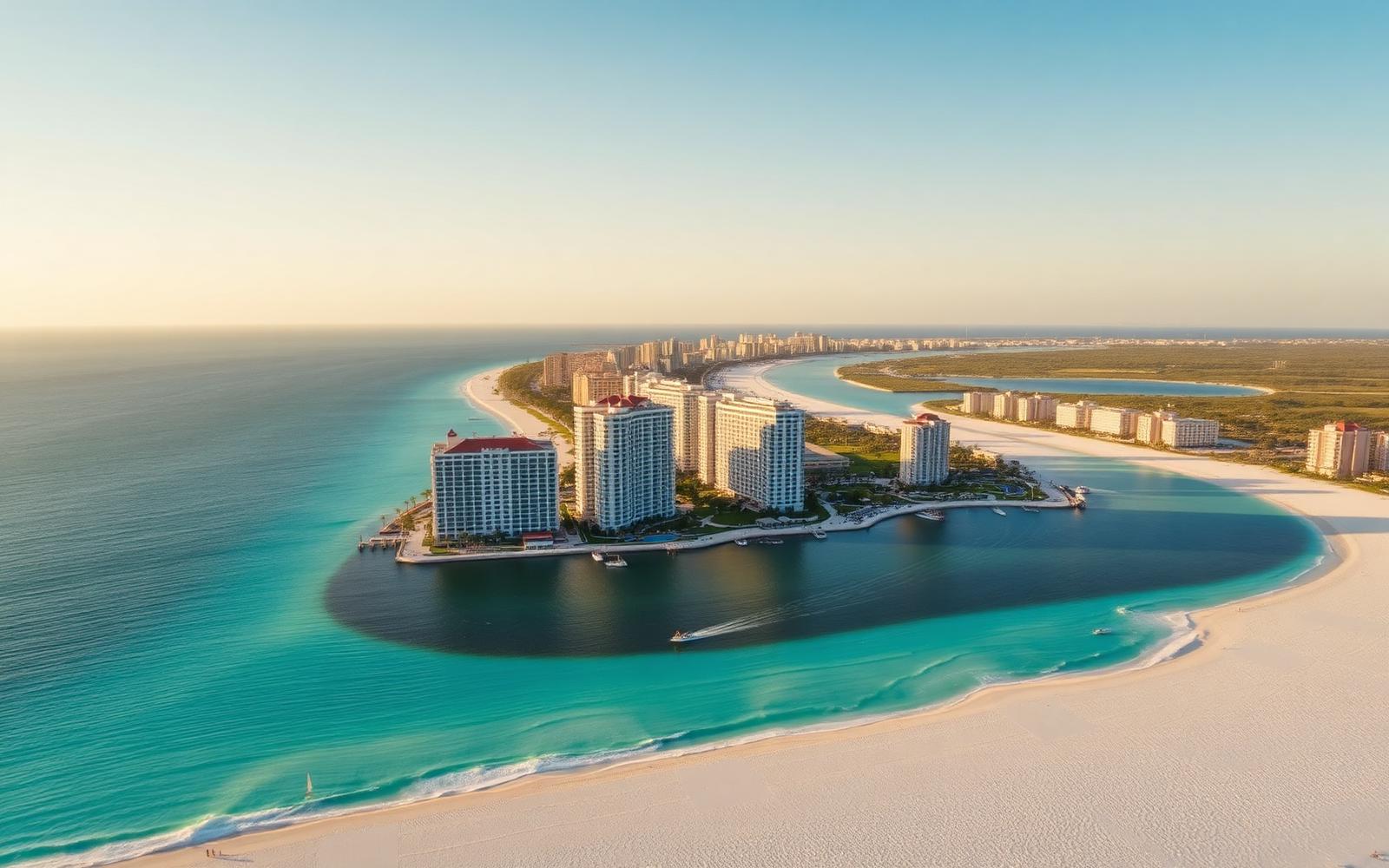
Is Cancun safe? Yes, Cancun remains one of the safest tourist destinations in Mexico in 2026, and the recent Pacific-coast security headlines did not touch the Yucatan Peninsula. This guide gives you the honest, current picture: what US, Canada and UK advisories actually say, where cartel activity really is (and isn't), how the Hotel Zone compares to downtown, the eight scams that separate tourists from money in pesos, and specific advice for solo female, family, LGBTQ+, senior and spring-break travelers. Every number below is dated to 2026 and cross-checked against government sources, state police reporting and airline operational status.
Is Cancun Safe Right Now? Short 2026 Answer
Yes, Cancun is safe right now. As of July 2026 the US State Department keeps Quintana Roo (Cancun's state) at Level 2, Exercise Increased Caution, the same tier as France, Germany and the United Kingdom. The February 2026 US Embassy security alert named five Pacific-coast states (Jalisco, Michoacán, Guerrero, Tamaulipas, Nuevo León) and did not include Cancun, Quintana Roo or any Yucatan state. Airlines run full schedules to Cancun International Airport (CUN), resort occupancy sits above 85% and the Hotel Zone reports near-zero violent incidents against foreign tourists year to date.
Cancun Safety at a Glance: What the 2026 Data Says
Cancun safety in 2026 is best understood through five numbers. Annual visitors: 32 million (record high across Cancun–Riviera Maya), the market would collapse if the destination were unsafe. Homicide rate: 12.4 per 100,000 for the Benito Juárez municipality (Cancun proper) versus 24 nationally and 34 in Baltimore. Foreign-tourist homicides in the Hotel Zone in the past five years: fewer than five, all linked to specific criminal circumstances, not random tourist targeting. Numbeo safety index: 58/100 for Cancun, moderate, matching Los Angeles and beating Baltimore or Detroit. Airline operational status: 100% full schedule from every US, Canadian and European carrier that flies here.
| Metric | Cancun | Mexico avg. | Los Angeles |
|---|---|---|---|
| Homicide rate (per 100k) | 12.4 | 24.0 | 9.5 |
| Tourist homicides Hotel Zone 5 yrs | <5 | , | , |
| Numbeo safety index | 58 / 100 | 48 / 100 | 58 / 100 |
| Violent crime index | 48 / 100 | 58 / 100 | 50 / 100 |
| Petty theft index | 62 / 100 | 60 / 100 | 63 / 100 |
Yucatan Peninsula vs Pacific Mexico: Why Cancun Sits Far from the Unrest
Every time a Mexico security story breaks in the US press, travelers ask whether it applies to Cancun. Almost always the answer is no, and the reason is geography. Cancun sits on the Caribbean coast at the northeastern tip of the Yucatan Peninsula. The Pacific-coast states where drug cartels dominate, Sinaloa, Michoacán, Guerrero, Jalisco, sit 1,200 to 1,600 miles west, across the entire country. The Yucatan Peninsula (Cancun, Playa del Carmen, Tulum, Merida, Cozumel) has operated for decades as a tourism enclave with its own state police, its own security posture and no significant cartel trafficking corridor running through it.
This geographic firewall explains why the February 2026 embassy alert named Pacific states only, why airlines run full Cancun schedules unchanged, and why the US State Department's Level 3 and Level 4 warnings do not touch a single Yucatan state. Understand this once and most of the news-driven anxiety about Cancun disappears.
US, Canada & UK Travel Advisories for Cancun Compared
Three major English-language governments issue travel advisories for Mexico. All three currently place Cancun in their middle-tier caution level, not their high-risk level. Below is the 2026 side-by-side. Read this the way locals do: the tier reflects the whole state of Quintana Roo, which also contains downtown-Cancun nightlife zones where most Level-2 incidents actually occur, not the Hotel Zone resort strip where the vast majority of foreign tourists stay.
| Government | Tier for Quintana Roo (Cancun) | Meaning |
|---|---|---|
| US State Department | Level 2 of 4, Exercise Increased Caution | Same tier as France, Germany, UK |
| Government of Canada | Exercise a high degree of caution | Middle of 4 tiers; not a warning |
| UK FCDO | See our advice before travelling | General guidance, no red-list flag |
The high-alert Mexico states in all three systems are the same six: Colima, Guerrero, Michoacán, Sinaloa, Tamaulipas and Zacatecas. None share a border with Quintana Roo. If your concern comes from a headline about those six states, it does not apply to Cancun.
February 2026 US Embassy Alert: Timeline and What It Meant for Cancun
On February 22, 2026 the US Embassy in Mexico issued a security alert covering ongoing operations in five Pacific and northern states, Jalisco, Michoacán, Guerrero, Tamaulipas and Nuevo León. The alert did not name Quintana Roo, Cancun or any Yucatan state. On February 23 the US Mission confirmed operations were returning to normal. No Cancun flights were cancelled, resort operations continued without change and organized Chichen Itza day tours ran on their normal schedule. Some independent travelers postponed rental-car excursions out of caution, but the toll highway, archaeological sites and hotels remained fully open throughout.
The important lesson: US Embassy alerts name states, and travelers should read them by state, not by 'Mexico'. When you see a Mexico headline while packing for Cancun, check the alert text first to see whether Quintana Roo is on the list. In 2026 it has not been.
Is Cancun Safe from Drug Cartels?
For tourists in the Hotel Zone, yes. Mexico's two largest cartels, Jalisco New Generation (CJNG) and Sinaloa, operate along Pacific-coast trafficking corridors and northern border cities, more than 1,200 miles from Cancun. Quintana Roo has seen local-level drug-dispute incidents, mostly in downtown Cancun nightlife zones (SM32, SM64, Puerto Juárez) and, occasionally, in Playa del Carmen and Tulum bar districts. Those incidents almost always target people involved in local drug sales, not vacationing foreign tourists. The Hotel Zone has federal marines, state police and the Grupo Turístico tourist-police unit patrolling continuously; Boulevard Kukulcan is one of the most policed 25 km of road in Mexico.
The realistic risk profile for a Cancun tourist is petty theft, taxi overcharges, drink-tampering in bars and rental-car scams, not cartel violence. Foreign-tourist violent-crime numbers in the Hotel Zone are close to zero. Do not confuse Pacific Mexico headlines with Cancun: the geography, economics and policing model are different.
Cancun Crime Rate vs Mexico City, Tulum and Major US Cities
Cancun's crime numbers sit below most large US cities and below Mexico City on nearly every axis. Below is a Numbeo-style comparison you can use to frame the conversation with anyone who worries about Mexico generally. Values are 0–100, higher = worse.
| City | Overall crime | Violent crime | Theft |
|---|---|---|---|
| Cancun | 42 (Hotel Zone) / 58 (Centro) | 48 | 62 |
| Tulum | 55 | 42 | 58 |
| Mexico City | 68 | 55 | 70 |
| Miami, USA | 51 | 45 | 55 |
| Baltimore, USA | 78 | 72 | 72 |
| New Orleans, USA | 72 | 68 | 65 |
Cancun's Hotel Zone scores lower than every major US city on the list. Cancun downtown scores higher than Miami but well below Baltimore or New Orleans. The practical frame: for a resort-strip vacationer, Cancun is safer than most US downtowns most travelers already visit without a second thought.
Neighborhood Safety Map: Hotel Zone, Puerto Cancun, Downtown & Puerto Juárez
Cancun safety varies dramatically by neighborhood. The Hotel Zone is a 25 km strip of luxury resorts along Boulevard Kukulcan, the safest tourist zone in Mexico by policing density and incident rate. Puerto Cancun is an upscale marina community north of the Hotel Zone with gated access and consistent police presence. Downtown (Centro) contains the ADO bus station, Mercado 28 and Parque de las Palapas, safe by day, use taxis at night. The Supermanzanas (SM) numbered zones north and northwest of downtown vary widely: SM10, SM15 and SM24 are middle-class residential and safe; SM32, SM64, SM86 and SM259 have documented local drug-dispute activity and are not places tourists need to go.
| Zone | Safety score | When to visit | Notes |
|---|---|---|---|
| Hotel Zone (Zona Hotelera) | 9 / 10 | 24/7 | Resort strip, most policed |
| Puerto Cancun | 9 / 10 | 24/7 | Gated marina, upscale |
| Downtown / Centro | 7 / 10 | Day + early evening | Take Uber after 10 p.m. |
| Parque de las Palapas | 7 / 10 | Day + early evening | Family food scene, busy |
| Mercado 28 | 7 / 10 | Day only | Skip after 8 p.m. |
| Puerto Juárez / SM86 | 5 / 10 | Ferry only | Direct to Isla Mujeres, don't linger |
| SM32, SM64, SM259 | 3 / 10 | Skip | Local drug-dispute zones |
Is Cancun Safe at Night? Bars, Clubs and Taxi Rules
Yes, if you stay in the Hotel Zone or Puerto Cancun. Boulevard Kukulcan from km 3 through km 20 is well-lit, patrolled by the Grupo Turístico and busy until 3 a.m. or later. Coco Bongo, Mandala, The City and Señor Frog's all sit within a two-kilometer nightlife cluster with high foot traffic and steady police presence. The realistic night risks are drink tampering (rare but documented), fake wristband and cover-charge scams at the club door, pickpocketing in packed dance floors, and taxi overcharges after 2 a.m. Violent crime against tourists after dark in the resort strip is very rare.
Downtown after midnight is a different picture. Avenida Yaxchilán and the streets around Parque de las Palapas are fine until about 11 p.m.; after that shift to Uber or a hotel-called taxi. Skip Puerto Juárez, SM32 and SM64 side streets at night entirely, those are not tourist zones and there is no upside to walking them after dark.
Safest Areas to Stay in Cancun for First-Time Tourists
Cancun's safest lodging zones cluster on the resort strip and the marina district. For a first-time visitor, the safest choice is Boulevard Kukulcan km 9 through km 16, this is the middle of the Hotel Zone, closest to Playa Delfines, Playa Marlin and the Mayan Museum, with heavy foot traffic and continuous police patrols. Km 4 through km 8 is the nightlife cluster (Coco Bongo, Mandala, Señor Frog's), safe, but noisy and skewed toward the party crowd. Km 16 through km 20 is calmer, more family-oriented and ends at Punta Nizuc. Puerto Cancun, just north of the Hotel Zone, is a gated marina community with high-end resorts (Nizuc, Marina Puerto Cancun) and a country-club feel, the safest lodging in Cancun by policing density and access control.
Avoid booking anywhere with a downtown Cancun address unless you specifically want the local-market experience and are comfortable with Uber-everywhere logistics. Ejido, Villas Otoch, and any address north of Avenida Uxmal are not tourist infrastructure.
Is Cancun Safe for Solo Female Travelers?
Yes, and solo female travelers consistently rate the Hotel Zone as safer than New Orleans, Miami South Beach or downtown Los Angeles on TripAdvisor and Solo Female Travelers Facebook groups. The resort-strip infrastructure is designed for the customer to feel safe: uniformed staff, gated pool areas, on-property security, English-speaking front desk 24/7. Practical rules for a solo Cancun trip: book in the Hotel Zone or Puerto Cancun, use Uber over street taxis after dark, never leave a drink unattended on the bar, decline street offers of spring-break wristbands, avoid isolated stretches of beach at sunset, and share your itinerary with someone at home daily.
Harassment happens more on the beach club promenade than on the street; a firm 'no gracias' and moving to a busier spot ends 95% of incidents. Day tours to Chichen Itza, Isla Mujeres and cenotes with licensed operators are consistently reported as respectful and professional environments for solo women, a licensed private tour with a vetted guide is a much better solo pattern than a rental car and self-navigation.
Is Cancun Safe for Families with Kids?
Yes, Cancun is one of the most family-tested destinations in the Americas. The Hotel Zone's all-inclusive resort model is built around family logistics: kids' clubs, calm-water pools, on-property water parks, private beach access with lifeguards, and 24-hour room service. Beach safety on the north-facing Bahía de Mujeres (Playa Tortugas, Playa Langosta, Playa Caracol) is calm year-round, protected water, no rip currents. The east-facing Caribbean beaches (Playa Delfines, Playa Marlin, Playa Chac Mool) have rougher surf and occasional rip currents; watch lifeguard flags. Health infrastructure is strong: Hospital Amerimed, Galenia and Hospiten Cancun all take international insurance and have pediatric care.
Is Cancun Safe for LGBTQ+ Travelers?
Yes. Mexico recognizes same-sex marriage nationwide (federal ruling, 2022) and Quintana Roo was one of the earlier states to legalize it. Cancun has a small but visible gay scene concentrated in Puerto Cancun and along Boulevard Kukulcan km 9 (Karamba, Rainbow Room, 11:11) and hosts an annual Pride week in June. Same-sex hand-holding in the Hotel Zone is common and unremarkable; the resorts and beach clubs are consistently reported as welcoming. The one caveat is downtown neighborhoods well outside the tourist zone, where cultural attitudes track older-generation norms, the same caveat that applies to any large Mexican city. Book in the Hotel Zone or Puerto Cancun and you will experience Cancun as one of the more relaxed LGBTQ+ beach destinations in Latin America.
Is Cancun Safe for Senior Travelers?
Yes, and Cancun is one of the easiest international destinations in the Americas for seniors. The Hotel Zone is flat, with wide sidewalks, wheelchair-accessible resorts and English-speaking staff at every service level. The Cancun International Airport (CUN) offers wheelchair assistance, priority immigration lanes for seniors, and a 20-minute transfer to the Hotel Zone with pre-booked private shuttles. Medical care is strong, Hospital Amerimed (Blvd. Kukulcan km 9), Galenia and Hospiten Cancun all bill international travel insurance directly and have English-speaking cardiology, orthopedic and internal medicine departments. Pharmacies are on every corner and most tourist-focused medications are available over-the-counter.
Is Cancun Safe for Spring Break?
Yes, if you follow the resort-strip rules. Spring break in Cancun (mid-February through late April) concentrates on Boulevard Kukulcan km 4 through km 9, and the biggest risks are not crime, they are alcohol, water and driving accidents. Drink tampering, hospitalization from mixing prescription medication with heavy drinking, drownings from unsupervised night-swimming, and jet-ski or ATV crashes are the top four emergency room categories every spring. The US Embassy issues an annual spring-break advisory reminding travelers of these health risks; it is not a crime alert. Stay in your all-inclusive at night, never accept a drink from a stranger at a beach party, and skip late-night pool jumping and jet-ski rentals when drinking.
The 8 Most Common Tourist Scams in Cancun (With Real Peso Prices)
Cancun scams follow a short, predictable playbook. Learning the eight below removes 90% of your financial risk on the ground. Every price is a 2026 street-level observation from our local operator team and vetted against traveler reports on TripAdvisor and Reddit r/cancun.
| Scam | Common ask | Actual price / rule |
|---|---|---|
| Taxi 'per person' fake surcharge | $15–20 USD per person Hotel Zone → Downtown | Zone flat rate: 200–300 pesos ($10–15) total |
| Airport 'authorized' shuttle upsell | $65 USD per person one-way | ADO bus 260 pesos; pre-booked private shuttle $45 flat |
| Timeshare 'free breakfast' pull | $0 upfront, 90-min hard sell | Skip, nothing at the resort strip is truly free |
| Fake INAH / Chichen Itza tickets | $100 USD 'skip-the-line' | Real gate fee: 700 pesos foreign visitor |
| Currency exchange 'no fee' scam | USD accepted at 15 MXN/USD | Real rate ~18 MXN/USD, pay in pesos |
| ATM skimmer at street kiosks | Card cloned + charges next week | Use bank ATMs inside HSBC, Santander, Banorte only |
| Fake police shakedown | $500–2,000 pesos 'fine' in cash | Real fines paid at station; ask for receipt (folio) |
| Drink tampering / spiked cocktail | Free 'welcome shot' from stranger | Only accept drinks you saw poured; watch the bartender |
Are Cancun Taxis, Uber and ADO Buses Safe?
All three are safe, with different rules. Cancun taxis are unmetered, always confirm the fare in pesos before you get in, and pay in pesos when possible (USD pricing runs 20–30% higher). Rates are posted at every hotel lobby and at the airport curb. Uber has operated legally in Cancun since a 2023 state Supreme Court ruling and works reliably in the Hotel Zone, Puerto Cancun, downtown and to/from the airport. DiDi also operates. ADO is Mexico's flagship intercity bus company, modern, air-conditioned, on-time and safe; the Cancun ADO central station is downtown, and there is a second smaller terminal at the airport for direct Playa del Carmen and Tulum service. Never share a taxi with strangers, and never accept a driver who refuses to name a price before you get in.
Cancun Airport Transportation: What's Safe, What Isn't
Cancun International Airport (CUN) is one of the safest airport arrivals in Latin America, the risk isn't the ride, it's the arrivals-hall hustle. Pre-booked private shuttles, ADO buses, licensed yellow taxis and Uber (legal at CUN since 2023) are all safe. The one thing to skip: the "authorized" shuttle solicitors wearing branded shirts inside the terminal, most are timeshare-tied and overcharge by 3×. Never accept a driver who won't name a price before you get in, and don't book transport at the arrivals counter (20–30% markup vs online). Full 2026 pricing, terminal-by-terminal pickup rules and the six ground options compared side-by-side live in our Cancun airport transfer.
If your first move on landing is a same-day trip inland, the safest pattern is a licensed private tour that picks you up at the airport or your hotel with a vetted bilingual driver. Our Chichen Itza tour from Cancun is built exactly for that pattern, on the toll highway 180D corridor, with commercial insurance and a fixed return time to the Hotel Zone.
Beach Safety in Cancun: Rip Currents, Sargassum and Jellyfish
Cancun has two beach systems with very different safety profiles. The north-facing Bahía de Mujeres beaches (Playa Tortugas, Langosta, Caracol) are calm year-round, protected water, no meaningful rip currents, great for kids. The east-facing Caribbean beaches (Playa Delfines, Marlin, Chac Mool) have real Caribbean surf with rip currents in some months, and lifeguard flag systems that must be respected. Green flag = swim; yellow = caution; red = strong currents, wade only; black = closed. Sargassum seaweed peaks May through August and does not affect safety directly but does affect the beach experience; most large resorts run daily cleanup crews. Box jellyfish and Portuguese man-of-war are uncommon but present, if you see purple flags posted, skip open-water swimming that day.
Health Safety in Cancun: Water, Food, Mosquitoes and Sun
Tap water in Cancun is not drinkable, buy bottled water only (25–35 pesos for 1.5 liters at any Oxxo). Every all-inclusive resort filters and purifies its water for ice, cooking and coffee, so hotel food and drink are safe. Food safety is strong at hotel restaurants, busy sit-down places and the taquerías inside Mercado 28; the higher-risk category is pre-cut fruit and ceviche from street stalls. Mosquito-borne dengue exists year-round in Quintana Roo with a small uptick in September and October, use DEET repellent at dusk. Sunburn is the most common health issue by far; buy reef-safe zinc-oxide sunscreen if you plan to snorkel at cenotes or a marine park like Xel-Há, where petroleum-based sunscreens are banned.
Hurricane Season and Weather Safety (June–November)
Hurricane season runs June 1 through November 30, with September and October the peak-risk months. Since Hurricane Wilma (2005) Cancun has upgraded to strict hurricane-code construction, and every large resort has a shelter-in-place plan, generator power and multi-day water reserves. The real safety issue for tourists is not the storm itself but the disruption around it: Cancun International Airport closes 12–24 hours ahead of a strike, tour operators cancel, and cruise lines re-route their Caribbean itineraries 3–5 days out. Buy travel insurance with weather cancellation coverage, book refundable hotel rates in September and October, and monitor the NOAA National Hurricane Center forecasts if a system develops in the Caribbean.
December through April is Cancun's calmest, driest and safest travel window. Our guide on the best time to visit Chichen Itza covers the same seasonal logic if you plan a mainland day trip during the shoulder months.
Is It Safe to Do a Chichen Itza Day Trip from Cancun?
Yes, Chichen Itza is one of the safest day-trip excursions in Mexico. The site itself is a UNESCO World Heritage property with INAH federal management, on-site tourist police and controlled entry gates. The overland route from Cancun has no known safety incidents against tour vehicles. The safest booking pattern is a licensed private operator with commercial insurance, an English-speaking driver and hotel pickup, not a rental car, and not a street-hailed van at the ADO station. For distance, drive time, tolls and the exact highway route, see how far is Chichen Itza from Cancun.
For families, solo women and senior travelers, private is the strong pattern: locked pickup time, one guide from door to door, no crowded shuttle transfers and a guaranteed return to the Hotel Zone. Our Chichen Itza private tour is built on exactly that model. If your priority is quiet ruins and a lower-heat visit, the Chichen Itza sunrise tour reaches the site before the tour-bus wave.
Emergency Numbers, Tourist Police and Hospitals in Cancun
Emergency response in the Cancun Hotel Zone is fast by Mexican-tourist-hub standards, typically under 8 minutes. The universal emergency number is 911 (works in English and Spanish state-wide). The Cancun tourist-police direct line is +52 998 885 2277. For US citizens, the US Consulate in Merida serves Cancun at +52 999 942 5700; the Canadian Consulate is on Boulevard Kukulcan km 8.5, +52 998 883 3360; the UK Consulate is at +52 998 881 0100. Three private hospitals accept international travel insurance: Hospital Amerimed (Blvd. Kukulcan km 9, +52 998 881 3400), Galenia Hospital (Av. Tulum, +52 998 891 5200) and Hospiten Cancun (Av. Bonampak, +52 998 881 3700). Save these to your phone before you leave the airport.
Cancun Safety FAQ: Quick Answers to Common Concerns
The section below covers questions travelers ask us most often on WhatsApp before booking, from spring-break drink safety to whether a rental car in the Yucatan is a good idea. Read the ones that match your trip; skip the ones that don't.
Related Cancun Reading
Once your safety questions are settled, most travelers ask about what the city actually offers. Our things to do in Cancun guide covers beaches, ruins, cenotes and neighborhoods; the Cancun excursions guide ranks day trips by value. For getting there and back, how to get to Chichen Itza from Cancun walks through every transport option. Cruise passengers landing at Cozumel should read our is Cozumel safe companion guide, and for the sister mainland scam-and-safety picture, Valladolid Mexico covers the colonial town most day trips stop in.
The Bottom Line: Cancun in 2026
Cancun is safe in 2026, as safe as it has been in the last decade, and safer than most large US downtowns for the resort-strip vacationer who follows a few basic rules. The February 2026 embassy alert did not touch Quintana Roo, cartel activity is a Pacific-coast story that geography keeps 1,200 miles away, and the Hotel Zone is one of the most policed 25 km of tourist infrastructure in the Americas. Book in the Hotel Zone or Puerto Cancun, use Uber over street taxis at night, respect beach flags, drink bottled water only, and pick a licensed operator for day trips. That is the entire safety curriculum. If Chichen Itza is on your list, Itza Quest runs the same door-to-door private model most safety-cautious travelers end up choosing, booking channel is a short WhatsApp message, not a form.
Continue reading
Related guides with the same travel intent.
Frequently Asked Questions
Is Cancun safe right now in 2026?
Yes. As of 2026 Cancun remains one of the safest tourist zones in Mexico. The US State Department keeps the state of Quintana Roo at Level 2, Exercise Increased Caution, the same tier as France, Germany and the United Kingdom. The February 2026 US Embassy security alert named five Pacific-coast states and did not include Quintana Roo or Cancun. Airlines run full schedules, resort occupancy is above 85% and Cancun's Hotel Zone reports near-zero violent incidents against tourists year to date.
Is Cancun safe from cartels?
For tourists in the Hotel Zone, yes. Mexico's largest cartels, Jalisco New Generation (CJNG) and Sinaloa, operate along Pacific-coast trafficking corridors more than 1,200 miles west of the Yucatan Peninsula. Cancun has seen isolated cartel-adjacent disputes in downtown nightlife zones (SM32, SM64, Puerto Juárez), but the Hotel Zone remains a protected tourism enclave patrolled by federal marines, state police and the tourist-police Grupo Turístico. Violent incidents against foreign tourists in Cancun are extremely rare and cluster in domestic drug-dispute areas, not resort strips.
Is Cancun safe at night for tourists?
Yes, if you stay in the Hotel Zone (Zona Hotelera) or Puerto Cancun. Boulevard Kukulcan from km 3 through km 20 is well-lit, patrolled and busy until 3 a.m. or later. Downtown after midnight, especially outside Parque de las Palapas and Avenida Yaxchilán, is where most tourist-adjacent incidents occur. Use hotel taxis or Uber (yes, Uber operates in Cancun since 2023), never accept a drink you did not see poured, and skip street-hailed rides after 1 a.m. The realistic night risk is petty theft and drink-tampering, not violent crime.
Is Cancun safe for solo female travelers?
Yes, particularly in the Hotel Zone, Puerto Cancun and Playa Delfines beach clubs. Solo female travelers consistently rate Cancun safer than New Orleans or Miami South Beach on TripAdvisor and Solo Female Travelers Facebook groups. Practical rules: stay on the resort strip, use Uber over street taxis at night, never leave a drink unattended, decline unsolicited spring-break wristband offers, and skip late-night walks on Puerto Juárez side streets. Sexual harassment happens more on the beach club promenade than on the street; a firm 'no gracias' and moving to a busier spot ends 95% of incidents.
What is the current US State Department travel advisory for Cancun?
The state of Quintana Roo, which contains Cancun, Playa del Carmen, Tulum and Cozumel, is Level 2 (Exercise Increased Caution) as of 2026. This is a general precaution and the same tier applied to France, Italy and the UK. The advisory language flags isolated nightlife violence and recommends staying in tourist zones after dark. Level 3 (Reconsider Travel) and Level 4 (Do Not Travel) apply only to Colima, Guerrero, Michoacán, Sinaloa, Tamaulipas and Zacatecas, none of which touches the Yucatan Peninsula.
Are Cancun taxis safe? Is Uber allowed?
Yes and yes. Cancun taxis are safe but unmetered, rates are posted at hotel lobbies and on the airport curb. Always confirm the fare before you get in and pay in pesos when possible (drivers often quote in USD at unfavorable rates). Uber has operated legally in Cancun since a 2023 state ruling and works reliably in the Hotel Zone, Puerto Cancun and to/from the airport. DiDi also operates. The one bad taxi rule: never share a ride with strangers, and never accept a driver who refuses to name a price up front.
Is it safe to drink the water in Cancun?
No, drink bottled water only, like the rest of Mexico. Every all-inclusive resort in Cancun filters and purifies its tap water, so hotel ice, coffee and cooking water are safe. Off-property, buy sealed 1.5-liter bottles (25–35 pesos, about $1.50 USD) at Oxxo, 7-Eleven or supermarkets. Tap water is fine for showering and brushing teeth. If you have a sensitive stomach, avoid pre-cut fruit and ceviche from street stalls; hotel and busy restaurant food is safe.
Is Cancun safe during hurricane season?
Hurricane season runs June 1 through November 30, with September and October the peak-risk months. Since Hurricane Wilma (2005), Cancun hotels build to strict hurricane code and every large resort has a shelter-in-place plan, generator power and multi-day water reserves. The realistic tourist risk is not the storm, it's the disruption around it: airport closures, cancelled tours and 3–5 day advance rerouting. Buy travel insurance that covers weather cancellation, book refundable rates in September and October, and monitor NOAA National Hurricane Center forecasts if a system develops in the Caribbean.
Is it safe to do a Chichen Itza day trip from Cancun?
Yes, Chichen Itza is one of the safest excursions in Mexico. The site is a UNESCO World Heritage property with INAH federal management, on-site tourist police and controlled entry. The road from Cancun runs on a modern toll highway with military and Guardia Nacional checkpoints along the way. Licensed private tour operators carry commercial insurance, GPS-tracked vehicles and English-speaking drivers. The safest booking pattern is a private tour with hotel pickup rather than a rental car or a street-hailed transport at Cancun ADO station. Exact distance, drive time and toll costs live in the how far is Chichen Itza from Cancun guide.
What should I do if I feel unsafe in Cancun?
Move to a busy, well-lit space first, a hotel lobby, a beach club, a Costco or Walmart, or Plaza Kukulcan. Call 911 (works in English and Spanish across the state). The tourist-police direct line for Cancun is +52 998 885 2277. The US Consulate in Merida (serving Cancun) is +52 999 942 5700; the Canadian Consulate in Cancun is +52 998 883 3360. If you're in your hotel, ask front desk to call the Grupo Turístico, response times in the Hotel Zone are typically under 8 minutes. Keep a written copy of your passport, hotel address and emergency contacts separate from your phone.